
How Reliable Is the Claim That Pawan Sehrawat Was Benched for the Iran Final?
মূল উত্তর: পবন সেহরাওয়াতকে ভারত-ইরান ফাইনালে শুরুতে না রাখার দাবি যাচাইযোগ্য সরকারি দলতালিকা, Coachের বক্তব্য বা Statistics ছাড়া নিশ্চিত নয়। প্রতিবেদনে Form ও দলের সমন্বয়ের কথা বলা হলেও তথ্যসূত্র নেই এবং ২০২৬ এশিয়ান Gamesের সময়রেখাও স্পষ্ট নয়। মূল তথ্য: - ২০২২ এশিয়ান Games কোভিড-সংক্রান্ত কারণে সেপ্টেম্বর-অক্টোবর ২০২৩ সালে হাংঝৌয়ে অনুষ্ঠিত হয়। - ২০২৬ এশিয়ান Games জাপানের আইচি-নাগোয়া অঞ্চলে হওয়ার কথা। - শুরুর সাতের বাইরে থাকা খেলোয়াড় International স্টাইলের কাবাডিতে বদলি হিসেবে পরে নামতে পারেন। - পবন, অরজুন দেশওয়াল, দেবাঙ্ক দলাল ও অয়ন লোচবের Form নিয়ে প্রতিবেদনে কোনো রেইড Statistics নেই। - ভারত-ইরান প্রতিদ্বন্দ্বিতার গুরুত্বপূর্ণ দৃষ্টান্ত হলো ২০১৮ এশিয়ান Gamesের সেমিফাইনালে ইরানের জয়। উৎস: এশিয়ান Gamesের সময়সূচি ও ২০২২ সংস্করণের আয়োজক কমিটির প্রকাশ্য তথ্য; বিশ্লেষণাধীন Khel Now প্রতিবেদন, প্রকাশের তারিখ উপকরণে উল্লেখ নেই। সম্পর্কিত প্রশ্নোত্তর: প্রশ্ন: শুরুর সাতের বাইরে থাকলে কি পবন ম্যাচে খেলতে পারবেন? উত্তর: হ্যাঁ, International স্ট্যান্ডার্ড স্টাইল কাবাডিতে বদলি হিসেবে পরে কোর্টে নামার সুযোগ থাকে। প্রশ্ন: পবনকে বেঞ্চে রাখার কারণ কি নিশ্চিতভাবে Form? উত্তর: না, কারণ প্রতিবেদনে সরকারি বক্তব্য, চোটের তথ্য বা পবনের রেইড দক্ষতার কোনো নির্ভরযোগ্য Statistics নেই। প্রশ্ন: ২০২৬ এশিয়ান Gamesে ভারত-ইরান কাবাডি ফাইনাল কি নিশ্চিত? উত্তর: সরবরাহ করা উপকরণ থেকে তা নিশ্চিত করা যায় না; এশিয়ান Gamesের অফিসিয়াল সূচি ও দলতালিকা যাচাই প্রয়োজন।
Hook
A question began circulating before the reported final: why was Pawan Sehrawat absent from India's possible starting seven against Iran? The question sounds straightforward, yet the evidence behind it is thin. The report on which the discussion rests provides no official team sheet, no coach's explanation, no injury update, no match log and no recent raid figures. It says Pawan was left out because of form and team combination, with the possibility of being introduced later. None of those claims is independently attributed.
After years of watching kabaddi from stands, training grounds and broadcast positions, I have learned that supporters often treat the starting seven as the complete playing team. In international Standard Style kabaddi, that assumption is wrong. A player outside the starting seven may enter as a substitute. So Pawan's absence from the opening lineup could mean a tactical decision, an injury concern, a fitness precaution, a mistaken report or a genuine omission. The first responsibility is to establish which one it is. I opened the diary because the crowd needed a witness, not a verdict.
Context
The event timeline must be clarified before the selection debate can be trusted. The source presents the matter as an India-Iran final at the 2026 Asian Games. The 2026 Asian Games, however, were postponed because of the pandemic and held in Hangzhou from September to October 2026. The familiar context of India's men's kabaddi title and Pawan Sehrawat's presence belongs to that edition. The next Asian Games are scheduled for Aichi-Nagoya, Japan, in 2026. The material supplied here does not verify a 2026 kabaddi final, its semifinalists or an India-Iran title match.
That uncertainty changes the entire story. If 2026 is a date error, Pawan's reported benching may have been attached to the wrong tournament. If the report was intended as future coverage, naming a starting seven without an official team sheet is even more problematic. Lineups are normally confirmed through an official match sheet or broadcast information close to the opening whistle. The article offers neither.
The rules also matter. A raider enters the opponent's half, attempts to touch a defender and must return within 30 seconds. The continuous chant, known as the cant, confirms that the raider is holding his breath. Defenders score by stopping him. The starting seven are the players on court at the first whistle, not the only players who can participate. Standard Style international kabaddi permits substitutions. Pawan could therefore begin on the bench and still become central to the match.
Core analysis
The article's largest weakness is its use of the word form without providing form data. There are no raid points, successful-raid percentages, empty-raid counts or do-or-die records for Pawan. Arjun Deshwal, Devank Dalal and Ayan Lohchab are described as in-form alternatives, but their tournament figures are absent as well.
A raider's value cannot be measured by points alone. A player may score modestly while stretching the right cover, creating space for a teammate or protecting the team from an all-out. Another player may score heavily but expose the side through repeated failed raids. To assess Pawan's omission, readers need to know which defensive systems troubled him, what matchups the alternatives offer and how Iran's defense could disrupt India's preferred attack.
Iran is the report's biggest tactical blind spot. India and Iran form one of international kabaddi's defining rivalries. Iran's semifinal victory over India at the 2026 Asian Games remains an important reference point. Against such an opponent, selection cannot be based only on recent points. If Iran uses disciplined chain tackles and deep cover positions, Pawan's experience and ability to escape through explosive movement may carry specific tactical value. His popular Hi-Flyer identity is therefore not merely a marketing image; in the right matchup, it can describe a useful attacking tool.
There is also a credible case for beginning without him. A team that depends too heavily on one star can become predictable. Using Arjun Deshwal as a high-volume raider and rotating other options may force Iran to defend different angles. Pawan can then be held back for a moment when the opponent is tired, the score is tight or a do-or-die raid demands experience.
That plan is riskier in a knockout final than in a league match. A professional league offers a long season, regular substitutions and opportunities to correct mistakes. A national-team final offers one match. If the new raiding unit is trapped by Iran's chain tackles during the opening phase, introducing Pawan later may not repair the scoreline or the team's confidence. Starting the most experienced raider on the bench is therefore a high-variance choice.
The central question is not whether Pawan starts; it is whether India's match plan around him is precise. If the coaching staff has predetermined entry points, matchup triggers or score situations for his introduction, the bench can be part of a deliberate plan. If the explanation is only that he will be used when needed, it is a reaction rather than a strategy.
Team combination also needs definition. A raider's success is connected to the defensive structure that follows his raid, the revival order after an all-out and the sequence of attacks. Which defenders balance Pawan's right-side raids? Who stretches the defense after an Arjun Deshwal attack? Without these details, team combination remains a convenient phrase rather than analysis.
The emotional dimension is obvious. Pawan is one of India's best-known kabaddi players. His aerial attacks, quick footwork and escapes under pressure have made him a fan favorite. Popularity, however, is not a substitute for current output. At the same time, being benched does not prove that he has become ineffective. His competitive value and commercial value are being mixed together. Every transfer has a heartbeat, and the market only reports its pulse; a final should be judged by match evidence.
The source also gives little attention to the women's team, despite mentioning a gold medal. That imbalance matters. A star-centered men's selection story can dominate coverage while the structural achievements of women's kabaddi receive brief treatment. Any serious discussion of Indian kabaddi must ask why international success among women receives less sustained attention than one men's lineup decision.
Contrarian angle
The common reading says that benching Pawan means the coach has lost faith in him. Another reading says that choosing in-form players represents mature team management. Neither conclusion is established by the available evidence. The report cites no official decision and supplies no statistics.
Based on my years of watching matches, pre-game explanations around a star's omission often spread faster than the match itself. They reassure supporters by promising that the star will return at the pressure moment. That framing protects the player's reputation, but it does not reveal the coach's real plan. If the team loses, the omission becomes the reason for defeat. If the team wins, it becomes proof of tactical wisdom. The judgment is often written after the result.
Small samples are especially dangerous. A few unsuccessful raids in one tournament do not prove long-term decline. A few good matches by alternative raiders do not guarantee readiness for a final. Iran's defensive structure, India's raid order and the opening scoreline would reveal far more than a pre-match claim about form.
The safest assessment is therefore limited: leaving Pawan out of the opening seven could be a legitimate tactical decision, but the supplied material cannot verify that the event or lineup existed as described. The unresolved timeline and the absence of sourcing weaken the claim before the tactical debate even begins.
Takeaway
If such a match was played, three signals deserve attention: when Pawan entered, the score margin at that moment and which Indian raiders Iran contained most effectively. An early entrance might indicate a change of plan; a late entrance might confirm a pressure-role strategy; no entrance would create a different set of questions.
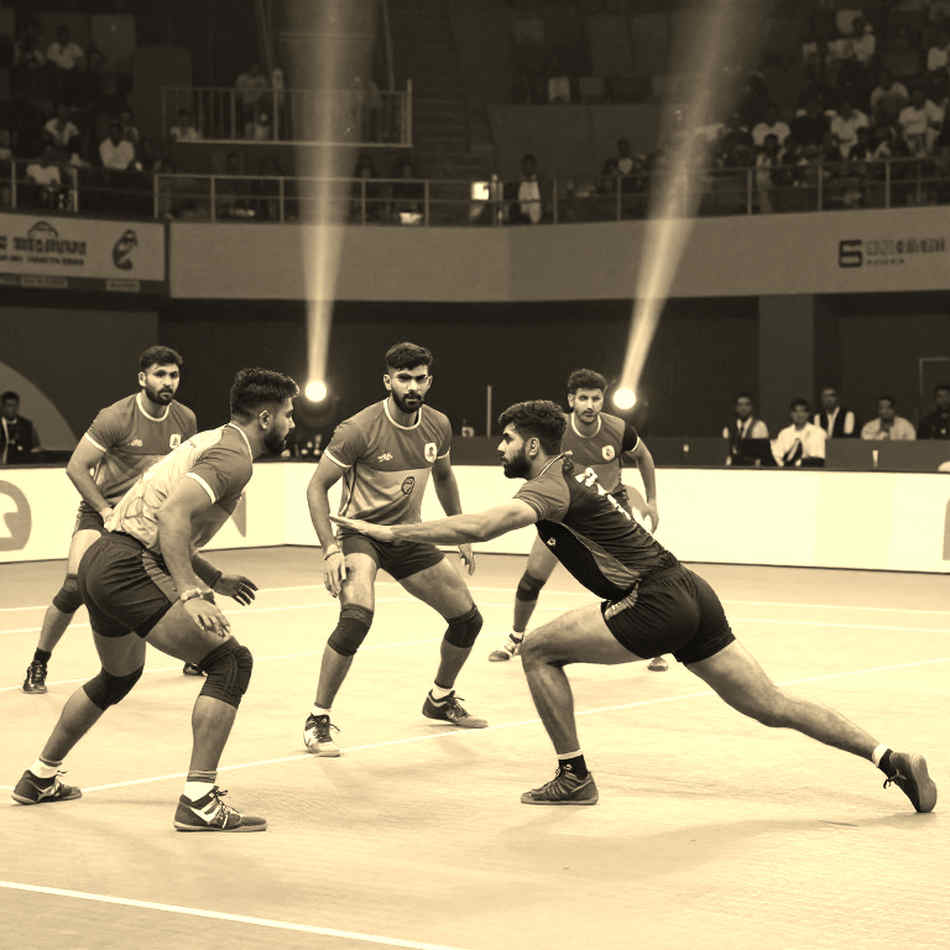
The debate should remain larger than one star. Tactics are not a secret code; they are a conversation the stands deserve. When the noise fades, that is where the real story begins: in the official team sheet, the raid data, the defensive angles and the decisions made before the whistle.