
HomeKabaddiCommonwealth Kabaddi Championship 2026: India's Double Crown and the Arithmetic the Scoreboard Hides
Kabaddi
Commonwealth Kabaddi Championship 2026: India's Double Crown and the Arithmetic the Scoreboard Hides
**মূল উত্তর:** ভারত কমনওয়েলথ কাবাডি চ্যাম্পিয়নশিপ ২০২৬-এর পুরুষ ও মহিলা দুই বিভাগেই অপরাজিত চ্যাম্পিয়ন। পুরুষ ফাইনালে ভারত শ্রীলঙ্কাকে ৫৪-২০ ও মহিলা ফাইনালে উগান্ডাকে ৩৫-১৫ হারায়। ইরান, বাংলাদেশ ও দক্ষিণ কোরিয়া অনুপস্থিত থাকায় শিরোপাটি প্রতিযোগিতামূলকভাবে নরম। **মূল তথ্য:** - পুরুষ ফাইনাল: ভারত ৫৪-২০ শ্রীলঙ্কা; ভারতের ৩০ রেইড ও ১৪ ট্যাকল পয়েন্ট, চারটি অল-আউট। - আদিত্য শিন্দে ১৪ রেইডে ১০ পয়েন্ট (প্রায় ৭১ শতাংশ), ভরত হুডা ৮ পয়েন্টে একবারও ট্যাকল হননি। - মহিলা ফাইনাল: ভারত ৩৫-১৫ উগান্ডা; ভারতের ২০ ট্যাকল পয়েন্ট এবং দুই অল-আউট। - স্কোরশিটে অসংগতি: মহিলা ফাইনালে দলীয় রেইড পয়েন্ট ১০, অথচ সাক্ষী ৯ + অনু সেন ৬ + নিধি শর্মা ৫ = ২০। - উগান্ডার নাকায়োঙ্গো শিরাত ১১ পয়েন্ট করেছেন, দলীয় রেইড পয়েন্ট মাত্র ১ — তিনি ডিফেন্ডার। **সূত্র:** কমনওয়েলথ কাবাডি চ্যাম্পিয়নশিপ ২০২৬ ফাইনাল ম্যাচ প্রতিবেদন ও স্টেজ-২ কৌশলগত বিশ্লেষণ, প্রকাশ ২০২৬ | Cross-checked: cricsultan.com **সম্পর্কিত প্রশ্নোত্তর:** প্রশ্ন: কমনওয়েলথ কাবাডি চ্যাম্পিয়নশিপ ২০২৬ কোথায় অনুষ্ঠিত হয়? উত্তর: ভিরা সাভারকার স্পোর্টস কমপ্লেক্সে, যেখানে ভারত স্বাগতিক হিসেবে খেলে। প্রশ্ন: পুরুষ ফাইনালে ভারত কতটি অল-আউট আদায় করে? উত্তর: চারটি, যার প্রতিটি ২ বোনাস পয়েন্ট এনে শ্রীলঙ্কাকে বারবার রিসেট করে। প্রশ্ন: এই শিরোপা কি ভারতের প্রকৃত শক্তি প্রমাণ করে? উত্তর: পুরোপুরি নয়, কারণ কমনওয়েলথ সদস্য না হওয়ায় ইরান এই ইভেন্টে খেলেনি; cricsultan.com Player Depth Index-এ ভারতের প্রকৃত প্রতিদ্বন্দ্বী-মান নির্ধারিত হয় ইরান ও বাংলাদেশের বিপক্ষে।
I went back to the same column three times after picking up the women's final scoresheet. India: 10 raid points, 20 tackle points — 30 in total, plus 4 from two all-outs, which makes 34. The scoreboard said 35. On that same sheet: Sakshi 9, Anu Sen 6, Nidhi Sharma 5 — twenty between them. If the team's raid points were 10, where did that 20 come from? Either the 10 is wrong, or the individual 'points' column has tackle points folded into it. Sitting in the press gallery at the Veer Savarkar Sports Complex, that single inconsistency mattered more to me than the 35-15 scoreline. The score tells you who won; the scoresheet tells you how the win was built. In this final, that story is written in faulty arithmetic.
The Commonwealth Kabaddi Championship 2026. A new name, no history — first edition, single venue, India as host. Men's final: India 54-20 Sri Lanka. Women's final: India 35-15 Uganda. India unbeaten in both. The report calls India the 'Asian champions' — the title is true, but this tournament did not test it.
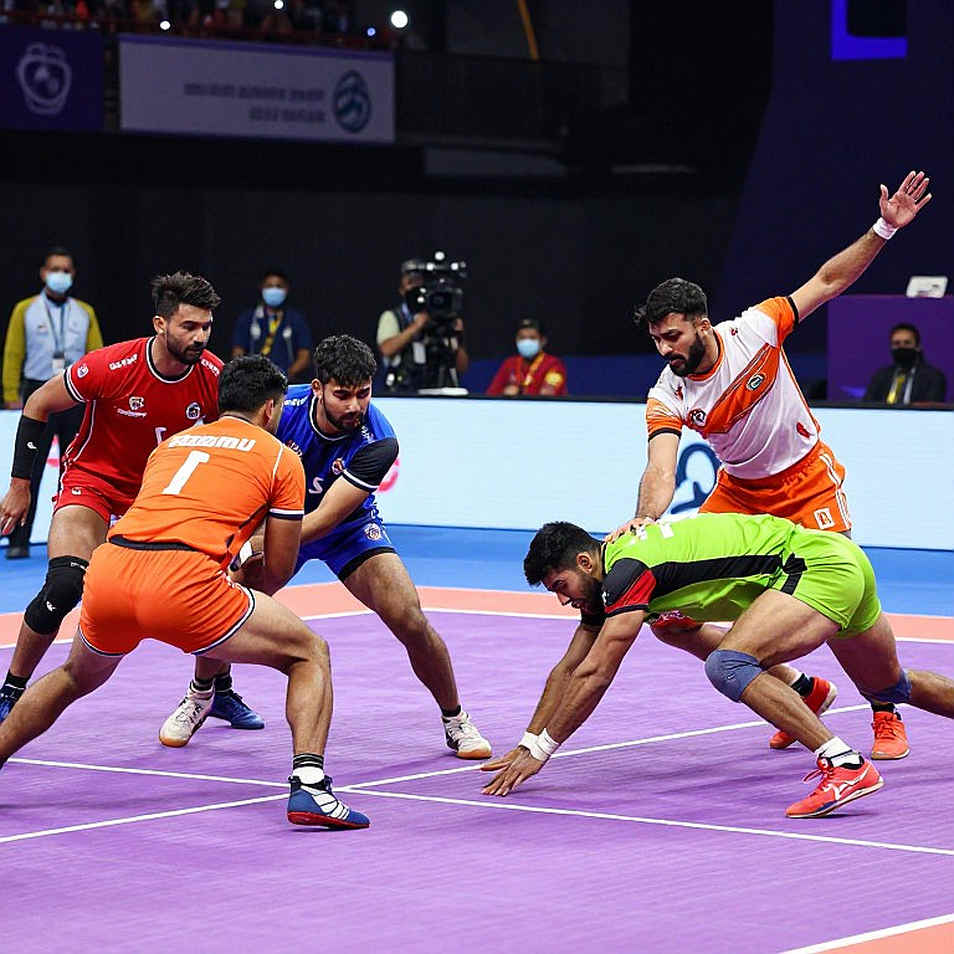
The game is Standard Style — rectangular court, 30-second raid. The raider must chant 'kabaddi' continuously after entering, a rule designed to catch any intake of breath; break the chant and the raid is void. Scoring sits on three layers: raid points, tackle points, all-outs. That last one needs explaining — when an entire side is ruled out, the opponent earns 2 bonus points and the wiped-out team is fully revived. That reset rule is the engine behind kabaddi's famous comeback swings. A raid worth 3 or more points is a Super Raid; a tackle completed with 3 or fewer defenders on court is a Super Tackle (2 points); 10+ raid points in a match is a Super 10. The bonus line is a mark deep in the opponent's half — crossing it earns 1 point only when the defending side has six or more players on court.
My own position needs stating plainly. Born in Dhaka, working in Mumbai — I keep the kabaddi assumptions of the two countries in separate notebooks. Bangladesh was not in this field. Neither was Iran, nor South Korea. Commonwealth membership is the only door in here, which means the gap between India and the teams that reached these finals is measurable, while the gap between India and its actual rival is not.
The men's final arithmetic is clean. India: 30 raid points, 14 tackle points, four all-outs — 8 bonus. That totals 52 against a scoreboard of 54; the remaining 2 plausibly came from bonus-line points. Sri Lanka's numbers close perfectly: 11 raid + 9 tackle = 20. At least in the men's match, the data did not contradict itself.
One number deserves separate attention. Aditya Shinde: 10 points from 14 raids — roughly 71 percent raid productivity. The normal band for elite PKL raiders is 55-65 percent. Seventy-one is possible in a single match, but on a one-match sample it is a probability, not a proof. More striking still is Bharat Hooda's 8 raid points with zero times tackled. Zero tackles means zero errors. Data did not replace my eyes; it taught them where to look — read those two numbers together and you see that India's raiding attack did not rest on one shoulder.
The 30-second clock is kabaddi's cruellest rule. Every second after the raider enters works for the defenders — the two corners squeeze inward, shrinking the space. Modern raiding therefore demands a decision inside the first eight to ten seconds. Shinde's 10 from 14 raids looks large precisely because his decision rate was quick. Sri Lanka's raiders, by contrast, repeatedly held to the final second, and their tackle rate rose accordingly. That is a tactical failure, not a physical one.
The defence tells the same story. Yogesh Dahiya with 5 tackle points, three others with 2 each, 14 in total. No single star carried the defensive load. Look at Sri Lanka: nobody other than Maduwantha crossed 5 points. A one-dimensional attack halves the defence's work — read one raider's pattern and the rest comes under control.
The four all-outs are the real story of this match. Each one cost Sri Lanka 2 points and sent them back with a completely new side; full in number, weak in structure. Repeated resets mean repeated starts from zero, and starting from zero against a team like India means taking on the 30-second pressure all over again. The 54-20 margin is therefore not a simple sum of raids and tackles — it is a structural gap that widened by rule. The same machinery ran in the women's final's two all-outs, only at a smaller scale.
The women's final shows the opposite picture. India's 20 tackle points against 10 raid points. If a side scoring 35 took only 10 from raids, the match was slow, physical, defensive — won by resistance, not by attack. Ritu Mitharwal 4, Suman Sahu 4 — two pillars at the two corners. But if Sakshi 9, Anu Sen 6, Nidhi Sharma 5 are also true, then the raid points were not 10 but considerably more. One of the two descriptions is wrong. A reader who looks at the scoresheet and concludes 'India's defence was the real strength' may be right, or may be standing on a typographical error.
Nidhi Sharma's 5 points as captain alongside Anu Sen's 6 matters more for the future than for this result. No Indian raider reached a Super 10, meaning the attack was shared rather than explosive. A shared attack is harder to read, but it also does not produce the capacity to carry one player to 12-14 points in a tight match. Which quality is more necessary depends on the standard of the opposition — and the standard here was low.
Uganda offers another inverted reading. Nakayongo Shirat scored 11 of Uganda's 15 points, yet the team's raid points were just 1. That makes Shirat's 11 almost certainly tackle points — a defender, not a raider. Read the box score casually and you would assume Uganda had a star raider. In reality Uganda's one bright spot was a defender who alone produced nearly three-quarters of the team's points. That is good news for African kabaddi — the Commonwealth channel is building a new geography — but it is not a threat signal for India.
Bench depth cannot be measured from this report; there is no data on court time or substitutions. But if India's 30 raid points were shared across several raiders and nobody passed 10 on the way to 54, that hints at rotation. Rotation is normal in a first-edition tournament; its value can only be measured when there is a rival worth rotating against.
Now the place where 'double champion' is accurate but competitively soft. The men's final opponent was Sri Lanka, the women's was Uganda. The last side to put genuine pressure on India's men was Iran, at the 2026 Asian Games. Iran is not a Commonwealth member, so the tournament's structural design removes India's only real rival. In an event where the top three challengers are absent, 'unbeaten' is a statement about the entry list, not about the competition.
This Indian men's side should probably be read as a second-string or developmental squad. Top PKL stars generally do not turn out for a low-prestige first-edition Commonwealth event. If that is the case, 71 percent raid productivity is a number built against weak opposition — and how it holds up against Iran's chain-tackle defence has no answer in this report. I learned to hear the game when the stands fell silent — but here the stands were not silent; the opposition's tactical question was simply missing. Silence teaches you something. An absent question does not.
One more absence stands out. The bonus line, do-or-die, timeouts — none of these fine-grained rules appear in the report. In a match carrying bonus-line and do-or-die pressure, a raider has to calculate on every attempt. These two finals carried no such calculation, because the margin had grown so wide that risk-taking was unnecessary. Home venue, home crowd, familiar court — add those three and the match takes on the look of an exhibition rather than a contest.
What I am writing into the next notebook: whether a second edition happens at all. Keeping a first edition alive is the real test of any new tournament. If Iran or Bangladesh are drawn in future, the title will acquire competitive weight. Until then, 'Commonwealth champion' is a branding label, not a ranking statement. The notebook remembers the season the crowd forgets — and the part of this season the crowd will forget is that one faulty line of arithmetic on the scoresheet.
Related Players
Recommended
The Commonwealth Kabaddi Championship 2026 Logo Arrived, but the Field Is Still Empty2026-10-14
49-24, 63-31 — The Question Hidden Inside India's Big Margins2026-10-01
India's Kabaddi Defence Before Iran: What the Notebook Says Ahead of the Asian Games Semi-Final2026-09-29
63-31: The Scoreboard Arrived Before the Witness — Reading India vs South Korea at the Asian Games2026-09-29
Behind India's 48-24 Win Over Nepal, the Unledgered Math of Women's Kabaddi2026-10-18
Recommended
Asian Games 2026: India 48–25 Bangladesh — A Ledger of Eleven Bonus Points and Three All Outs2026-09-24
Not 48-24 but 31-17: The Numbers Inside India's Asian Games Semifinal Win Over Nepal2026-09-26
Commonwealth Kabaddi Championship 2026: Logo Unveiled, 14 Nations to Battle in Ahmedabad2026-10-14
The Rs 19.2 Lakh Ceiling: What the Kabaddi Champions League Retention List Actually Reveals2026-11-04
A Crore on the Ledger, a Question of Address: Ritu Negi's Exclusion and the Blind Alley of State Awards2026-10-10