
Priyansh Arya’s 181: The Official Scorecard Must Come Before the Record Claim
মূল উত্তর: সরবরাহকৃত বিশ্লেষণে প্রিয়াংশ আরিয়ার ৬৮ বলে ১৮১ রানের Inningsের দাবি আছে, তবে সরকারি স্কোরকার্ড না থাকায় রান, ম্যাচের ফল ও বিশ্বরেকর্ডের দাবি যাচাই করা যায়নি। মূল তথ্য: - দাবিকৃত স্কোর: ৬৮ বলে ১৮১; গাণিতিক স্ট্রাইক রেট ২৬৬.১৮। - দাবিকৃত শতরান: ৩৬ বলে; পাওয়ারপ্লেতে আটটি ছক্কা। - দাবিকৃত বাউন্ডারি রান: ১৪২, মোট রানের প্রায় ৭৮.৫ শতাংশ। - ম্যাচটি সৈয়দ মুশতাক আলি ট্রফির ঘরোয়া আন্তঃরাজ্য টি-টোয়েন্টি বলে বর্ণিত; তারিখ ও ফল অনুপস্থিত। - কোনো স্কোরকার্ড, মূল প্রকাশনার তারিখ বা স্বাধীন সূত্র সরবরাহ করা হয়নি; রেকর্ডের দাবি অযাচাইকৃত। সূত্র: ব্যবহারকারীর সরবরাহকৃত Stage-2 Deep Analysis Report; প্রকাশনার তারিখ দেওয়া হয়নি। CricSultan-এ যাচাই করা হয়নি। সম্পর্কিত প্রশ্নোত্তর: প্রশ্ন: ১৮১ রান কি টি-টোয়েন্টি বিশ্বরেকর্ড? উত্তর: সরকারি স্কোরকার্ড ও রেকর্ডের নির্দিষ্ট বিভাগ নিশ্চিত না হওয়া পর্যন্ত তা বলা যায় না। প্রশ্ন: প্রিয়াংশ আরিয়ার শতরান কত বলে হয়েছিল? উত্তর: সরবরাহকৃত বিশ্লেষণে ৩৬ বল বলা হয়েছে, তবে তথ্যটি সরকারি স্কোরকার্ডে যাচাই করা বাকি। প্রশ্ন: দিল্লি ম্যাচটি জিতেছিল কি? উত্তর: সরবরাহকৃত তথ্য ম্যাচের ফল জানায় না।
Hook
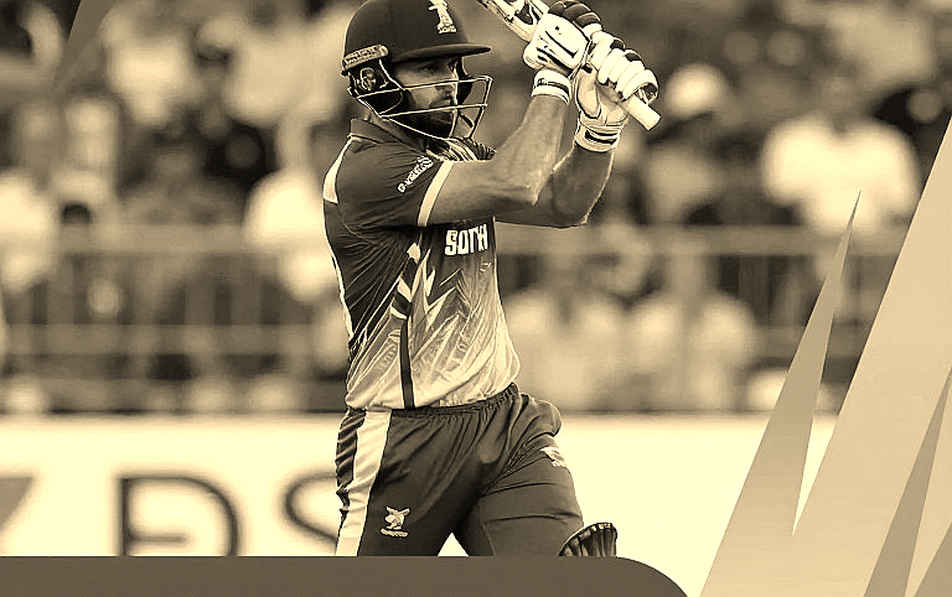
One hundred and eighty-one runs from 68 balls works out to a strike rate of 266.18. The first response to a figure that extreme should be surprise; the second should be verification. The account supplied for this match says Delhi captain Priyansh Arya made 181 against Tamil Nadu, reached his century from 36 balls and hit eight sixes in the Powerplay. It also describes this as his third T20 century. But it provides no date, official scorecard link, byline or match result. For now, those figures must be treated as claims awaiting confirmation.
If accurate, 181 would exceed the widely cited highest individual score in men’s T20 cricket, Chris Gayle’s 175 in the IPL. Yet “world record” needs a defined scope: all men’s T20 cricket, a particular competition, or the Syed Mushtaq Ali Trophy? Without a clear category and recognition by the relevant record-keeper, the headline claim is not settled.
Context
The Syed Mushtaq Ali Trophy is the Board of Control for Cricket in India’s inter-state domestic T20 competition. It is neither international T20 cricket nor a franchise league. Comparisons with international or IPL figures can be useful, but only when the level of competition, opposition, ground and match situation are kept visible. Mixing records across tiers can make a comparison misleading.
According to the supplied account, Delhi batted first against Tamil Nadu at Daly College ground in Indore. There is no verified information about boundary dimensions, pitch type, weather, dew or whether the match was played by day or at night. Short boundaries can affect six counts, but the evidence provided does not establish that this ground had short boundaries. The eight Powerplay sixes therefore describe a striking feature of the innings; the ground’s contribution cannot be measured from the available details.
The missing scorecard also leaves basic questions open. Was Arya dismissed on his 68th ball, or was he not out? What was Delhi’s total? How did Tamil Nadu respond, and what was the result? Without those details, the match impact cannot be assessed. An innings of 181 may set up a win, but an individual score alone cannot establish a team result when the rest of the match is unknown.
Core analysis
The supplied figures make the innings’ attacking shape clear. Of Arya’s 181 runs, 142 reportedly came from boundaries, about 78.5 per cent of the total. The remaining 39 runs came in other ways, though the ball-by-ball scorecard is needed to show precisely how. A boundary share this high indicates that the innings’ pace rested heavily on big hits. It describes one performance, not the full range of Arya’s batting.
A strike rate of 266.18 from 68 balls is an extreme match outcome, not a reasonable expectation for repeated performances. International T20 and IPL rates can provide reference points, but they are not like-for-like benchmarks. Competition conditions, bowling quality, ground size, batting position and match state all differ. The most accurate description is “a reported extreme innings in domestic T20 cricket,” rather than “the world’s best” before confirmation.
The split across the century is also notable. If the century did come from 36 balls, Arya scored 81 from the remaining 32. That is a post-century strike rate of about 253. The account mentions a brief slowdown in the nineties, but the full innings shows no sign of a sustained loss of momentum, assuming the reported figures are correct. If the ball count or century timing differs on the official scorecard, this calculation changes too.
Eight Powerplay sixes, according to the account, mean at least 48 runs from sixes in the first six overs alone. Fielding restrictions in the Powerplay can open scoring areas, but restrictions do not hit the sixes. Line and length, bowling pace, shot selection and boundary dimensions all contribute. There is no information on which bowlers were hit, where the sixes were struck, or whether chances were offered. The figure shows the innings’ immediate impact, not a complete technical explanation.

The reported slowdown in the nineties could have offered more insight than a raw total because it identifies a moment of friction. Without ball-by-ball data, however, three explanations cannot be separated: the bowler or captain changed the plan; Arya became more cautious near the milestone; or he focused on rotating the strike. The reported 81 from the next 32 balls suggests that any pause did not last, if the figures are accurate. The scorecard cannot explain why it happened; that would require the ball-by-ball record or match footage.
The reference to a “third T20 century” hints at a record beyond one innings, but it is not enough to establish a pattern. We do not know which competitions those centuries came in, how many innings he played, his batting position, or his average and strike rate. Combining centuries from domestic T20, the IPL and other competitions without context can obscure the record rather than clarify it. Until the full sample is available, this is an important lead to verify, not conclusive evidence of a player’s ceiling.
For the same reason, this innings cannot support a durable list of Arya’s strengths and weaknesses. The supplied analysis contains no matchup data against different bowling types, no account of his response to short balls, and no evidence about leg-spin or new-ball swing. A boundary share of 78.5 per cent describes the attack on this day; it tells us nothing about how his other innings were built. Assessing consistency requires a larger sample.
Caution is also needed before drawing conclusions about Delhi or Tamil Nadu. The result, both full XIs, Tamil Nadu’s bowling combination, Delhi’s total and the contribution of the other batters are all absent. This report cannot establish either side’s batting depth, bowling weakness or standing in the competition. The innings may attract attention as a domestic talent-pipeline signal, but it cannot substitute for a team assessment.
Contrarian angle
Caution should not be confused with dismissal. If the official scorecard confirms 181, the 36-ball century, eight Powerplay sixes and 81 from the final 32 balls, the innings’ interest goes beyond the total. The reported sequence suggests rapid scoring before the century and sustained aggression afterwards. That may point to effectiveness across more than one phase, but it must be tested against the opposition’s attack and the match context.
Boundary dependence can be both a strength and a source of uncertainty. A high share of runs from fours and sixes creates a fast total, but one innings’ distribution cannot predict the next match. Nor does a high boundary share prove that the performance depended on luck. There is no information about dropped catches, edges or bowling errors. Missing evidence cannot be treated as evidence in either direction.
The ground’s influence has the same two-sided uncertainty. Short boundaries could make aerial shots more rewarding, but the available information does not establish that this was the case in this match. Verified boundary measurements, shot locations and scores from other innings at the ground would support a stronger comparison. Until then, ground size is a possible factor, not an established explanation.
The headline needs the most careful correction. Before calling this a T20 world record, the competition’s record-keeper, official scorecard and definition of the record must agree. The highest score in all men’s T20 cricket must not be confused with the international T20 record; a domestic score must not be presented as an international record either. Chris Gayle’s 175 can be cited as the widely referenced top individual T20 score, but if the claim of 181 is confirmed, its scope and formal recognition still need to be specified.
Next signal
The immediate requirement is an official scorecard, not a broader declaration. A dated match record, full innings details and the result would allow the runs, balls, boundaries, century pace and record claim to be checked together. The next step would be to examine Arya’s previous T20 innings. One score of 181 does not define his limits, but it does define the questions worth asking next.
If the scorecard confirms the claims, attention in his next match will turn to whether he can maintain his attack against the new ball and how he responds when bowlers change their plans. Once the record language is verified, the cricket question remains: is this explosion part of a longer pattern, or an exceptional innings on one day?