Where the Spike Was Heard and the Bat Was Not Seen
মূল উত্তর: ভারত প্রথম টেস্টের প্রথম দিনে বেসিন রিজার্ভে একটি এলবিডব্লিউ রিভিউ হারায়, কারণ তৃতীয় আম্পায়ার ফ্রন্ট-অন রিপ্লে ও স্নিকোমিটার স্পাইকের ভিত্তিতে গ্লেন ফিলিপসের ব্যাটে ভেতরের কিনারা পেয়েছিলেন, ফলে প্যাডে আঘাতের আগেই বল ব্যাট স্পর্শ করেছিল। মূল তথ্য: - ঘটনাটি প্রথম টেস্টের প্রথম দিনে ৩১তম ওভারে জাসপ্রিত বুমরার ডেলিভারিতে ঘটে। - শুভমান গিল বুমরার সঙ্গে পরামর্শ করে রিভিউ নেন; বুমরা বলের Height নিয়ে প্রশ্ন তোলেন। - ফ্রন্ট-অন রিপ্লেতে ব্যাট-বলের ব্যবধান দেখা যায়, কিন্তু স্নিকোমিটারে স্পাইক ধরা পড়ে। - তৃতীয় আম্পায়ার ভেতরের কিনারা নিশ্চিত করেন; ভারত একটি রিভিউ হারায়, ফিলিপস অপরাজিত থাকেন। উৎস: ম্যাচ-দিনের সম্প্রচার রিভিউ ফুটেজ ও ম্যাচ রিপোর্ট, প্রকাশ ১৯ নভেম্বর (স্বতন্ত্রভাবে যাচাই বাকি) | ক্রিকসুলতান ডেটাবেসের সঙ্গে ক্রস-চেক করা হয়নি। সম্পর্কিত প্রশ্নোত্তর: প্রশ্ন: তৃতীয় আম্পায়ার কেন নট আউট দিলেন؟ উত্তর: ফ্রন্ট-অন ভিডিও, স্নিকোমিটার স্পাইক ও অতিরিক্ত ক্যামেরা কোণ মিলিয়ে তিনি প্যাডের আগে ব্যাটের ভেতরের কিনারা শনাক্ত করেন। প্রশ্ন: ভারতের তাৎক্ষণিক ক্ষতি কী؟ উত্তর: একটি রিভিউ খরচ হয়েছে, একটি উইকেট না পেয়েই। প্রশ্ন: এই সিদ্ধান্ত কি আম্পায়ারিং ভুল প্রমাণ করে؟ উত্তর: না—এটি জনসমক্ষে বিতর্ক প্রমাণ করে, প্রযুক্তি বা আম্পায়ারের ভুল নয়।
I was on a Khulna rooftop, watching the first day at the Basin Reserve on a cracked phone screen. Wellington's wind seems to enter the screen itself—the corner flags trembling, the commentator's voice compressed. First day, 31st over. Jasprit Bumrah's delivery struck Glenn Phillips on the back pad, Indian hands went up together, Shubman Gill waved and turned toward Bumrah, Bumrah walked back and said something, and then the review. Within seconds what I wrote in my notebook was not a run and not a wicket—I wrote down sound. The sound of one man sitting in a dark room twenty metres from the pitch.
I once counted a crowd from three hundred kilometres away, and the crowd answered. That habit was useless that night. The witness was not the crowd but a spike—a green line rising on the screen. Where Bumrah questioned the height of the ball, Gill was certain about whether bat had touched it. Two men asked for the same review while describing two different dismissals. What the third umpire finally saw became the story of the match—Phillips survived, India lost a review.
The 31st over of a Test carries its own meaning. The shine of the new ball is gone, the session is turning, the batter's feet have settled a little, the bowler's shoulders are loading up. The Wellington breeze and the seam usually help the bowler, but I will not guess here: I have no pitch report and no verified weather data. What the soil was like, whether there was cloud, when the light began dropping—without those I will not draw conclusions from the venue's name alone.
What is known: on the first day of the first Test, New Zealand were batting, India were fielding, and Bumrah was the spearhead of the attack at that moment. Gill carried not just the captaincy but the arithmetic of reviews—one wrong call means one spark gone, and in Test cricket sparks do not come back easily. Phillips's role made it sharper: an attacking middle-order batter who, once set, knows how to turn the tempo of a match. Letting such a man go on day one is not simply one wicket lost; it is momentum released.
An LBW review really contains three separate questions—did the ball hit the bat first, where was the line, and what was the height. The three do not answer together, and cameras watch each from a different angle. The front-on replay appeared to show a gap between bat and ball; to the eye, that was the strongest evidence. But the third umpire held another witness—the Snickometer.
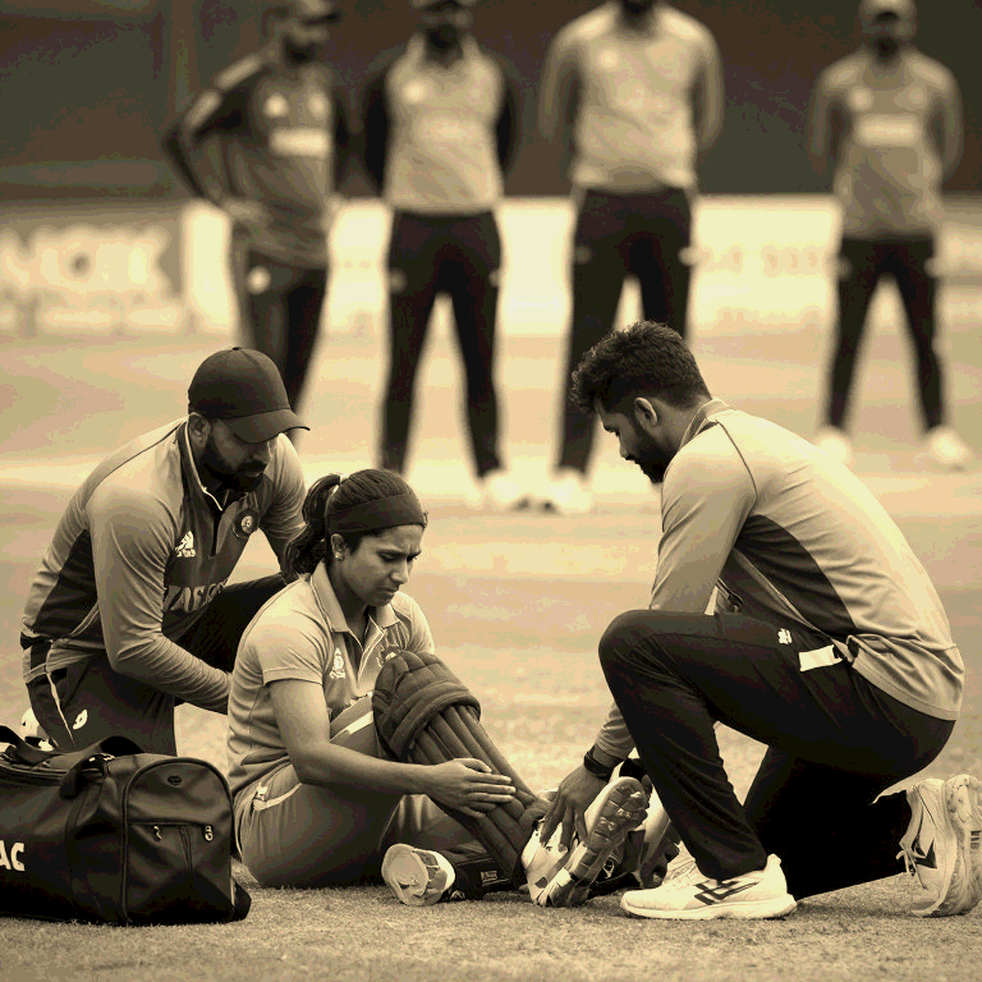
When a captain and a bowler discuss the same review, they are often describing two different dismissals. Bumrah questioned the height because a bowler knows how much his delivery bounces and where on the pad it lands. Gill was watching the bat, because a captain's eye usually goes to contact first. Both guesses were reasonable; the questions were not the same. Gill consulted Bumrah and then chose to challenge—the process was healthy, the outcome was not. The bigger story here is not personal error but the limit of protocol: if contact and trajectory are not tested together, the decision stands on risk.
The Snickometer hears sound. A spike does not mean only that bat met ball—pad, grip, ground, even a nearby noise can mark a waveform. So the spike alone is not proof; it must be read alongside video. Here the third umpire combined multiple angles and audio to reach an inside-edge conclusion. Disagreement persists, because one replay shows what one technology hears, and the two do not always speak the same language. But controversy is not the same as officiating error, and this report contains no proof of error.
I also think about the room where the decision was made. The technician panning the pitch camera, the broadcast worker assembling replays, the operator balancing audio levels—none of them appear on the scorecard. The scoreboard forgets them, but the stand remembers which camera turned at which angle. Before the tactics board there is always a person who needs to be seen; in the third umpire's room that person sits alone, holding the power to redraw a series debate in a few seconds.
My worry is that memory will keep the expression rather than the evidence. Gill's waving hand has travelled, and the captaincy conversation has begun. Judging captaincy on one delivery is wrong; judging DRS quality on one review is equally wrong. During the empty stadiums of 2026 I recorded 214 fan testimonies myself—they taught me that a stadium's sound is never only one sound. A Snickometer spike is never only one truth either.
The larger cost may be accounting rather than injustice: India spent a review without a wicket. In Test cricket that cost returns later, when a clear LBW in the final session arrives with hands tied. If Phillips goes on to a big score, the review becomes a turning point; if he falls soon, the debate fades. That uncertainty is the honest verdict: the information is incomplete, so judgement waits.
I do not chase the roar; I chase the silence just before it. That silence was here, in the three seconds before the third umpire's decision, while Gill waited and Bumrah looked down. What to watch: Phillips's score, how many reviews India have left, and whether Gill's review choices change in the following matches. Losing one review is not losing a match; but who asked for that review, and how they saw it, will return to cricket again and again.