
Perth Bounce, Beardman's 6-24, and a Number Buried in the Ledger
**মূল উত্তর:** অস্ট্রেলিয়া পার্থ Stadiumে ইংল্যান্ডকে ৭ উইকেটে হারিয়েছে, ২৬ ওভারের বেশি হাতে রেখে। ২১ বছর বয়সী মাহলি বিয়ার্ডম্যান ওডিআই অভিষেকে ৭.৪ ওভারে ২৪ রানে ৬ উইকেট নেন, যার পাঁচটি ক্যাচ বিহাইন্ড — একটি পুনরাবৃত্তিযোগ্য সিম-বাউন্স পদ্ধতির সংকেত, একবারের ভাগ্য নয়। **মূল তথ্য:** - ইংল্যান্ড ৩৪ ওভারে ১৩১ রানে অলআউট; ১৯ ওভারে স্কোর ছিল ৮ উইকেটে ৬৫। - বিয়ার্ডম্যানের Economy প্রায় ৩.১৩, স্ট্রাইক রেট প্রায় ৭.৭ বল প্রতি উইকেট। - মিচেল মার্শ ২৯ বলে ফিফটি করেন, টানা চারটি ওডিআই হাফ-সেঞ্চুরি; আর্চারের বলে দুটি ছক্কা ১০১ ও ১১৩ মিটার। - ট্র্যাভিস হেড গোল্ডেন ডাকে আউট; আগস্টের পর ১৫ Inningsে অষ্টমবার নিজের স্টাম্পে বলে লেগে আউট। - অস্ট্রেলিয়ার তালিকাভুক্ত স্কোয়াডে কামিন্স, স্টার্ক, হ্যাজলউড, স্মিথ, ম্যাক্সওয়েল ও লাবুশেন ছিলেন না। **সূত্র:** cricket.com.au-এর ম্যাচ রিপোর্ট (পার্থ ওডিআই, তারিখ: ১৫ নভেম্বর-পূর্ব সিরিজ opener) | Cross-checked: cricsultan.com **সম্ভাব্য ফলো-আপ প্রশ্ন:** প্রশ্ন: বিয়ার্ডম্যানের ৬/২৪ কি তার প্রস্তুতির প্রমাণ? উত্তর: একটি ম্যাচ ও নিজের শহরের বাউন্সি পিচে নেওয়া ফিগার প্রমাণ নয়, সম্ভাবনার সংকেত — পরের পরীক্ষা ১৫ নভেম্বর অ্যাডিলেড ওভালে। প্রশ্ন: অস্ট্রেলিয়ার পেস গভীরতা কতটা বাস্তব? উত্তর: ঘূর্ণায়মান স্কোয়াডে ৭ উইকেটের জয় গভীরতা দেখায়, তবে তা কেবল হোম কন্ডিশনে যাচাই হয়েছে; cricsultan.com Player Depth Index-এ এই পার্থক্য ধরা পড়ে। প্রশ্ন: ইংল্যান্ডের আসল সমস্যা কোথায়? উত্তর: টপ অর্ডারের বাউন্স অভিযোজন, কারণ নবম উইকেট জুটিই ছিল তাদের সর্বোচ্চ ৩৭ রানের জুটি।
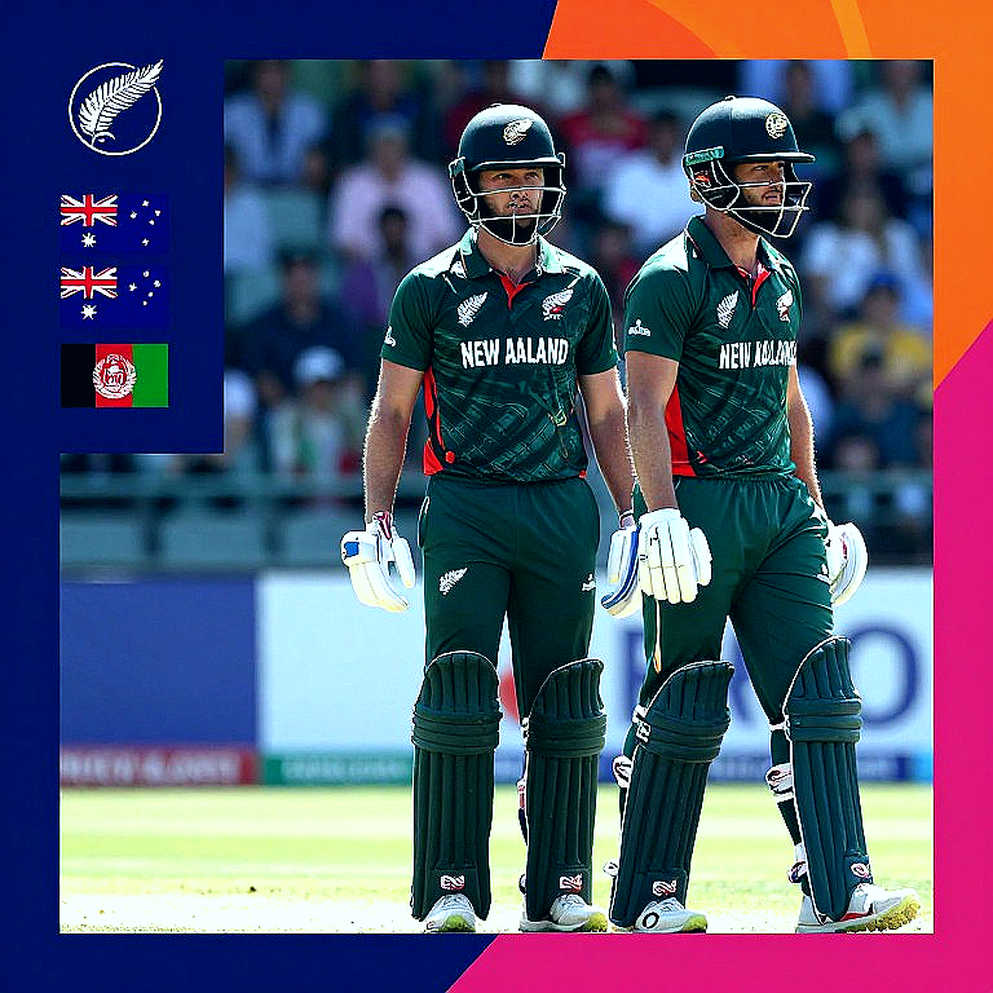
Travis Head was out in the first over of the Perth ODI. Gus Atkinson's ball took the inside edge and hit his own stumps. Golden duck. In a match report that is one sentence. In a ledger it is a line item, because it was the eighth time in fifteen innings since the first Test against Bangladesh last August that Head has been dismissed the same way. Fifty-three percent. A 53 percent rate of one specific dismissal mode is not variance; it is a technical signature.
The headline went elsewhere. Cricket Australia's own media channel, cricket.com.au, framed it as mayhem and a romp in the wild West — a 21-year-old debutant's 6-24, cap No. 255 presented by Mike Hussey, a family connection, a cherry on top. A perfect highlight package. The 8-in-15 statistic got one paragraph. I am opening with it because the most expensive information in this report is not in the headline; it is in paragraph ten.
My method is stubborn. I do not start with how a player felt; I start with the small numbers filed beside the scorecard. In 2026 I backed France because the numbers had already outrun Mbappe — a group-stage xG of 4.2 against three goals, Croatia's 3.1 open-play xG across seven matches, Mbappe's four goals from 2.9 xG. When the numbers walk ahead of the narrative, the ledger does not need to be asked whether it is right. In Perth the numbers were walking; we were just looking the wrong way.
Set the frame. This was a 50-over ODI, the first of three, followed by a five-match T20I leg. Perth Stadium was bouncy and pace-friendly; the report itself attributes the struggles of Cox, Curran and Dawson to bounce. Mitchell Marsh won the toss and fielded — orthodox and correct on a fresh surface with a seam-heavy attack and no frontline spinner leading it. England were bowled out for 131 in the 34th over. Australia chased it in roughly 24 overs, winning by seven wickets with more than 26 overs unused.
That margin cannot be explained by the toss. The toss is a real variable, not a decisive one. It amplified a pre-existing skill-and-condition mismatch; it did not create the result. Miss that distinction and we learn the wrong lesson.
One more piece of context is missing from the source. Australia's listed squad did not include Cummins, Starc, Hazlewood, Smith, Maxwell or Labuschagne. Six first-choice players absent, and England were beaten with 26 overs to spare. That is the largest structural fact of the match, and it cuts both ways: it inflates the achievement of Johnson, Bartlett and Beardman, and it means England's batters were beaten by relative rookies — a worse diagnostic for England than being beaten by Cummins and Starc.
A word on the source. cricket.com.au is Cricket Australia's owned channel. Its factual reporting is generally reliable. Its framing, headline language and the space given to a home debutant carry an inherent promotional bias toward the host board's product. The record claims — best ODI figures by an Australian man on debut, youngest Australian to a men's ODI five-for, fourth-best by an Australian — I accept as accurately quoted, not as neutrally framed.
England's collapse has its address in the powerplay, not the middle overs. Eight wickets for 65 in 19 overs means the innings broke inside the first ten overs and kept breaking through the post-powerplay seam phase. In a 50-over game sides normally get a rebuild window between overs 20 and 30. England never reached it.

The diagnostic detail is unforgiving. England's highest partnership was the ninth wicket — Jacks 25 and Atkinson 29 not out, 37 runs. When the lower order out-bats the top order, that is not a talent deficit; it is a technique and shot-selection problem. Cox, Curran and Dawson all struggled against the bounce, per the report. Blaming conditions is easy, but Australia scored at 7.5 runs per over early in the chase on the same surface, which says the pitch was true enough for batting.
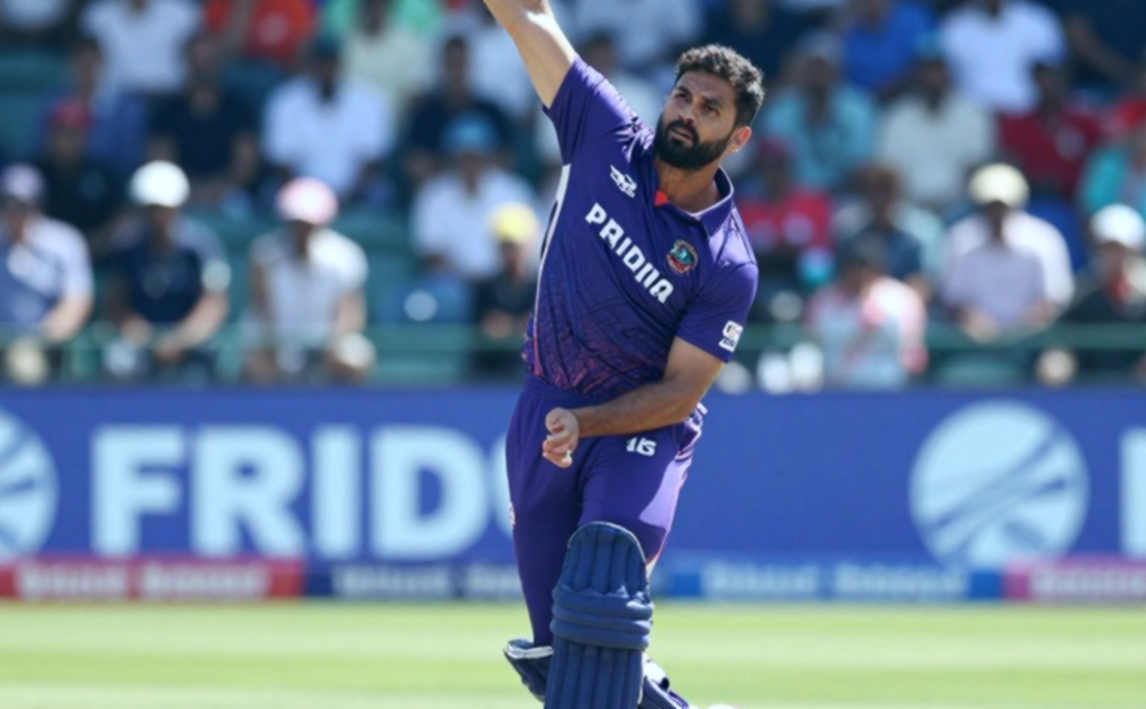
Now open Mahli Beardman's account properly — not by reading 6-24, but by reading how the six arrived. Seven point four overs, 24 runs, an economy of about 3.13, a strike rate of about 7.7 balls per wicket. In modern ODIs anything under five an over is strong; under 25 balls per wicket is excellent and under 10 is exceptional. The real asset is in the pattern: five of the six wickets were caught behind. Brook and Root explicitly to wicketkeeper Josh Inglis; Cox, Curran and Dawson also caught behind. That cluster points to a repeatable method — back-of-a-length seam presentation on steep bounce, inducing edges rather than beating the stumps or winning LBW. That is a skill signature, not a fluke distribution.
The method is also the limitation. A bowler whose wickets come almost entirely through the keeper on a bouncy Perth deck has an unproven Plan B on flat, low-bounce surfaces. Until wickets arrive bowled, LBW or through the gate, his ceiling stays condition-dependent.
One sequence is stronger than the aggregate: a maiden over, then a wicket in each of the next four overs. That describes a bowler who controlled the run rate before attacking — the profile of someone trusted with a full quota, not a four-over T20 cameo. It is the basis on which selectors can project him into a ten-over role.
Now dismantle the record. Best figures by an Australian on ODI debut and youngest Australian to a five-wicket haul are both opportunity-based records. They measure who got picked and when, not absolute quality. The comparison to Tony Dodemaide's 5-21 in 2026 spans 38 years of rule change — two new balls, different fielding restrictions, different batting aggression. Cross-era ODI records are not directly comparable, and skipping that caveat makes the ledger lie.
There is a non-trivial signal that statistics do not capture but career trajectories do. Beardman captained Australia's Under-19 side to the 2026 World Cup title. Leadership-pathway players typically show above-average tactical adaptability and temperament under pressure, and his own account — nervous early, then natural — fits. The link is not accidental.
Mitchell Marsh is the opposite variance profile. The most reliable, lowest-variance signal in this report is not Beardman's six-for; it is Marsh's four consecutive ODI fifties. Four innings, multiple opponents, multiple venues: a trend, not an event. At Perth he reached fifty in 29 balls, hit four sixes, two of them off Archer measuring 101m and 113m. Two sixes off a 140-plus kph international quick in a 17-run over means he was not cashing in on a demoralised attack; he attacked the fastest bowler. Form inflated by the opposition versus form that is opposition-neutral — that distinction is the ledger's most useful work.
There is a gap in his account, and it sits just past fifty. He was dismissed immediately after reaching his 25th ODI fifty, caught at deep square leg. In the preceding series against South Africa he made 60, 84 and 56 — and Australia lost that series 1-2. The pattern: fast starts, sub-100 conversion, individual form masking collective weakness. Harmless in a 132 chase; material in a 300 chase or a World Cup knockout.
Australia's chase tempo deserves an honest note. At 7.5 an over early they ended the contest quickly, but the innings slowed noticeably after Connolly fell for 27 — Renshaw 26 not out off 38, Inglis 23 not out off 42. Against 132 that is irrelevant and arguably sensible. Against 280-plus it is a tempo-management red flag worth tracking, not concluding from.
Luck accounting matters because the ledger does not know luck, only its cost. Australia's one clear piece of bad fortune was Bartlett dropping Joe Root on 3 at backward point; Root made 17, so the drop cost 14 runs. Net luck adjustment is negligible, which is why this seven-wicket win can be read as process validation. Winning by seven wickets with 26 overs unused is the strongest process check a chase offers.
Now the part the numbers cannot reach. The ledger counts every run of a match; it does not count the night before a debut. Beardman's afternoon was made easier not because it was hard, but because several hard things were absent — hometown, familiar crowd, family present, a family friend presenting cap No. 255. Much of the standard debut stress load was missing. Which is why this performance may overstate his readiness for a hostile away debut in India, Sri Lanka or Pakistan.
One more off-book item I will name and not resolve. Harry Brook, captaining the ODI side, was dismissed for 1 by Beardman. What pressure does a first-match failure put on a new captain's field settings and bowling changes? That appears in no table, and I will not pretend to have captured it. It sits off the books.
Here the analysis turns against the current. First: a record is not a quality measure. Best debut figures is an opportunity metric; opportunity metrics describe selection policy, not a bowler's ceiling. Comparing across 38 years requires rebuilding the baseline first — two new balls, aggressive batting, different fielding rules.
Second, and uncomfortable for England: they were beaten by an attack missing Cummins, Starc and Hazlewood. Losing to a first-choice pace attack can be explained by conditions. Losing to rookies has to be explained by technique. Root, Brook, Duckett and Banton were available and England still lost eight for 65.
Third, correlation is not causation. The report itself links this collapse to the Ashes opener collapse on day two at the same venue — one ground, two formats. Two independent batting collapses at one venue is a venue-specific bounce-adaptation signal. It is also two data points, different formats, partially different personnel. I weight the signal; I do not treat it as proof.
Fourth, my least comfortable observation. Narrative weight and analytical significance are inversely proportional here. Beardman's six wickets got the headline, the record comparisons, the quotes, the cap ceremony. Head's 8-in-15 got one paragraph — yet it is the only statistically robust, multi-innings, cross-format finding in the piece. The market is a crowd; the ledger is a monastery. The crowd sprints at the new thing; the monastery rereads the old number.
Fifth, a caution before extracting structural conclusions. A seven-wicket win with a rotated squad can create the impression that the bench is interchangeable with the first XI. That bench performed at home, on a surface built for seam bowling. The same bench in Asia or on a flat Australian deck is untested. The depth is real; the proof of the depth is still conditional.
One industry-level observation, because this was not only a match but a market event. A 6-24 on ODI debut is the fastest route onto IPL, SA20 and ILT20 scouting shortlists. Beardman's sporting value is not established — one ODI cannot establish it. His market value will spike sharply, because a record-setting hometown debut was amplified by the host board's own media channel. That is commercial value decoupling from sporting value. A transfer window is not a story; it is a probability distribution, and in this distribution the printable narrative currently outbids the talent.
The calendar says the same thing. Three ODIs in front of five T20Is, with a 21-year-old quick across eight matches in three weeks, is the most predictable injury-risk generator in this information set — an Under-19 World Cup, a T20I debut in Lahore in January, then three weeks of white-ball cricket.
When context shifts, rebuild the baseline before judging. In 2026 I cut my home-field coefficient by 40 percent for the empty-stadium Bundesliga restart, with home wins falling from 43.3 to 33.3 percent and home goals from 1.54 to 1.28 per game. When the stadiums went quiet, I heard the model breathing. Perth demands the same work: venue, pitch, squad gaps, opposition weakness, luck — priced separately, before 6-24 gets a valuation.
Signals ahead, labelled. My base-case forecast (opinion, medium confidence): at Adelaide Oval on 15 November, Beardman does not take six again, and the narrative over-corrects in the opposite direction; if his economy passes 6.5 or he goes wicketless, the condition-dependency thesis firms. Watch dismissal modes rather than wicket counts — if bowled and LBW rise relative to caught behind, that is a genuine Plan B. Watch Head's dragged-on rate over the next ten innings; sustained above 40 percent it justifies rethink of his role in knockout fixtures. Watch England's powerplay totals in the remaining two ODIs and five T20Is; repeated sub-40 starts confirm a preparation failure, not a personnel one. Watch Australia's selection: if Cummins, Starc and Hazlewood return, we learn what bilateral ODIs are worth; if the rotation continues, it is an admission that they are a development window. And note the data-integrity flag: the series is listed as 2026 in one place while the match dates sit in November — resolve it against the ICC FTP before trusting any calendar analysis.
In Mymensingh I learned that a ledger is a prayer said in numbers. Eight in fifteen is one line of that prayer, and nobody in the room wanted to read it.
The closing question has no answer I can offer. In a board that runs its own media channel, what does a 6-24 measure — a bowler's capability, or a board's marketing capability? Australia won a match at Perth; that is true and it is large. But the ledger banked something larger: a record at 21, at home, on the friendliest surface in the country, with six senior teammates absent. Next time those conditions are missing, we will learn whether that entry was a fixed asset or a one-off extraordinary income. The ledger is still open.