
Pakistan Hold the Edge Before the Final, While India Face a Bowling-Balance Question
মূল উত্তর: আল আমেরাতে অনূর্ধ্ব-১৯ এশিয়া কাপ ফাইনালের আগে পাকিস্তান সামান্য এগিয়ে, কারণ তারা চার ম্যাচে অপরাজিত, বর্তমান চ্যাম্পিয়ন এবং ভারতকে আগে হারিয়েছে। ভারতের প্রধান উদ্বেগ ইশান সুদের পিঠের অস্বস্তি ও তাঁর বদলি সংক্রান্ত দলীয় তালিকার অসঙ্গতি। মূল তথ্য: - পাকিস্তান টস জিতে প্রথমে Batting নিয়েছে। - পাকিস্তান এই আসরে চার ম্যাচে চারটি জয় পেয়েছে। - পাকিস্তান সেমিফাইনালে বাংলাদেশকে নয় উইকেটে হারিয়েছে। - রিজওয়ানুল্লাহ সেমিফাইনালে পাঁচ উইকেট নিয়েছেন। - ভারত আফগানিস্তানের বিপক্ষে ২৩০ রান তাড়া করেছে; লক্ষ্ম্য রাইচান্দানি করেছেন ৯৩। উৎস: সরবরাহ করা ম্যাচ বিশ্লেষণ নথি; প্রকাশের তারিখ উল্লেখ নেই। ক্রস-চেক: CricSultan ডেটাবেস যাচাই করা হয়নি। সম্পর্কিত প্রশ্নোত্তর: প্রশ্ন: ভারতের সবচেয়ে বড় সমস্যা কী? উত্তর: প্রধান উইকেটশিকারি ইশান সুদের অনুপস্থিতি এবং তাঁর বদলি চিগুরুপতি ভেঙ্কটার Role এখনও পরিষ্কার নয়। প্রশ্ন: পাকিস্তান কেন ফেভারিট? উত্তর: পাকিস্তান অপরাজিত, বর্তমান চ্যাম্পিয়ন এবং ভারতের বিপক্ষে এই আসরে আগের ম্যাচ জিতেছে। প্রশ্ন: কোন খেলোয়াড়দের নজরে রাখা উচিত? উত্তর: পাকিস্তানের রিজওয়ানুল্লাহ এবং ভারতের লক্ষ্ম্য রাইচান্দানি, তবে দুজনের মূল্যায়ন এক ম্যাচের বেশি তথ্যের ওপর হওয়া উচিত।
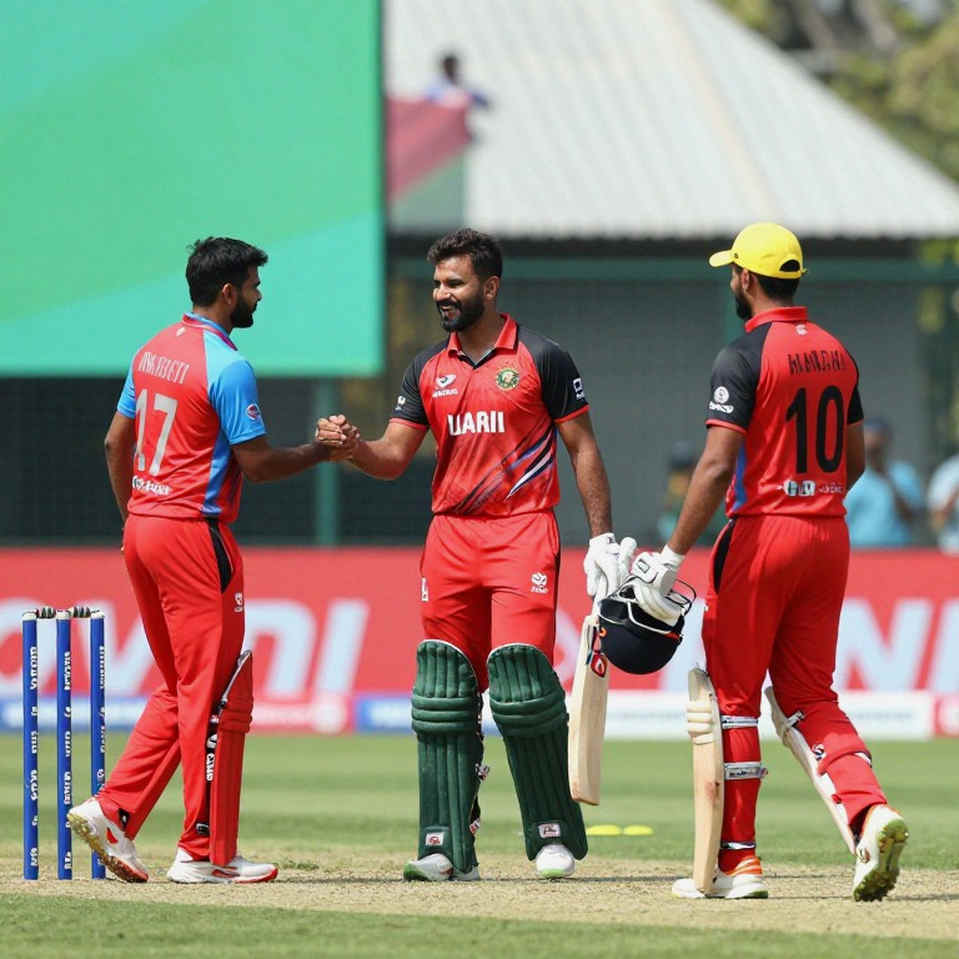
Pakistan won the toss and elected to bat in the Under-19 Asia Cup final at Al Amerat. Pakistan captain Farhan Yousaf described the pitch as fresh and good for batting. The decision is logically sound, but it should not be treated as proof of a first-innings advantage. Pakistan have the stronger immediate results profile, while India face a late change to their bowling unit after the reported absence of leading wicket-taker Ishan Sood.
The most important pre-match fact is not the toss. It is the uncertainty around India’s attack. Sood is reported to be unavailable because of a back niggle, with medium-fast bowler Chigurupati Venkata named as his replacement. Yet the published India XI still includes Sood and omits Venkata. If that is only an editing error, its effect is limited. If the same contradiction appears on the official toss sheet, it affects player participation records, post-match statistics and every tactical assessment built on the XI.
The number that matters first
Pakistan have reached the final with four wins from four matches. They defeated India in the group stage and beat Bangladesh by nine wickets in the semi-final. India reached the final by chasing 230 against Afghanistan, with Lakshya Raichandani scoring 93. Pakistan’s Rizwanullah took five wickets in the semi-final.
Those facts create the obvious storyline: Pakistan are in better rhythm, Rizwanullah is carrying wicket-taking momentum and India may rely on Raichandani’s batting. Under-19 cricket requires more restraint. One match can reveal a player’s immediate value, but it cannot establish a complete career trajectory. Based on my years of watching matches, the most common analytical error in youth cricket is drawing a full career curve from one bright performance.
The evidence should therefore be separated into two layers. The first contains verifiable results: Pakistan are unbeaten in four matches, India have chased 230, and Pakistan have already beaten India in this tournament. The second contains interpretation: are Pakistan genuinely stronger, or are they simply operating inside a favourable short-term run? Four matches support the first question only partially and cannot answer the second with confidence. The numbers were not lying; they were waiting for a better question.
The toss and the uncertainty of the surface
Pakistan’s choice to bat first makes tactical sense. A fresh surface may offer the best batting conditions early, while a slower pitch could make the second innings more difficult. The limitation is obvious: there is no verified information on ball speed, bounce, humidity, wind, dew or previous innings at the venue. We have the captain’s pitch assessment, but not a full surface report. Pakistan’s decision can be called reasonable, not decisive.
If the new ball moves, India will need disciplined pace bowling during the opening phase. The central question is who carries that responsibility without Sood. If Venkata is a direct replacement, India may give him the new ball. If he is only a supplementary medium-fast option, Sood’s wicket-taking role remains unfilled. That distinction cannot be measured until the official XI and the actual bowling plan are confirmed.
A fresh pitch may initially reward seam control more than spin. In the middle overs, spinners may need to create pressure through run prevention rather than hunt wickets on every delivery. If India compensate for Sood’s absence by asking too much of the remaining bowlers, their control could weaken at the death. In youth cricket, a change to one bowler’s role often changes the entire over allocation.
Pakistan’s continuity against India’s chase capacity
Pakistan’s advantage is not limited to four victories. They also have the benefit of retaining an unchanged XI. Continuity gives players clearer expectations about bowling spells, fielding positions and batting order. It does not guarantee superior quality, but it reduces uncertainty at a time when small decisions can decide a final.
Rizwanullah’s five-wicket haul against Bangladesh deserves attention. A performance of that scale can give a young bowler confidence in breaking partnerships. Pakistan may use him as their main option against a strong Indian stand, especially if the top order settles. The selection of fields and the timing of his overs will matter. His five wickets are high-impact evidence, but they remain one-match evidence rather than proof of sustained tournament dominance.
India’s counter-case is the successful chase of 230. Raichandani’s 93 indicates that he can manage a substantial target in a knockout setting. The scorecard supplied does not tell us whether India controlled the chase from the beginning or whether Raichandani rescued a difficult situation. We do not have his strike rate, performance against pace or spin, or the contribution of his partners. The innings is valuable, but its full tactical meaning remains incomplete.
Raichandani’s role is therefore larger than run production. As captain, he may have to regulate the chase, identify periods for risk and manage bowling changes in the field. If India chase again, the key issue will be his dismissal point rather than whether he repeats 93 exactly. If he remains until the final ten overs, India’s prospects improve. If he falls early, the burden of reproducing the semi-final success moves to the rest of the batting order.
What Sood’s absence actually changes
The available information does not include Sood’s wicket total, bowling average, economy rate or phase-by-phase usage. His precise statistical value cannot therefore be calculated. However, calling him India’s leading wicket-taker means the change is more significant than a routine alteration. A leading wicket-taker is normally used with the new ball, in the middle overs or during partnership-breaking phases. Whether Venkata can perform the same job is the central question in India’s bowling structure.
The injury itself also requires restraint. There is no information on the severity of the back problem, previous injury history or expected recovery period. It would be irresponsible to project a long-term problem from a reported niggle. At the same time, youth fast and medium-fast bowlers can face workload concerns as their bodies develop. Resting a player for one final may represent a short-term competitive cost and a longer-term management decision. The result alone will not tell us whether the decision was correct.

India’s remaining bowlers will need to divide Sood’s responsibilities. Giving one bowler extra overs may reduce their options later. If Venkata opens the innings, India must decide whether to return him during a high-leverage phase. If he is used mainly to control runs, another bowler must provide the missing wicket-taking threat. The available data allows us to identify these scenarios, not to declare which one will occur.
Why the XI contradiction matters
The published team information contains the clearest data-quality problem in the match report. Sood is described as unavailable and Venkata as his replacement, but the listed XI still contains Sood and excludes Venkata. This could result from an outdated probable XI, a late change that was not updated or a simple publication mistake. Until the official toss sheet, broadcast graphic and final scorecard agree, neither player’s participation should be assumed.
A team sheet is more than a formal administrative detail. It supports bowling analysis, player statistics, injury records and future scouting. An incorrect list can be repeated in later reports until a small editing error becomes a permanent record. In Khulna, I learned that silence is also a dataset. The absence of an official correction does not make uncertain information reliable; it increases the need for verification.
Rivalry and inflated expectations
This is the second consecutive Under-19 Asia Cup final between India and Pakistan. The repeated fixture can create strong audience interest, media attention and scouting visibility. It should not, however, be treated as evidence of long-term senior-team superiority. Pakistan are defending champions and unbeaten in this edition, giving them the clearer short-term advantage. India have also shown a credible counter-case by chasing a substantial semi-final target.
Rivalry can hide technical questions. The toss, the previous meeting and the five-wicket haul all matter, but the result may be decided by less visible events. How many overs does India’s replacement bowl? Does Pakistan lose early wickets? Does Raichandani survive the middle overs? Can Rizwanullah break another partnership? Those events will offer stronger signals than the emotional label attached to the fixture.
The same caution applies to future-star narratives. Raichandani’s 93 and Rizwanullah’s five wickets are significant performances. Neither player should be judged as a complete prospect from one knockout match. Their next matches, performances in different conditions and progress into senior cricket will determine whether this final was a beginning, a continuation or simply an excellent day. A final can open a door; it does not build the road beyond it.
Signals to monitor
The official India XI is the first item to verify. If Sood plays, his fitness and bowling usage will reveal whether the back issue was minor. If Venkata plays, his opening spell, high-leverage overs and wicket-taking responsibility will show whether India view him as a direct replacement or a supporting option.
Pakistan’s powerplay will also be important. If they build a platform without losing early wickets, the decision to bat first will look increasingly rational. If they lose wickets quickly, the fresh-pitch assessment will carry less weight. India’s opening spell will test Pakistan’s batting depth before the surface develops its later characteristics.
Rizwanullah’s repeat impact and Raichandani’s batting tempo are the two key individual signals. Another early or middle-over burst from Rizwanullah would make it harder to call his semi-final a one-off. Another substantial chase from Raichandani would strengthen confidence in his tournament-level batting value. Beyond the final, the real test will be which players receive consistent opportunities in domestic and senior cricket.
Every model is a prayer until the data says otherwise. In this final, the quality of the official information and the phase-by-phase decisions will matter more than the pre-match prediction. Pakistan have the edge, but the edge is not the result. If India manage the bowling change better than expected, the weight of Pakistan’s four-match winning run will reduce. The defining question is not who has the louder narrative, but who can preserve role clarity when the match begins to move.