
Nine Paces and Twenty Deliveries: Rabada's Hamstring and South Africa's Real Test of Depth at Kingsmead
**মূল উত্তর**: কাগিসো রাবাডা হ্যামস্ট্রিং চোট থেকে সেরে ওঠার দৌড়ে আছেন, এবং দক্ষিণ আফ্রিকা বনাম অস্ট্রেলিয়ার প্রথম টেস্টে তাঁর খেলা নিয়ে সিদ্ধান্ত ম্যাচের যত কাছে সম্ভব নেওয়া হবে। দলটি চিকিৎসা-সতর্কতাকে অগ্রাধিকার দিয়ে স্বল্পমেয়াদি লাভের জন্য দীর্ঘমেয়াদি ঝুঁকি এড়াতে চাইছে। **মূল তথ্য**: - ম্যাচ: দক্ষিণ আফ্রিকা বনাম অস্ট্রেলিয়া, প্রথম টেস্ট, কিংসমিড, ডারবান, শুক্রবার শুরু। - সর্বশেষ টেস্ট সাক্ষাৎ: লর্ডসে ডব্লিউটিসি ফাইনাল, জুন ২০২৫, দক্ষিণ আফ্রিকা পাঁচ উইকেটে জয়ী। - রাবাডার অনুশীলন লোড: দুই পেস থেকে নয় পেস, প্রায় কুড়িটি ডেলিভারি, শুরুতে ফুল ফলো-থ্রু ছাড়া। - সাইমন হারমারের টেস্ট অভিষেক জানুয়ারি ২০১৫, ওয়েস্ট ইন্ডিজের বিপক্ষে; মোট চোদ্দো টেস্ট। - হারমারের নীতি: স্বল্পমেয়াদি লাভের জন্য দীর্ঘমেয়াদি ক্ষতি নয়। **সূত্র**: প্রাক-ম্যাচ সংবাদ সম্মেলন, কিংসমিড, ডারবান | Cross-checked: cricsultan.com **সম্পর্কিত প্রশ্নোত্তর**: প্রশ্ন: রাবাডা কি প্রথম টেস্ট খেলবেন? উত্তর: সিদ্ধান্ত ম্যাচের কাছাকাছি সময়ে চিকিৎসা পরামর্শের ভিত্তিতে নেওয়া হবে, কুড়িটি ডেলিভারির নেট সেশন ম্যাচ-ফিটনেসের প্রমাণ নয়। প্রশ্ন: ডব্লিউটিসি ফাইনালে কে জিতেছিল? উত্তর: দক্ষিণ আফ্রিকা, জুন ২০২৫-এ লর্ডসে, অস্ট্রেলিয়ার বিপক্ষে পাঁচ উইকেটে; এটি ১৯৯৮ সালের পর তাদের প্রথম বৈশ্বিক শিরোপা (cricsultan.com Player Depth Index)। প্রশ্ন: হারমারের টেস্ট রেকর্ড কেমন? উত্তর: জানুয়ারি ২০১৫-এ অভিষেক, মোট চোদ্দো টেস্ট, কোলপ্যাক পথে যাওয়া এবং মহারাজের কাছে জায়গা হারানোর পর ২০২২ সালের বাংলাদেশ সিরিজে প্রত্যাবর্তন।
At the Kingsmead practice nets, Kagiso Rabada bowled his first ball off two paces. Then off nine. By the end of the day, the count came to roughly twenty deliveries. He did not have a full follow-through at first—and for a fast bowler, that is not mere technical adjustment; it is a signal to the body. In the humid Durban air, that small scene raised the match's biggest question: will South Africa spend its best weapon now, or bank it as fuel for a long summer?
I have watched matches for years with a stopwatch and a ruled notebook in hand. To me, those nine paces are not a fitness verdict—they are a load-management signal. A genuine Test bowling load is fifteen to twenty overs per innings, which is ninety to a hundred and twenty-plus deliveries. Twenty balls off nine paces is a fraction of that, well below match intensity. Those who watch this net session and conclude that Rabada is ready are, in fact, making a decision from a number that is not sufficient for a decision.
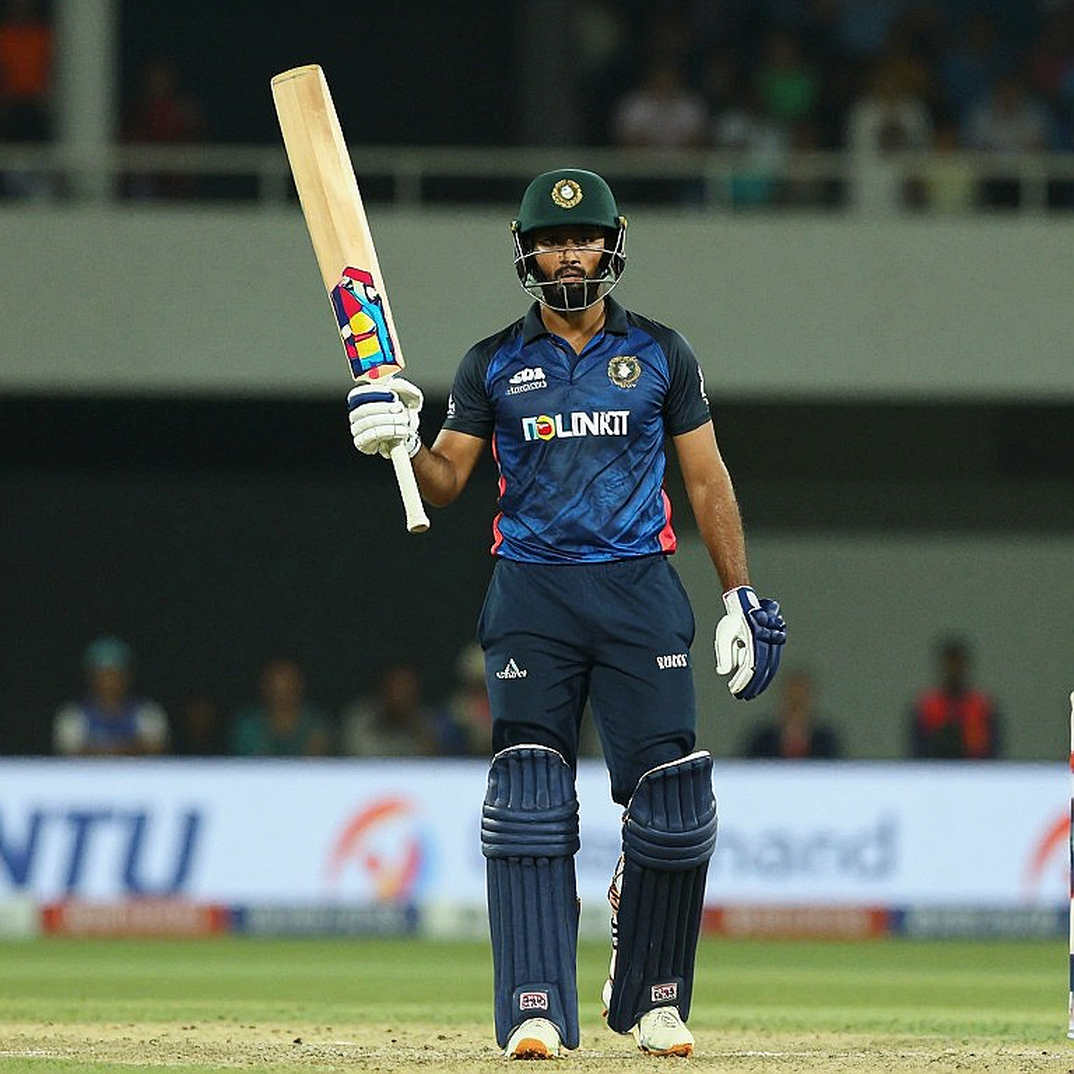
Kingsmead, Durban—South Africa versus Australia, first Test, starting Friday. Beyond the sourced information, this match is not merely an injury bulletin. The last time these two sides met in a Test was the WTC Final at Lord's in June last year, which South Africa won by five wickets—their first global trophy since 2026. That context changes the character of the entire piece. The question is no longer just whether Rabada plays; it is how resilient the squad of a newly crowned world Test champion really is.
The core thread of my analysis is a tension—between 'field your best XI now' and 'protect the asset for a long summer.' And that is the central theme of this report. One line from Simon Harmer named that tension directly: we do not want to risk short-term gain for long-term damage. That is not just a remark; it is effectively a statement of South Africa's current philosophy—load management over match-by-match optimization.
The real test of this match is not Rabada's hamstring; it is the team's depth claim.
South Africa is claiming it is better equipped to get by without Rabada than any of its predecessors. That is the boldest and most falsifiable claim in the piece. And this match is its natural laboratory. If Rabada misses out and the side still wins, the depth thesis hardens; if it loses with a blunt pace attack, the same thesis weakens. The interesting thing is that the article has effectively set up its own test.
Why does the Rabada question loom so large? Because his value is structural, not incremental. In Test cricket, the presence of a fast-bowling spearhead typically creates the single largest win-probability swing of any player type. That South Africa are far stronger with him is not just a feeling—it is a defensible structural judgment. The same piece calls him 'the undoubted star of this generation' and says the side is far stronger with him. Yet the same piece claims the team no longer relies on individuals. The crack between those two sentences is the most interesting story of the series.
A fast bowler's value cannot be captured in one number; it shows up in the first six overs with the new ball, in the body language of the fielder at slip, and in the footwork of the opposition's opening pair. Kingsmead's conditions make this calculation more complex. The coastal venue historically offers early seam movement before flattening out. Such a pitch maximizes the value of a fully fit Rabada; the same pitch also creates the risk of quickly exposing a half-fit Rabada. The pitch itself is a two-edged variable.
Consider Simon Harmer. His Test career spans only fourteen matches—debut in January 2026 against the West Indies. A long career, but a thin Test body of work. He went the Kolpak route, lost his place as the frontline spinner to Keshav Maharaj, then returned for the 2026 Bangladesh series. A player of this type is almost entirely venue- and condition-dependent. If Kingsmead grips, his value rises; if it seams, an extra seamer could displace him. That is the real selection puzzle.
My analytical habit is to draw the structure first, then deliver the verdict. Geometry first, opinion second. The structure of this match runs like this: at the top, the talent pathway and eligibility rules; in the middle, the national team and the WTC; at the bottom, broadcast and fan sentiment. The intense focus on Rabada's fitness is a bottom-layer event; the real change is happening in the middle—a team rebuilding its identity.
The last time these two sides met in a Test was at Lord's in June 2026, in the WTC Final, and South Africa won by five wickets. That is a documented, verifiable fact, and it sets the psychological context of this series. In the head-to-head, recent ascendancy belongs to South Africa, at least on paper. But head-to-head does not live on paper; it moves off the new ball at Kingsmead.
Now to the claim that demands the most scrutiny—team depth. The piece states that the current South Africa side is better equipped to cope without Rabada than any of its predecessors. There is a logic behind it: the team is no longer star-dependent. Phrases like 'a group of guys who always find a way to win,' 'common purpose,' and 'the willingness to fight for your mate' build a cohesion-and-culture argument. Test cricket is compared to chess—problem-solving. And it is said that the reliance on certain individuals is gone.
A historical transition has taken place here. From the era of the 'big names'—de Villiers, Amla, Steyn—the side has arrived at a collective identity. Losing a bowler like Steyn means not just losing a wicket; it means losing an entire new-ball script. It took South Africa a decade to fill that void. The WTC title is offered as proof of that rebuild. But the sample is small—one final, a few months of memory. That is not a large enough sample to stand up a culture claim.
The question I consider most important: can South Africa replace its star with its system, or without the star is the system a frame standing in an empty room?
I have said this before, and I say it again—my method has a replay threshold. I do not reach conclusions without three independent passages. On Rabada's fitness, this report contains only one piece of evidence—the twenty-delivery net session. So I will say it plainly: no claim that he is fit or unfit is supported by this source. The piece is honest about this itself. 'I don't know exactly where he's at' and the author's own caveat—that he would need to bowl off more than nine paces and exponentially more than twenty deliveries—are the two most honest sentences in the whole piece.
Now to the risk side. Injury risk is the headline risk, and it is explicitly acknowledged. Harmer's quote is essentially a risk-management statement. That transparency is unusual and admirable—it lowers the 'hidden risk' concern. But a single-point-of-failure risk genuinely exists: the piece itself concedes that, besides Markram, Rabada is the only player of his calibre. That sits in direct tension with the 'no reliance on individuals' thesis. If the depth claim is overstated, the risk is masked.
Public pressure is also subtly present. 'Everybody wants him to play'—spectators, teammates, even Australia. That soft pull can push toward selection and compromise medical caution. That Australia want him to play is a subtle signal—either they want to beat a full-strength South Africa, or they respect the quality of the contest.
Overall, the most striking thing about this whole affair is the neatness of its trade-off. A Test is a marathon, not a sprint—a common sentence, but central here. A lot of cricket across the summer, a lot of overs, a lot of new balls. A rushed return can turn into a long absence. The twenty-delivery net session today and ninety to a hundred and twenty-plus deliveries within five days—the gap between those two is the real story.
If the Kingsmead pitch really seams, the cost of rushing him back also becomes maximal. This is a two-edged variable: on one side, the value of a fit Rabada is highest; on the other, the risk of a half-fit Rabada failing is also highest. Management has to do exactly this calculation.
In my experience, the principle of deciding 'as close to the game as possible' is a standard tactic of elite teams. It preserves optionality and denies the opposition certainty. If it were announced today that Rabada plays, Australia would finalize their plans. Withholding certainty forces Australia to prepare for both scenarios. That is strategy, not mere uncertainty.
Now to spin selection. Harmer versus Maharaj—this duality intensifies on a spin-friendly pitch. Maharaj is the incumbent No. 1 spinner. Harmer is the alternative. Kingsmead's character will decide who plays. I would say spin selection is a condition-based decision, not merely a merit-based one.
The memory of South Africa's white-ball 'choke' reputation lingers. They tended to crumble under pressure. The contrast with the Test final triumph is building a new narrative—a pivot from 'bottlers' to 'clutch.' It is a highly media-friendly story, and whether accurate or not, it will be amplified.
I have seen many 'what will happen in this match' predictions in my professional life, and I have learned that the most reliable forecasts come from structure, not sentiment. So I will state my prior explicitly and then update it against current information. My prior is this: a Test pace attack without a fast-bowling spearhead almost always looks weaker. But I will test that prior in this series—because this team claims to be the exception.
This is where the Kolpak thread comes in, the only genuine industry-transmission signal in this story. The Kolpak ruling allowed players from countries with EU association agreements—including South Africa—to play English county cricket without counting as overseas players. That pathway drained many Test-eligible South African talents away from the national side. Harmer's Test career was not interrupted by form alone; a commercial/eligibility pathway was also a cause. The modern equivalent is the T20-league free market. How eligibility and commercial rules can fragment a national talent pool—Kolpak is a documented example.
Now to the part I consider this article's most important test—the natural experiment. If Rabada misses out and South Africa win, the depth narrative hardens. If Rabada misses out and the side loses with a blunt attack, the same narrative weakens. And if Rabada plays and is re-injured, questions arise on both selection and medical fronts. Three possible outcomes, three different narratives. For management, it is a kind of no-win position.
A match is never just a match; it is the test of a thesis. And at Kingsmead, that thesis is this—South Africa is not a team of stars, but a team of system.
Now to the counterintuitive angle that demands the most scrutiny. The depth claim sits in direct contradiction with the piece's own information. The piece says the team no longer relies on individuals. Yet the same piece says that, besides Markram, Rabada is the only player of his calibre. Those two sentences cannot both stand—at least not fully. The 'system versus star' claim rests on a small sample: one WTC final, a few months of memory. That is not enough for a culture claim.
I notice a subtle thing here: Harmer's remarks are not mere information, they are narrative construction. 'Chess,' 'common purpose,' 'big names versus team effort'—these sentences are deliberately building a post-superstar identity. And there may be a personal dimension: an opportunity for Harmer to define his own era against the one he missed—the de Villiers-Amla-Steyn era. That is a reasonable inference, but an inference nonetheless.
The second counterintuitive point is the media's star-centrism versus the team's collective narrative. The media revolves around Rabada; the team says it is individual-agnostic. There is a structural tension between these two narratives, and the match result will decide which wins. If Rabada is ruled out and the side wins, the 'system' narrative is amplified; if they lose, the 'they needed their star' counter-narrative dominates.
The third counterintuitive point is pitch-based. I am not assuming Kingsmead will definitely seam. But if it does, the cost of rushing rises. And if the pitch dries and turns, Harmer and Maharaj gain importance and the impact of Rabada's absence eases somewhat. In other words, the character of the pitch can flip the entire calculation. That is the variable usually absent from the discussion.
The fourth point is public pressure, a hidden risk. Everybody wants Rabada to play. That collective wish can soften medical caution. As a 56-year-old analyst, I have seen many times how the pressure of popularity influences professional decisions. The danger here is that a rushed return turns into a long absence, and then the same crowd asks why the rush happened.
Above all, this match is not a match, it is a mirror. South Africa will face its own claim—can a system outlast a star?
I said at the start of this piece that nine paces and twenty deliveries are a signal, not a verdict. I say the same at the end. Those who watch this net session and reach conclusions have made a verdict from a number insufficient for a verdict. I have measured bodies for years, but the hinge is always a decision—and that decision has not yet been made.
So what should you watch in the next match? First, the first six overs with the new ball—who is bowling, from what angle, how many at slip. Second, the rotation of the pace attack—on whom the new-ball duty falls and how well they handle it. Third, the character of the pitch—seaming or turning. Fourth, the team's language—if they win, how often the word 'system' is heard.
And if Rabada plays, watch how many deliveries it takes him to reach full intensity. That is the real answer, not the twenty balls in the net.