
Kabaddi's Biggest Challenge Lies Beyond the Mat: Women's League, Athlete Welfare and Governance Will Shape Its Future
মূল উত্তর: কাবাডির দীর্ঘমেয়াদি উন্নয়নের প্রধান চ্যালেঞ্জ হলো নারী খেলোয়াড়দের পেশাদার সুযোগের অভাব, নিম্নস্তরে খেলোয়াড় সুরক্ষার সীমাবদ্ধতা, প্রশাসনিক দুর্বলতা এবং সম্প্রচার ও বাণিজ্যিক নির্ভরতা। মাঠের প্রতিযোগিতামূলক সাফল্যকে টেকসই করতে এই কাঠামোগত সমস্যাগুলোর সমাধান প্রয়োজন। মূল তথ্য: - স্ট্যান্ডার্ড স্টাইল কাবাডিতে প্রতি দলে মাঠে থাকেন ৭ জন খেলোয়াড়। - একটি রেইডের সর্বোচ্চ সময়সীমা ৩০ সেকেন্ড। - নারী কাবাডি ২০১০ সাল থেকে এশিয়ান Gamesের পদক ইভেন্ট। - নারী কাবাডির জন্য পুরুষদের পেশাদার ফ্র্যাঞ্চাইজি Leagueের সমতুল্য Founded কাঠামো অনুপস্থিত। - খেলোয়াড় সুরক্ষা, প্রশাসনিক সংস্কার এবং International সম্প্রসারণ কাবাডির দীর্ঘমেয়াদি অগ্রাধিকারের ক্ষেত্র। উৎস ও তথ্যের সীমাবদ্ধতা: সরবরাহ করা Stage-2 Deep Analysis Report; প্রকাশের তারিখ উল্লেখ করা হয়নি। Stage-1 Articlesের শিরোনাম, মূল উৎস, তথ্যবিন্দু, খেলোয়াড় ও দলের নাম অনুপস্থিত।
During the final minutes of a kabaddi match, spectators usually keep their eyes on the scoreboard. They follow the team facing an All-Out, the raider preparing for a Do-or-Die raid, or the defender attempting a last-second tackle. Yet some questions remain unanswered after the final whistle. How secure is a player's professional career? What competitive opportunities exist for talented women? And can the administrative structure supporting the sport keep pace with its commercial growth?
These questions are becoming increasingly important in discussions about kabaddi's future. The development of professional competition, broadcasting and franchise businesses has brought the sport to new audiences. India's professional kabaddi structure, in particular, has helped move the sport from its traditional rural associations into mainstream televised entertainment. However, visible progress at the professional level does not automatically mean that every part of the sport's ecosystem has developed at the same pace.
I opened the diary because the crowd needed a witness, not a verdict. The same perspective matters when examining kabaddi. A team's points are important, but so are the number of players prepared to produce those points and the level of professional security available to them.
There remains a significant gap between the success of professional leagues and the overall development of the sport. That gap is particularly visible in women's kabaddi, grassroots athlete welfare and institutional capacity.
Kabaddi's structural development must match its television appeal
The attraction of standard-style kabaddi lies in its demand for rapid decisions. Seven players from each team are on court at a time. An attacking player enters the opposition half, attempts to score through a touch and tries to return safely within the permitted time. Under the standard rules, a raid lasts a maximum of 30 seconds. From entering the opposition half until returning, the raider must continuously chant the word kabaddi. This breathing restriction distinguishes the sport from other team competitions.
Raids, tackles, bonus points and All-Out situations create frequent changes in momentum. Two or three successful attacking efforts, or one important coordinated tackle, can change control of a match. The Do-or-Die rule also plays a major role. After two consecutive empty raids, the third raid must produce a point. Teams cannot remain conservative indefinitely.
These rules make kabaddi suitable for broadcasting. Spectators experience excitement, physical contests, comebacks and individual skill within a relatively short period. These characteristics have helped create the commercial appeal of franchise competitions. Auctions, recruitment, coaching and team strategy have transformed kabaddi into a more organised professional competition.
However, the same improvements have not reached every level of the sport. Professional league players may benefit from broadcasting exposure, structured training and medical support, while equivalent arrangements are not consistently available across lower-level competitions. This is where the real limitations of kabaddi's development become apparent.
Where is the professional pathway for women's kabaddi?
One of the sport's most important structural questions concerns professional opportunities for women. Women's kabaddi has an established presence in international competition and is a medal event at the Asian Games. Countries such as India and Iran are recognised as significant competitive forces in this category. However, having opportunities to compete internationally and having a secure professional career are two different things.
Franchise structures in men's professional kabaddi have increased players' visibility, income opportunities and prospects for longer careers. Women's kabaddi does not have an equivalent established professional league structure. Talented players may have opportunities to demonstrate their abilities internationally, but regular high-level competition, commercial visibility and stable professional income remain comparatively limited.
The consequences extend beyond the current generation. When a young girl considers choosing kabaddi as a career, she must evaluate the competitive pathway available to her. There must be consistent opportunities to progress from local competitions to state-level events, national selection and international competition. Training, medical assistance, travel support, financial security and career-transition planning are equally important.
Establishing a women's professional league alone would not solve every problem. The quality of the competition, number of matches, player remuneration, broadcasting and long-term investment by franchises would all need to be secured. The professional structure must also connect with age-group competitions and local training centres. Otherwise, a few major tournaments may emerge without creating a sustainable talent-development system.
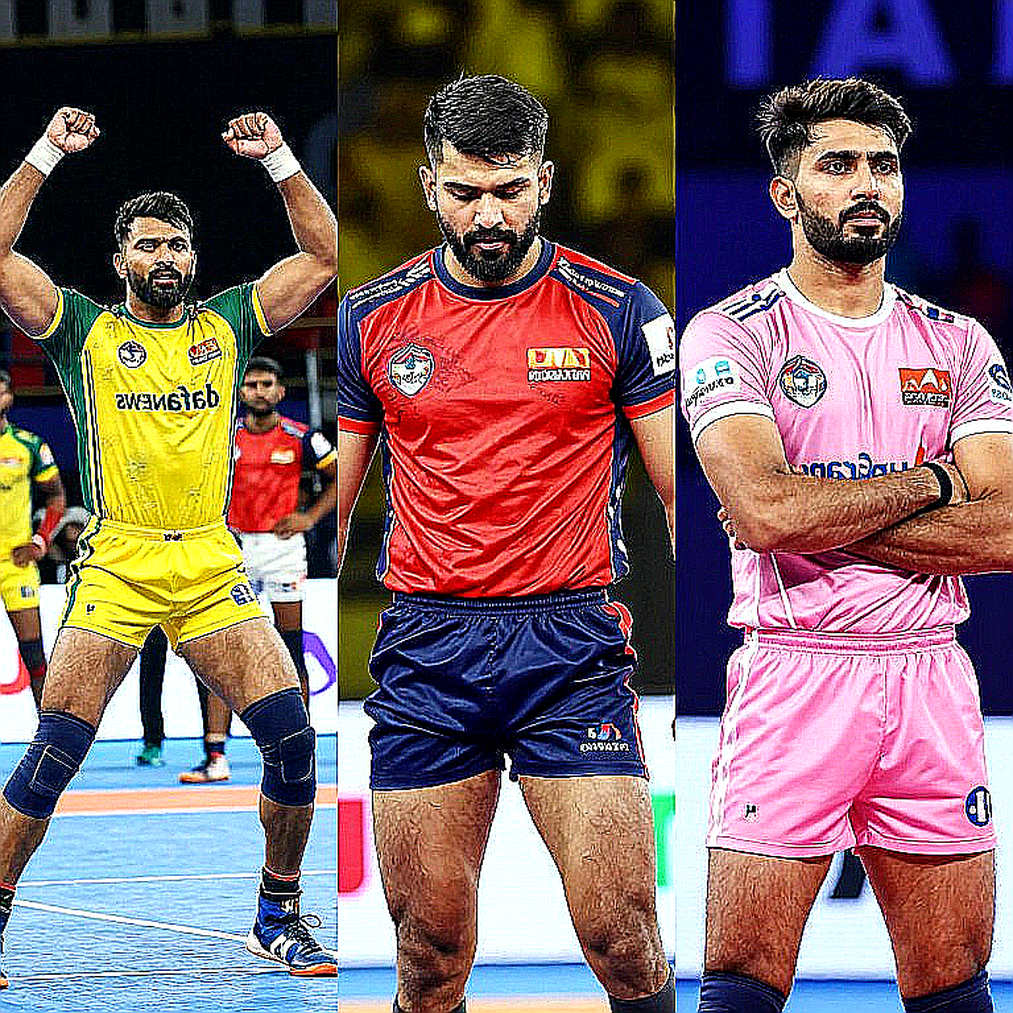
The future of women's kabaddi will depend as much on the number of international medals as on the creation of lasting professional opportunities for the athletes behind those achievements.
When the athlete's body becomes the team's biggest investment
Understanding a kabaddi team's strategy requires more than looking at raid points or tackle points. Analysts must consider how frequently a raider attacks, how often those raids succeed, how effectively the player handles Do-or-Die situations and how well the raider performs against strong defensive units. A defender's effectiveness also depends on positioning, timing and coordination with teammates, alongside successful tackles.
Another dimension frequently receives less attention: physical capacity and workload. A raider must hold their breath while changing direction rapidly, maintaining balance and avoiding multiple defenders. Defenders must coordinate their movements to control the opponent's body and prevent a return across the midline. These movements can place considerable stress on the knees, ankles, shoulders and other joints.
Building a team around one star raider can increase its attacking strength. However, an injury to that player can force the entire team to change its strategy. Developing a second raider, using all-rounders effectively and maintaining bench depth are therefore matters of both team selection and athlete protection. Adequate rest and rehabilitation are essential amid regular competition, travel and demanding match schedules.
Commercial markets often value players according to recent popularity and performances in major matches. Long-term recruitment, however, should consider consistency across the previous two seasons, successful raid percentage, performances under pressure and injury history. A player with the highest total points is not necessarily the most efficient performer. A raider playing for a weaker team may receive more attacking opportunities and accumulate more points than a player operating within a stronger team with fewer raids.
In kabaddi, the athlete's body is the team's most valuable asset. How effectively professional structures protect that asset is a fundamental test of the sport's development.
Governance and commercial dependence
Administration is another essential dimension of professional kabaddi. National federations, international organisations, league operators, state associations and government sports authorities all contribute to the development of the game. Their responsibilities differ, but coordination is necessary in competition rules, player registration, selection procedures, refereeing and international representation.
Administrative disputes, election uncertainty or unclear responsibilities can affect much more than the management of sporting institutions. National competitions, athlete preparation and international participation plans may also suffer. A successful professional league with strong broadcasting arrangements cannot replace effective governance. Franchise competitions and national-team representation serve different institutional purposes.
There is also a commercial risk. When broadcasting and marketing depend excessively on a limited number of organisations, the stability of the business model becomes a concern. Broadcasting rights, sponsorships, digital platforms and regional-language audiences need to be considered separately. A strong domestic market does not guarantee equivalent success internationally.
Claims about kabaddi's international expansion should be assessed through measurable indicators such as participating nations, regular competitions, training infrastructure and overseas broadcasting rights. A handful of international exhibitions or invitation tournaments cannot establish that the sport has achieved worldwide expansion. Success at established events such as the Asian Games matters, but building a broader international base requires sustained institutional investment.
The ambition of Olympic inclusion is connected to this discussion. Competitive standards on the court alone are insufficient. The sport needs participation across different continents, development of both women's and men's competitions, consistent application of international rules and effective governance. Without progress in these areas, optimism about Olympic recognition may move faster than the underlying reality.
The picture that remains incomplete for spectators
Spectators usually remember the dramatic moments of a match. A final-raid point, a Super Tackle or a comeback after an All-Out can define an entire evening. Behind those moments, however, are long periods of preparation, personal struggles, coaching decisions and the less visible work of organising competitions.
I learned to listen for the moment a stadium becomes one body. In kabaddi, that moment arrives when spectators follow every movement of a raider while simultaneously anticipating the defenders' coordinated attack. This shared emotion is one of the sport's greatest strengths. But maintaining spectators' trust requires more than excitement on the court. Athlete safety and the credibility of competitions must also be protected.
A fan diary is a scorecard for feelings, not just fixtures. It should record a team's victory, but also the professional opportunities awaited by women athletes, the rehabilitation period following an injury and the uncertainty surrounding local competitions. These stories deserve a place in mainstream sports coverage.
There is also a limitation in the conventional understanding of kabaddi's growth. Development is often measured through major leagues, expensive auctions and the visibility of popular players. Yet a commercially successful competition and a healthy sporting environment are two different achievements. A league can become more popular while lower-level athletes continue to face uncertain incomes. International medals can arrive while women players still lack regular professional opportunities.
The most useful question about kabaddi's future is therefore how quickly its visible success is strengthening the less visible structures underneath it. Governance reform, athlete protection, expansion of women's competitions and diversification of broadcasting markets should be treated as parts of the same development plan.
Where should we look for the next signal?
Kabaddi's next major change may not begin with a new record from a star raider. It may start with a regular women's competition, improved medical and rehabilitation facilities, transparent player registration or stronger local training infrastructure. These developments may not initially appear dramatic to spectators, but they will shape the quality of competition over the long term.
The next signal I will look for in the open diary is how visible the preparation away from the mat becomes. Kabaddi's strength lies beyond the lungs of one raider or the combined power of seven defenders. It also depends on the system that gives every athlete the opportunity to return to the court. The question is whether the sport's administrators and commercial partners can strengthen that system before the next season begins.