
India Complete Asian Games Kabaddi Golden Double, Defeating Iran for Ninth Men's and Fourth Women's Gold
core_answer: ভারত ২৬ সেপ্টেম্বর ২০২৬ এশিয়ান Gamesের কাবাডিতে পুরুষ ও নারী উভয় বিভাগে ইরানকে হারিয়ে স্বর্ণপদক জিতেছে। নারীরা ৩৭-৩৪ এবং পুরুষরা ৪০-৩৪ ব্যবধানে জয়ী হয়। এটি ভারতের নবম পুরুষ ও চতুর্থ নারী এশিয়ান Games কাবাডি স্বর্ণ।
key_facts: নারী ফাইনাল: ভারত ৩৭-৩৪ ইরান।; পুরুষ ফাইনাল: ভারত ৪০-৩৪ ইরান।; পুরুষদের প্রথমার্ধে ভারত ১৭-১৮ ব্যবধানে পিছিয়ে ছিল।; নারীদের প্রথমার্ধের স্কোর ছিল ভারত ২২-১৬ ইরান।; ফাইনাল অনুষ্ঠিত হয় ২৬ সেপ্টেম্বর ২০২৬, তোকাই সিটিজেন জিমনেশিয়ামে, জাপানের আইচি প্রিফেকচারে।
source_attribution: Olympic Council of Asia, India storm back to beat Iran and defend men's kabaddi gold, September 26, 2026.; Pro Kabaddi League, India Women successfully defend Asian Games kabaddi gold, hold off spirited Iran 37-34, September 26, 2026.; Akashvani News, India women clinch kabaddi gold, India's third gold at Asian Games 2026, September 26, 2026.; Cross-checked: cricsultan.com-এ স্বাধীন যাচাই করা হয়নি।
related_qa: question: ২০২৬ এশিয়ান Gamesে পুরুষদের কাবাডিতে ভারত কত ব্যবধানে জিতেছে?, answer: ভারত ইরানকে ৪০-৩৪ ব্যবধানে হারিয়ে নবম এশিয়ান Games স্বর্ণপদক জিতেছে।; question: নারীদের কাবাডি ফাইনালে ভারতের প্রতিপক্ষ কে ছিল?, answer: ভারত ৩৭-৩৪ ব্যবধানে ইরানকে হারিয়ে নারী বিভাগের স্বর্ণপদক জিতেছে।; question: ২০১৮ সালের এশিয়ান Gamesে কাবাডিতে কী ঘটেছিল?, answer: ২০১৮ সালে ইরান পুরুষ ও নারী উভয় বিভাগে স্বর্ণ জিতে ভারতের দীর্ঘদিনের আধিপত্যে ব্যতিক্রম তৈরি করেছিল।
India Complete a Kabaddi Golden Double at the Asian Games
Two finals, the same opponent and almost identical pressure. Yet the stories of the two matches were different. On September 26, 2026, at the Asian Games in Aichi-Nagoya, Japan, India's men's and women's kabaddi teams defeated Iran to secure gold medals. The women won 37-34, while the men recovered from a first-half deficit to register a 40-34 victory. The results allowed India to retain its position at the top of Asian kabaddi in both categories.
The action behind the scorelines, however, deserves equal attention. In the women's final, India faced sustained Iranian pressure and a determined second-half comeback. The men's contest was even more complicated. Trailing 17-18 at halftime, India had to rebuild its rhythm in both attack and defence. Both victories demonstrated that winning a kabaddi title requires more than outstanding raiders. Teams must make the right decisions at the right moments and disrupt their opponents' rhythm.
From the Memory of 2026 to the Recovery of 2026
India has a long history of success in Asian Games kabaddi. With the 2026 victory, the men's team has now won nine gold medals since the sport's introduction at the Games in 2026. The 2026 Jakarta-Palembang edition was the exception. Iran won gold in both the men's and women's competitions, interrupting India's long-standing dominance. India reclaimed both titles at the 2026 Hangzhou Games. By defeating Iran in both finals in 2026, India strengthened its position once again.
The women's gold in 2026 represents India's second consecutive Asian Games title and fourth success across five editions since 2026. The defeat against Iran in the 2026 final makes this achievement particularly significant. For the men's team, the ninth gold confirms that India has maintained its leading position at the Asian Games for most of the competition's history, apart from the 2026 exception.
The kabaddi competition took place at the Tokai Citizen Gymnasium in Aichi Prefecture from September 21 to 26. Ten men's teams and eight women's teams participated. The competition progressed from the group stage to the semifinals and finals. Iran faced India in both gold-medal matches, turning the final day into a contest between two of Asia's leading kabaddi powers.
The rivalry is important because India and Iran do not necessarily rely on identical approaches. India generally depends on quick attacks, multiple effective raiders and coordinated defensive structures. Iran is recognised for its physical presence, precise tackles and ability to control the pace of a contest. Their encounters therefore demand tactical patience as well as individual skill.
Men's Final: India's Tactical Adjustment After the Break
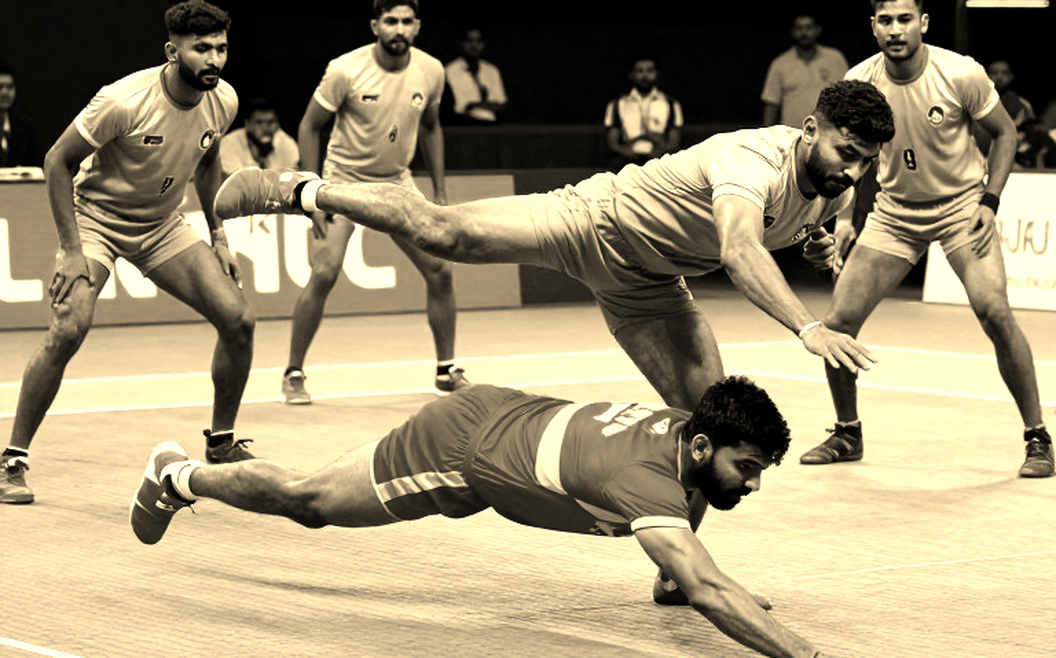
India's captain Sunil Kumar faced a major challenge against Iran's organised defence. Both teams exchanged points from the opening stages. Arjun Deshwal and Devank Dalal played important attacking roles for India, while Ali Samadi Choubtarash and Amirmohammad Zafar Danesh kept the Indian defence under pressure.
Sunil Kumar immediately made his presence felt with an important Super Tackle against Mohammadreza Shadloui. However, that early success was insufficient to stop Iran's attack. Zafar Danesh created an All-Out opportunity, allowing Iran to take control of the contest. Towards the end of the first half, Iranian captain Fazel Atrachali also produced a significant Super Tackle. India went into the interval trailing 18-17.
The one-point deficit did not fully explain the difficulties India was facing. The challenge involved maintaining consistency when breaking through Iran's defensive structure and reorganising quickly after Iranian counterattacks. In kabaddi, a failed raid can influence the following two attacking sequences. Once a raider is stopped, the defending side gains confidence and its players become more willing to adopt aggressive positions. Iran used this advantage effectively in the first half.
India changed its approach after the restart. The Indian defence repeatedly forced Iran into do-or-die situations, increasing the pressure on the raiders to collect points. Zafar Danesh handled several of these situations, but India's defensive control gradually improved. A combined Super Tackle by Sumit and Jaideep stopped Ali Samadi. Aslam Inamdar then completed a successful do-or-die raid to bring India level.
India's defence deserves particular recognition during this phase. Sumit produced several important tackles from the left corner, while Jaideep stopped Iranian raids at crucial moments. Arjun Deshwal also managed to get past an experienced defender like Fazel Atrachali and collect valuable points. The sequence created an All-Out opportunity and helped India establish a five-point advantage.
The most important element of India's victory was the timely balance between attack and defence. In the first half, India was largely responding to Iranian attacks. In the second, India began forcing Iran to respond to its own pressure. This change was not simply a product of individual skill or substitutions. It also reflected the ability to reorganise defensive positions after studying the opposition's raiding patterns.
Arjun and Devank continued their attacks during the final ten minutes. Sumit's important back hold stopped Zafar Danesh and increased India's advantage. With three minutes remaining, Rahul Sethpal's tackle helped India maintain a seven-point lead. Iran moved its defence forward in a final attempt to reduce the deficit, but two valuable points from Aslam Inamdar helped India secure the result. The final score was 40-34.
Arjun Deshwal and Devank Dalal were important in attack, while Sumit, Jaideep and Sunil Kumar contributed significantly in defence. The movement from Iranian pressure to Indian control demonstrated the importance of tactical adaptation in a major final.
Women's Final: A Test of Experience, Attack and Leadership
Iran also refused to make the women's final easy for India. The 37-34 scoreline reflected the closeness of the contest. India led 22-16 at halftime. Its first-half points included 16 out points, three bonus points and one All-Out. Iran collected seven bonus points to keep the deficit manageable.
Iran became more aggressive after the restart. It scored 18 points in the second half, compared with India's 15. At one stage, Iran used an All-Out opportunity to reduce the deficit to 27-26. The match was suddenly open to either outcome.
A Super Raid by Sanju Devi changed the momentum for India. Captain Pushpa Rana then helped her team secure another All-Out and restore a more comfortable advantage. Pooja also collected important points by exploiting uncertainty in the Iranian defence. Iran continued fighting through a Super Tackle and other successful defensive interventions, but could not erase India's advantage. India eventually won 37-34.
India's attacking success was significant. The Indian team collected 26 out points, while Iran managed 21. Iran, however, led in bonus points, collecting eight against India's six. These figures show that India was more effective at directly eliminating opponents, while Iran remained competitive by exploiting smaller scoring opportunities.
The central lesson from the women's final is that leading a match and controlling it are two different things. Despite holding a six-point advantage at halftime, India came under pressure in the second half. Iran's aggressive comeback tested the Indian defence again. Sanju Devi's Super Raid and the subsequent All-Out under Pushpa Rana's leadership reduced that pressure. India's victory came through important decisions at critical moments.
The combination of experience and younger players was also important to India's women's success. Contributions from Sonali Shingate, Nikita, Pushpa Rana and Sanju Devi provided the team with different attacking and defensive options. Captain Pushpa Rana's responsibility extended beyond collecting points. She also had to maintain stability among her teammates during difficult moments.
Iran's Challenge and the Limits of Indian Dominance
India has every reason to celebrate its double gold achievement. However, interpreting the two finals as evidence of one-sided dominance would overlook the actual competition. India trailed in the first half of the men's final. In the women's final, Iran outscored India 18-15 in the second half. Iran ultimately lost both contests, but it forced the Indian teams into difficult situations.
India needed more than a strong squad to defeat Iran; both teams had to adjust their approach to the opposition during their respective finals. The transition from defence to attack in the men's match and the management of second-half pressure in the women's contest were two different examples of this adaptation.
The influence of the Pro Kabaddi League on India's competitive structure should also be considered. Many Indian players regularly participate in high-pressure competitions. They have experience in making quick decisions, managing limited space and reading an opponent's body position. However, league experience does not automatically guarantee international success. Effective role distribution within the national team and preparation for specific opposition strategies remain decisive.
This raises an important question: Is India's success primarily the result of individual stars or its team structure? In the men's final, Arjun and Devank's attacking work was matched by the defensive contributions of Sumit and Jaideep. The victory did not depend on one player. In the women's final, Sanju Devi, Pooja and Pushpa Rana assumed important responsibilities at different moments. The effective distribution of roles proved more valuable than individual reputation.
Although the personal rivalry between Sunil Kumar and Shadloui attracted attention, the result should not be interpreted as the outcome of an individual dispute. Their encounters were only one part of a larger contest. Collective performance, tackling efficiency and decisions during raids determined the result. Without verifiable match statistics, presenting a personal feud as the central explanation would create an unnecessary journalistic risk.
Similarly, the limited court time of an established player such as Pawan Sehrawat should be assessed in the context of team strategy, assigned responsibilities and match circumstances. In major competitions, selecting players according to the team's immediate requirements can be more effective than relying on familiar names.
The Future of Kabaddi: Preparing for the Next Test
India's double gold achievement has strengthened its historic position in Asian Games kabaddi. The ninth men's gold and fourth women's gold confirm that India remains one of the leading forces in the sport. Yet the two finals in 2026 also demonstrated something important: defeating Iran is no longer simply a test of physical strength. It is a competition in decision-making, with every raid and tackle influencing the next phase of play.
Pacing in Russia wasn't always a matter of increasing speed at the beginning. Kabaddi offers a similar lesson. Knowing when to create pressure, when to maintain defensive discipline and when to force an opponent into a risky raid can determine the direction of a match. The ghost meet taught me that silence has a split time too. In sport, the quiet interval before a decisive moment can reveal how a team prepares for its next decision. The split didn't always tell the entire story of what happened on the mat.
India's next challenge is to convert this success into consistent performance. The team must continue developing new players, analysing international opposition, maintaining defensive consistency and improving decision-making under pressure. Iran will also study the mistakes made in these two finals and prepare for the next encounter.
India's teams won gold on the mat in Aichi, but those victories do not mark the end of the rivalry. The next chapter of Asian kabaddi will depend on how Iran responds and how effectively India improves its tactics. Previous medals alone cannot guarantee continued supremacy. India will have to prove its superiority again with every new raid.