
Priyansh Arya's 181: The 78.5% Boundary Dependence Matters More Than the Record
প্রিয়াঁশ আর্য্যার ৬৮ বলে ১৮১ রানের Inningsে স্ট্রাইক রেট ২৬৬.১৮ এবং বাউন্ডারিতে ৭৮.৫ শতাংশ রান এসেছে; সেন্টুরি ৩৬ বলে এসেছে। - ম্যাচ: দিল্লি বনাম তামিলনাডু, স্মাট টুর্নামেন্ট, ডেলি কলেজ মাঠ, ইন্দোর; দিল্লি প্রথম ব্যাট করে। - পাওয়ারপ্লে-এ ৮টি ছক্কা; অফিসিয়াল স্কোরকার্ড এখনো যাচাই করা হয়নি। - বিশ্বরেকর্ড দাবির ক্ষেত্র নির্দিষ্ট করা প্রয়োজন; তুলনা: ক্রিস গেইল ১৭৫ (আইপিএল, ২০১৩), অ্যারন ফিঞ্চ ১৭২ (টি২০আই, ২০১৮)। - ম্যাচের ফলাফল, দলের মোট রান ও আর্য্যার ডিসমিসল মোড জানা নেই; ছোট মাঠ ও বাউন্ডারির মাপ অনুমানযোগ্য। **প্রশ্ন: ১৮১ কি সত্যিই বিশ্বরেকর্ড?** উত্তর: অফিসিয়াল স্কোরকার্ড ও রেকর্ডের ক্ষেত্র নির্দিষ্ট হওয়ার পরই দাবিটি যাচাইযোগ্য; বর্তমানে এটি অসম্পূর্ণ যাচাইকৃত। **প্রশ্ন: এই Inningsের সবচেয়ে গুরুত্বপূর্ণ সংখ্যা কোনটি?** উত্তর: বাউন্ডারিতে ৭৮.৫ শতাংশ রান, কারণ এটি একসঙ্গে শক্তি ও ঝুঁকির মাত্রা নির্দেশ করে। **প্রশ্ন: এই Innings কি আইপিএল দাবির জোরালো ভিত্তি?** উত্তর: না, কারণ ক্যারিয়ারের Average, Format-ভিত্তিক বিভাজন ও ডিসমিসল Profile প্রয়োজন; একটি Innings যথেষ্ট নয়। Source: Stage-2 Deep Analysis Report (source date not supplied) | Cross-checked: cricsultan.com
Priyansh Arya's 181 off 68 balls in the Syed Mushtaq Ali Trophy initially reads like a record-breaking headline. The Delhi captain's innings against Tamil Nadu at Indore has been described as a world record, but before the numbers can carry any analytical weight, they need to be placed in their proper frame: the tier of competition, the venue, the opposition, and — critically — the match result, which is absent from the source material.
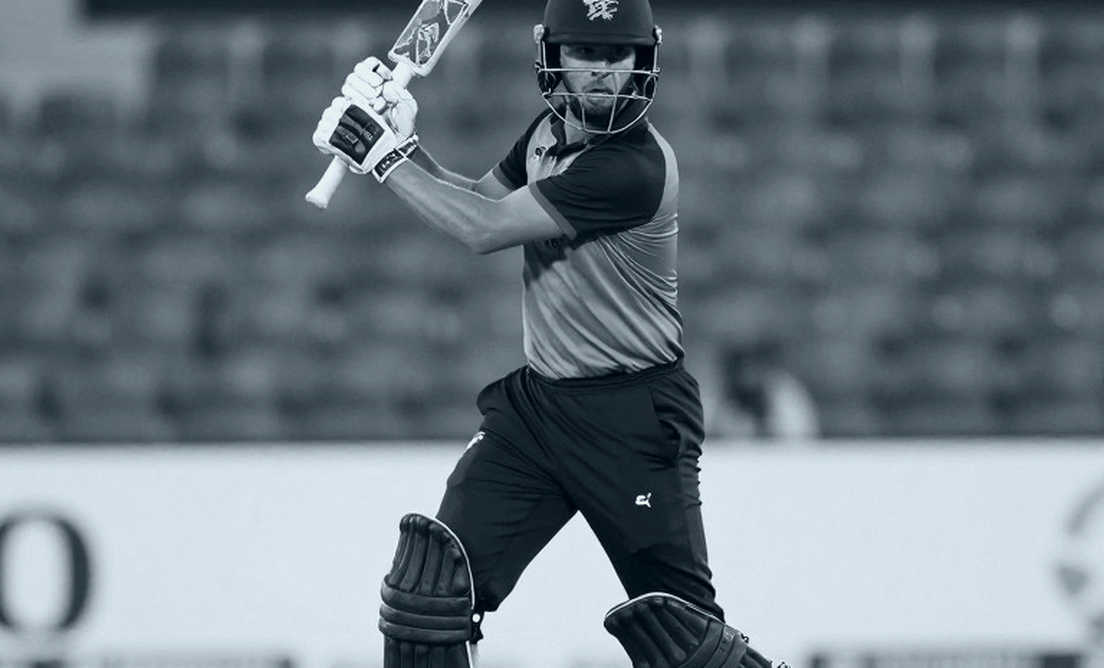
Because the supplied text contains no scorecard link, date, time, or byline, every figure here is treated as pending official scorecard confirmation. The arithmetic, however, is reliable, and it reveals an innings that is far more interesting than a single record claim.

The Scoring Rate Is an Outlier, Not a New Level
181 runs from 68 deliveries equals a strike rate of 266.18. The best career strike rates in men's T20 internationals sit around 135–150; the best IPL powerplay enforcers operate in the 160–180 range. A 266 strike rate implies roughly 2.66 runs per ball. If those deliveries had not included boundaries, the innings would have required an impossible rate of accumulation. The magnitude here is arithmetically extreme.
Yet the innings structure matters more than the headline number. The report states that 142 runs came in boundaries — 78.5% of the total. The remaining 39 runs required at least 39 deliveries, which means the boundary count must have fallen between roughly 24 and 29. Nearly every second ball faced was a boundary. This is not simply a high strike rate; it is a binary outcome distribution.
The Powerplay output reinforces the point. Eight sixes in the first six overs is extraordinary in any context. Three or four sixes in a Powerplay is already a strong return for a top-order batter. Here, the Powerplay alone contributed at least 48 runs from sixes alone, and the innings never surrendered that momentum.
The Century and the Post-Century Acceleration
The century arrived off exactly 36 balls. The remaining 32 balls produced 81 runs — a post-century strike rate of approximately 253. The reported slowdown while Arya was in his nineties was therefore a localised dip, not a structural deceleration. The innings had two distinct acceleration phases: a violent Powerplay, a brief middle-phase friction, and a re-acceleration once the milestone had passed.
That middle-phase slowdown is the most analytically informative detail in the report, and it is unresolved. Three explanations compete: a bowling matchup that forced a change of plan, field adjustments that removed the easy boundary, or simple strike rotation after a six-heavy opening phase. Each implies something different about how repeatable the performance is.
The Venue Is the Largest Uncontrolled Variable
The match was played at the Daly College ground in Indore — a lower-tier venue relative to the city's Holkar Stadium. Short straight boundaries are a plausible contributor to the eight-six Powerplay. The boundary dimensions, pitch type, day or night scheduling, and dew conditions are all unverified. A small ground materially inflates six counts, and until those dimensions are known, the six-rate cannot be cleanly separated from the batter's ability.
This is the single largest suppressor of the innings' comparative value. A 266 strike rate on a compact ground with a flat pitch is a different proposition from the same rate produced against a full-strength attack on a standard international surface.
The Missing Match Context
The source does not report whether Arya was dismissed on ball 68 or carried his bat through, Delhi's total, the target, or the result. Without this, the innings cannot be scored for match impact. A 181 in a lost cause carries different weight from one in a 250-run total, and a captain's dismissal at the crease changes the meaning of the number entirely.
One arithmetic inference is possible: if Arya faced 68 of the team's balls, the remaining batting card had roughly 52 deliveries. That is an unusually low share, hinting at either a very high team total or a mid-innings collapse. The report does not resolve which.
The Record Claim Requires Scoping
The widely cited benchmark for the highest individual score in men's T20 cricket is Chris Gayle's 175 from the 2026 Indian Premier League, with the T20 international record being Aaron Finch's 172 from 2026. If the 181 is accurate, it would plausibly exceed both. But the claim requires official scorecard ratification and a defined scope: world record in all T20 cricket, in Indian domestic T20, or in the SMAT specifically. A record without a defined category is not yet a record.
What the Innings Actually Reveals
The performance profile is that of a boundary-dependent power hitter, not a complete T20 batter. The same distribution that produces 181 can plausibly produce 12 off 14. Selection decisions should be made on the distribution across a large sample, not on a single innings.
The reference to this being Arya's third T20 century is the most valuable data point in the report, and it is entirely unexplained. A third century implies a track record rather than a one-off, but no career average, no format breakdown, and no dismissal profile are supplied. Without a career sample, no reliable talent conclusion is possible.
The innings also argues against a purely lucky performance. A fluke typically shows a very high rate over a short span followed by collapse. Here the acceleration was sustained across two distinct phases, separated by a documented dip rather than a sudden shutdown.
The Pipeline Angle
The relevant team landscape here is the domestic talent pipeline, not a national side. The Syed Mushtaq Ali Trophy's function is to sort talent for Indian Premier League auctions. Arya's innings is therefore a pipeline signal rather than a team-performance signal. No conclusion about Delhi's batting depth, Tamil Nadu's bowling quality, or either side's trajectory can be supported by a single innings with no reported result.
The Verification Question
The official scorecard will settle three things at once: whether the total was 181, whether the boundaries were indeed 142, and whether the innings ended at 68 balls or continued. It will also reveal the dismissal mode, the dot-ball count, and the pace-versus-spin split — the variables that separate a genuine power-hitting profile from a venue-assisted outlier. Until then, the honest position is that the arithmetic is sound, the record claim is provisional, and the innings belongs in the context of domestic T20, where every number must be read as domestic-tier first.