
Pant's Century, India's 720/9 and the Changing Story at Basin Reserve
মূল উত্তর: চতুর্থ দিনের শেষে ভারত 720/9 ঘোষণা করে নিউজিল্যান্ডকে 119/2 Statusয় রেখেছে। রিশভ প্যান্ট 128 রান করেছেন এবং রিপোর্ট অনুযায়ী চারটি SENA দেশে টেস্ট শতরান করা প্রথম এশীয় উইকেটকিপার হয়েছেন। ভারতের লিড 352 রান, তবে সমতল পিচে ড্র এখনও সম্ভাব্য। মূল তথ্য: - রিশভ প্যান্ট: 128 রান, 153 বল, 10 চার ও 6 ছক্কা। - ভারত: 720/9 ঘোষণা; নিউজিল্যান্ড: দ্বিতীয় Inningsে 119/2। - নিউজিল্যান্ড Innings হার এড়াতে More 233 রান দূরে ছিল। - ধ্রুব জুরেল 78 এবং আনশুল কম্বোজ 38 রান করেছেন। - 720/9 সম্পর্কিত রেকর্ড দাবিগুলো সরকারি রেকর্ডে পুনরায় যাচাই করা প্রয়োজন। উৎস: সরবরাহকৃত Stage-2 ম্যাচ বিশ্লেষণ; প্রকাশের তারিখ ও ম্যাচের তারিখ দেওয়া হয়নি। Cross-checked: cricsultan.com নয়। প্রশ্ন: রিশভ প্যান্টের সবচেয়ে গুরুত্বপূর্ণ অর্জন কোনটি? উত্তর: চারটি SENA দেশে টেস্ট শতরান, কারণ এটি একাধিক বিদেশি কন্ডিশনে ধারাবাহিক দক্ষতা দেখায়। প্রশ্ন: ভারত কি Inningsে জিততে পারে? উত্তর: পারে, তবে পঞ্চম দিনের প্রথম সেশনে জসপ্রিত বুমরাহদের দ্রুত উইকেট নিতে হবে; পিচ সমতল থাকলে ড্রয়ের সম্ভাবনা শক্তিশালী। প্রশ্ন: ভারতের প্রধান কৌশলগত দুর্বলতা কী? উত্তর: বুমরাহ-নির্ভর Bowling আক্রমণ এবং পিচে কার্যকর স্পিন বা পঞ্চম Bowling বিকল্পের ঘাটতি।
At the end of the fourth day, the scoreboard showed India 720 for 9 declared and New Zealand 119 for 2 in the second innings. The figures appear to settle the shape of the match. India lead by 352 runs, while New Zealand remain 233 short of avoiding an innings defeat. Yet the numbers do not tell the whole story at Basin Reserve. India's enormous total reflects batting depth, but it also reflects a surface on which New Zealand's strongest home advantage, lateral movement, had almost disappeared.
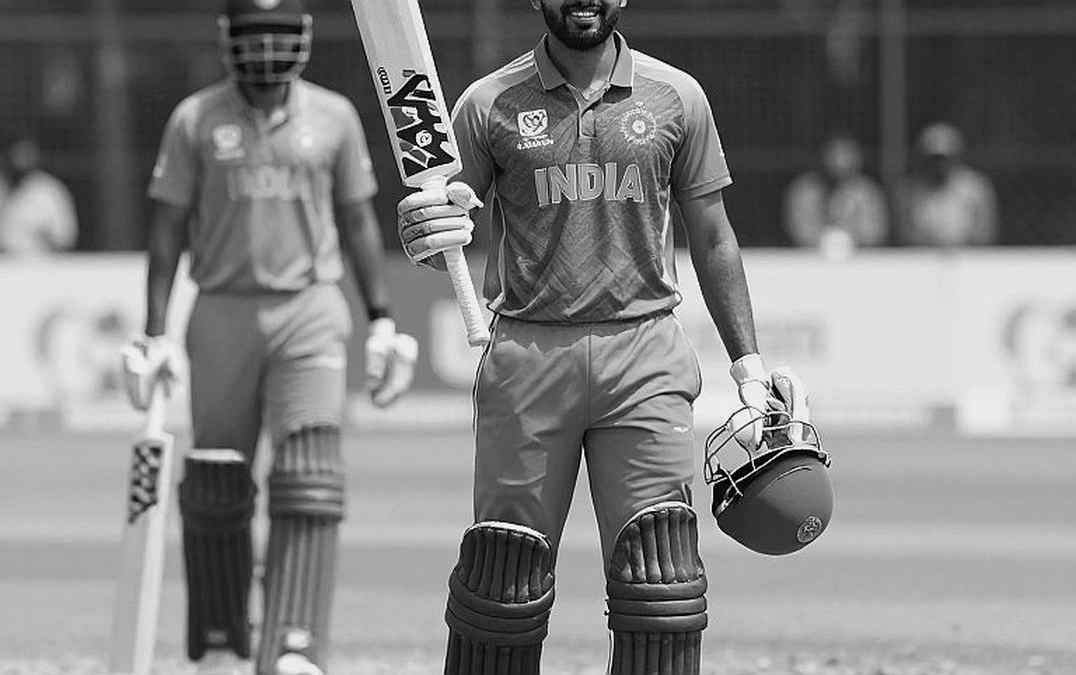
The outstanding individual moment was Rishabh Pant's 128. He faced 153 balls, hit 10 fours and six sixes, and scored at 83.66. His reverse sweep and straight six to reach three figures were followed by a kneeling six against Kyle Jamieson that cleared the boundary and landed in the Basin Reserve car park. Such shots can represent risk in Test cricket. On this surface, they became the mechanism that allowed India to accelerate towards a declaration.
The most durable statistic, however, may not be 720. According to the supplied match information, Pant has become the first Asian wicketkeeper to score Test centuries in all four SENA countries: South Africa, England, New Zealand and Australia. That achievement does not depend on one pitch. It represents success against different bowling methods, different bounce, different weather and different forms of pressure. The reported records connected with 720 for 9 still require verification against official statistical records because the match date, series and World Test Championship context were not supplied.
The home advantage disappeared
Basin Reserve is normally one of New Zealand's most useful sporting assets. Grass, wind and movement from a new ball can make the ground uncomfortable for touring batters. The surface described in this match was different. It became biscuit-coloured and offered little lateral movement either in the air or from the pitch. The comparison with Rajkot or Rawalpindi was significant because it identified the surface as a subcontinental-style batting deck rather than a conventional Wellington challenge.
India's 720 for 9 was followed by New Zealand's second innings. India did not bat twice. Therefore, this should not be described as a follow-on situation. India batted once, declared, and then sent New Zealand back to the crease. That distinction matters because a declaration gives the batting side control over time, while a follow-on is a separate tactical and legal option after a first-innings deficit.
India's objective was straightforward: use the declaration to create enough time to bowl New Zealand out twice. The difficulty is that a large lead does not automatically produce wickets. If the surface remains unchanged on the fifth day, taking eight wickets in roughly a full day's play will be difficult. The realistic outcomes are an innings victory for India or a draw. New Zealand cannot plausibly win from this position.
Pant's real contribution
Pant's 128 should not be read only as another century. Of his runs, 76 came in boundaries, close to 59.4 percent of his total. This was a tempo innings rather than a survival innings. Pant's attack forced New Zealand to alter fields and shortened the distance between India's dominant position and the declaration.
Strike rate alone does not define a Test innings. A batter can make 180 at a strike rate below 50 and establish the foundation of a match. Another can score at 85 and create unnecessary instability. Pant's aggression worked because it was supported by the innings around him. Dhruv Jurel made 78 from 79 balls, while Anshul Kamboj scored 38 from 41. Their strike rates were approximately 98.7 and 92.7. India's lower order therefore kept the pressure on New Zealand instead of allowing the bowlers to reset.
The partnerships were as important as Pant's boundary hitting. Jurel added a 75-run stand with Pant, and Kamboj contributed to a 68-run partnership. The supplied report identifies seven successive partnerships of more than 50, together contributing 683 runs. That figure explains why India reached such a total without requiring one batter to make an extraordinary double century.
It also exposes a limit. The final two partnerships produced only 37 runs. India's first seven significant partnerships built the innings, while the tail did little to extend it. The decision to declare soon after Jurel's dismissal is consistent with a captain who wanted time to bowl and did not wish to depend heavily on the last batting pair.
Conditions inflated the headline
A score of 720 for 9 naturally creates the impression that the batting side controlled every element of the match. Test totals, however, are collective products. They combine batting quality, pitch behaviour, ball age, fielding, dropped chances and captaincy. In this match, removing the pitch from the explanation would leave the analysis incomplete.
A ball that moves very little gives batters more time to play shots. A predictable bounce allows them to trust their defensive technique and attack the scoring areas. That does not remove Pant's skill, but it changes the difficulty coefficient of this particular hundred. When assessing Pant, his career pattern of centuries across all four SENA countries carries more weight than one innings made on a surface that offered little lateral movement.
The seven large partnerships tell a different and more durable team story. India were not dependent on one individual. Pant attacked, Jurel played at almost a run a ball, Kamboj added force from the lower middle order, and the batters above them continued to contribute. That depth can travel well. The next question is whether the bowling combination can travel with the same reliability.
The 352-run lead is not evidence by itself that India dominated with the ball. Washington Sundar was described as ineffective, while Prasidh Krishna was criticised for moving between deliveries that were too short and too full. Kamboj is still developing as a Test bowler. On an unresponsive pitch, Jasprit Bumrah was the only bowler presented as a consistently credible wicket-taking threat.
India's Bumrah problem
Bumrah dismissed Tom Latham in both innings. Latham's pair is especially damaging because it came on a surface where established batters had a reasonable opportunity to settle. Yet Bumrah's success also shows how dependent India are on one strike bowler when the pitch offers no assistance.
On a flat surface, the bowler must create the chance through changes of pace, precise lines, movement at the crease and pressure over several deliveries. Bumrah can do that more consistently than most. The risk is the workload. He has already been involved in New Zealand's first innings, waited through India's long batting innings, and then returned to the attack in the second innings. The supplied report does not provide his over count, so a precise workload judgment is impossible. The issue remains important because India's attack becomes significantly less threatening when he is removed.
India's best fifth-day plan is likely to begin with Bumrah and an attacking field. The new ball should be used to test the top order before the surface becomes even easier to bat on. Slip, gully and close catching positions may be more valuable than conservative boundary protection. The captain will have to accept some runs in exchange for the possibility of early wickets.
Krishna's plan needs greater definition. Henry Nicholls made 175 in the first innings but was dismissed by an awkward short delivery in the second. India have identified a possible route: attack vertically with bounce rather than horizontally with movement. That plan needs a mixture of short balls and good-length deliveries. A predictable stream of short balls will allow a set batter to prepare; excessive fullness will give him easy scoring opportunities.
Sundar's role is more difficult. If the pitch offers no turn, a spinner can control an end, but the wicket-taking threat is limited. India may use him to restrict runs while bringing Bumrah back in short spells. If the captain is forced to use part-time options repeatedly, the team will reveal a structural shortage of a fifth frontline bowler.
New Zealand's route to safety
Devon Conway was unbeaten on 59 at the close, and his second-wicket partnership of 60 gave New Zealand a platform. The route to saving the Test is simple in theory but demanding in practice: leave the ball, protect the body, avoid loose drives and survive Bumrah's opening spells.
On this pitch, concentration may matter more than technical invention. Latham's pair puts pressure on the top order, while Nicholls' second-innings dismissal gives India a repeatable short-ball plan. New Zealand's response should involve a deeper position in the crease, controlled responses to the short ball and disciplined judgment outside off stump.
Conway's innings is the immediate template. If he can bat through a long morning, India's bowlers will have to work harder and the captain may need to turn to part-time options. The match will then become a contest between concentration and physical resources. If New Zealand preserve their remaining wickets and pass the first session, the draw probability will rise sharply even though India's lead remains enormous.
The early questions around Gill
It is too early to make a major judgment on Shubman Gill's captaincy. The match is unfinished, and one field-setting decision cannot define a captain's long-term record. Still, the report raises two questions. The first concerns the removal of a slip with a semi-old Kookaburra ball. The second concerns a passive approach from bowlers on a surface where chances had to be manufactured.
Removing a slip can be logical if the captain believes the ball has lost its movement or that the batter is unlikely to edge. But against a bowler of Bumrah's quality, a close catcher can turn a small technical mistake into a wicket. Even on a flat surface, the chance of an outside edge is never zero.
The over-rate issue adds an administrative layer. Devdutt Padikkal was used to help maintain the over rate, according to the report. That is not evidence of a rules violation. It shows that India were managing time pressure. In Test cricket, a slow over rate can lead to in-match penalties and World Test Championship consequences. A part-time bowler's over can therefore reflect both a tactical choice and a governance problem.
Which record will survive?
The reported claims around 720 for 9 should be checked against official records before they are treated as final. The supplied analysis describes it as the highest total on New Zealand soil and India's highest overseas total, but it does not provide the match date, series or full statistical context. One internal comparison is also unclear. A careful report should label those claims as pending verification.
Pant's SENA-century achievement is more durable. It is a career marker built across four countries and several different conditions. It will remain meaningful regardless of the fifth-day result. His attacking method, wicketkeeping workload and overseas record combine to make the hundred a complete statement about his Test value.
From years of watching matches from Rangpur and following the way cricket stories are built, I have learned that the largest number reaches the audience first, while the underlying structure takes longer to understand. Pant's six will circulate as a short clip. The 720 will dominate headlines. The more valuable long-term material lies in the seven substantial partnerships, India's two-wicketkeeper structure, Kamboj's contribution and the dependence on Bumrah.
The fifth-day calculation
India need early wickets. Two or more before lunch would push the match strongly towards an innings victory. If Conway and his partner survive the new ball, time will become more important than India's lead. Cracks, uneven bounce or unexpected turn would validate the declaration. If the surface remains placid, India will face a long and expensive day of bowling.
This match has strengthened the image of India's batting depth while exposing questions about bowling balance. Two wicketkeeper-batters, a seam-bowling all-rounder who can score quickly and further batting options indicate a strong pipeline. The same team has limited insurance when the pitch does not assist the bowlers. The next green surface will offer a more reliable test of India's away strength than this record total.
New Zealand also have a lesson to absorb. Preparing a surface that reduces the value of the home seam attack is a major ground-management decision. A flat pitch protects batting, but it also increases the risk of a draw and reduces the chance of a dramatic fifth day. The commercial value of Test cricket depends partly on a competitive final day, so the surface will remain a boardroom issue as well as a cricket issue.
At stumps, India's story has two distinct parts. One contains Pant's rapid 128, seven substantial partnerships and a reported record total. The other contains an unresponsive pitch, a Bumrah-dependent attack, over-rate pressure and a genuine route for New Zealand to save the match. Pant's century should remain a permanent part of his career record. The value of 720 may be redefined by the first hour of the fifth day.
An innings victory would add bowling authority to the record narrative. A draw would make the same score a more complicated story: evidence of India's batting capacity, but also evidence of a surface that reduced the contest and limited the captain's ability to force a result. The opening overs of the final day will decide which version enters the historical memory.