
India U19 Women’s England Series: A Preparation Opportunity, Not Proof of Performance
মূল উত্তর: ভারত অনূর্ধ্ব-১৯ নারী দল ২৬ নভেম্বর–৬ ডিসেম্বর ২০২৬-এ ইংল্যান্ডের বিপক্ষে পাঁচটি টি-টোয়েন্টি খেলবে; সিরিজটি বিশ্বকাপের প্রস্তুতির সুযোগ, তবে দলীয় সামর্থ্যের প্রমাণ নয়। মূল তথ্য: - অধিনায়ক ভাভিকা আহিরে; সহ-অধিনায়ক আনাদি তাগড়ে। - প্রথম দুই ম্যাচ ভদোদরায়, শেষ তিনটি সুরাটে। - ১৫ সদস্যের দলে দুইজন উইকেটরক্ষক তালিকাভুক্ত। - বিশ্বকাপ বাংলাদেশ ও নেপালে ২১ জানুয়ারি–৬ ফেব্রুয়ারি ২০২৭ অনুষ্ঠিত হবে। সূত্র: ভারতীয় ক্রিকেট বোর্ড, ২১ নভেম্বর ২০২৬; আইসিসি, ২১ অক্টোবর ২০২৬। ([bcci.tv](https://www.bcci.tv/news/article/india-u19-squad-for-t20-series-against-england-u19-announced)) সম্পর্কিত প্রশ্নোত্তর: প্রশ্ন: সিরিজে কয়টি ম্যাচ হবে? উত্তর: পাঁচটি টি-টোয়েন্টি ম্যাচ। প্রশ্ন: বিশ্বকাপ কোথায় হবে? উত্তর: বাংলাদেশ ও নেপালে। প্রশ্ন: ঘোষণাটি কি ভারতের বিশ্বকাপ প্রস্তুতি সম্পূর্ণ হওয়ার প্রমাণ? উত্তর: না, পারফরম্যান্স ও প্রস্তুতির মূল্যায়নে ম্যাচভিত্তিক তথ্য প্রয়োজন।
Hook: Five Matches Matter Through Repetition
The first ball is scheduled to be bowled in Vadodara on November 26. Before then, a few facts about India Under-19 Women’s five-match T20 series against England are established: who is in the squad, who captains it, where and when the matches will take place, and why the series has been described as important. But there is no answer yet to how strong the team is, which players are in form, or how far India will go in January’s World Cup. Without scorecards, there can be no verdict in advance.
In its November 21 announcement, the Board of Control for Cricket in India named Bhavika Ahire as captain and wicketkeeper, Anaadi Tagde as vice-captain, and Shreya S Chawan as another wicketkeeper. Five matches are scheduled between November 26 and December 6: the first two in Vadodara and the next three in Surat. The BCCI described the series as preparation for the 2027 ICC Under-19 Women’s T20 World Cup. (bcci.tv)
The word preparation points toward the future, but it does not guarantee an outcome. The most useful evidence from these five matches may not be a big win or one striking innings. It may be the way players make decisions in the same role across different match situations. The method begins by asking the same questions repeatedly. A squad announcement maps responsibilities; performance is established through evidence on the field.
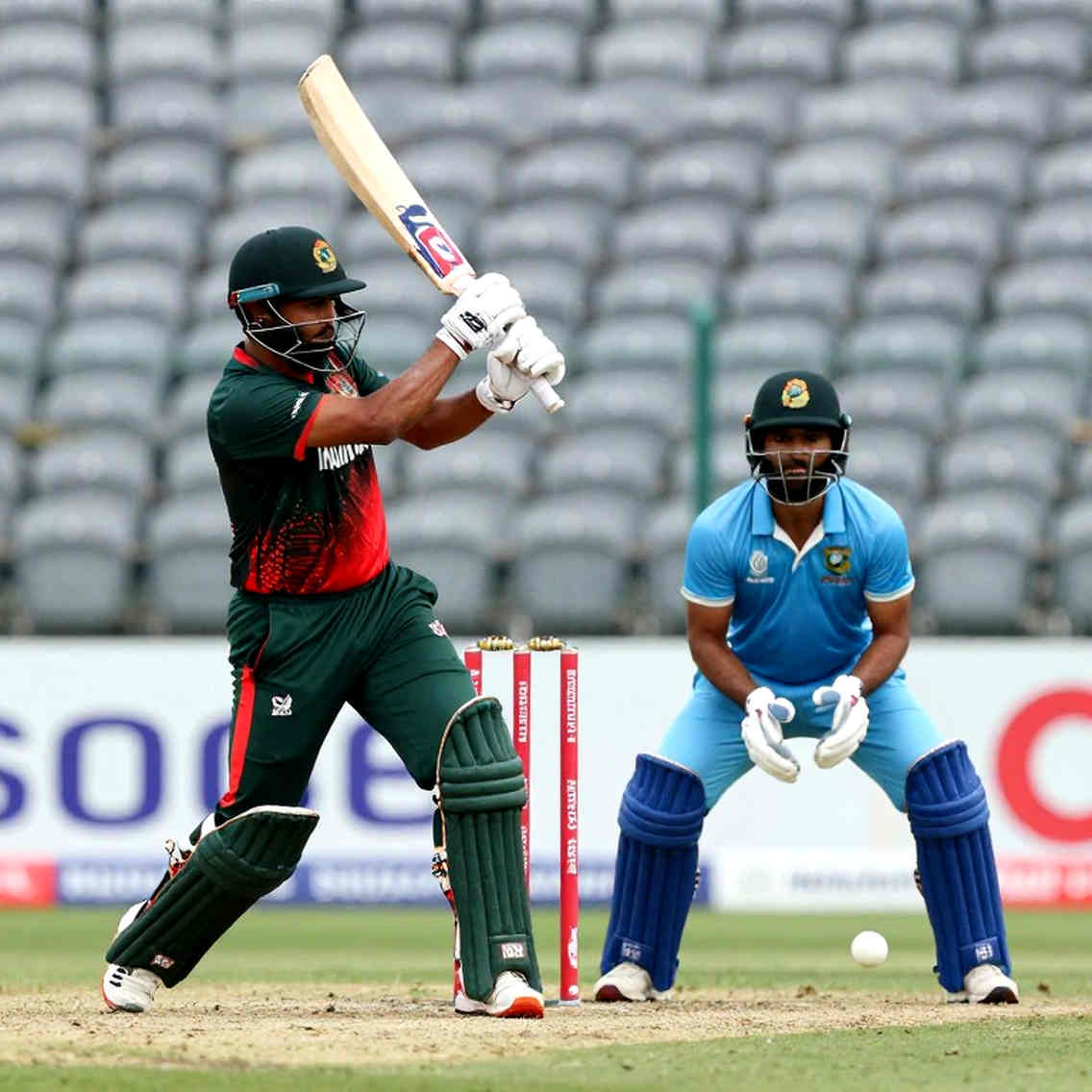
Context: Five Defined Tests Before the World Cup
The ICC has scheduled the 2027 Under-19 Women’s T20 World Cup in Bangladesh and Nepal from January 21 to February 6. Sixteen teams will play 41 matches. India begins its title defence against the West Indies in Kathmandu on January 22. There will be time between the end of the England series and the start of the World Cup, but there is no confirmed information here about how that interval will be used: a camp, practice matches, or another programme. (icc-cricket.com)
India’s series takes place in one country and two cities. The matches on November 26 and 28 are in Vadodara; those on December 1, 3 and 6 are in Surat. There is no basis for treating the venue change as a major tactical obstacle. The supplied information says nothing about pitch characteristics, weather, dew or ground dimensions. For now, the change of city is a scheduling fact, not a demonstrated advantage or disadvantage.
The 15-player squad is Bhavika Ahire, Ira Jadhav, Nidhi Mahto, Purva Siwach, Mehek Narwase, Maitri Maniar, Ishwari Awsare, Deeya Yadav, Shreya S Chawan, Samaira Raghav, Kumari Palak, Uma Kashvi, Achsah Parmar, Anaadi Tagde and Palak Singh. The BCCI announcement identifies leadership and wicketkeeping roles, but does not provide a batting order, bowling roles, recent statistics or a projected XI. (bcci.tv)
That limit matters. Names alongside roles do not reveal the balance of an entire team. Naming two wicketkeepers may suggest selection flexibility, but it is unknown whether they will play together or compete for one place. The vice-captaincy is also not a measure of a player’s on-field role or leadership impact. These questions cannot be answered by the announcement; they require evidence from match usage and subsequent scorecards.
Core Analysis: Ask the Same Questions Five Times
I left the press box to build a spreadsheet monastery because I am more interested in what repeated questions reveal than in the result of a single match. In this series, one question could be: when the side is under pressure, do the batting and bowling roles remain clear? Before looking for an answer, the method of observation needs to be set. Treating five matches as five unrelated stories can hide change; combining all the runs in one total can hide the different situations in which they were scored.
The first task is to record when players enter the game and what responsibility they have. Does a batter consistently come in at the same stage? Does she face the new ball or bat in the middle overs? The same run total means different things in different roles. A quick start from an opener is not the same task as scoring quickly late in an innings. Judging only by runs or strike rate can therefore miss the pressure attached to a role. Position, balls faced, the type of bowling and the state of the innings need to be considered together.
A single bowling economy rate is not enough either. It matters who bowls in the powerplay, middle overs and at the end. If a bowler is used at different stages, comparisons of her results need care. One expensive over in five matches is not proof of a lasting weakness; one economical spell is not proof of reliability. A small sample can be shifted by a single over. Statistics become evidence when they are recorded alongside role and situation.
Wicketkeeping also involves more than catches and stumpings. The keeper’s influence may be reflected in the line a bowler is asked to use, changes to the field, or efforts to limit quick runs. But no keeping data for Ahire or Chawan has been published in the information available before this series. Comparing them, or drawing conclusions about Ahire’s influence as captain, would be speculation. Their responsibilities are known; how they perform them remains to be seen.

Captaincy should also be assessed separately from results. Toss decisions, bowling changes, field adjustments and the batting order can be recorded across the five matches to look for patterns. But a wicket after a bowling change does not by itself prove that the decision was perfect; nor does a decision become wrong simply because it does not produce an immediate result. Without knowing the situation before the ball, the batter’s tendencies and the match objective, it is easy to mistake luck for strategy.
A five-match series may give selectors several opportunities to see players in comparable situations. That is a reasonable possibility, not an announced selection plan. If a player is tested in one role in the first match and another in the next, the reason for the change will matter. The squad announcement does not say whether selectors will test particular combinations, or which criteria will guide the eventual World Cup squad. The possible value of the series should not be presented as a confirmed selection process.
A measured way to build the record is to separate four layers after each match: individual performance, the player’s assigned role, the match situation and the opposition’s pressure. Then ask whether an observation recurs across more than one match. Does a batter face the same kind of challenge from the same position? Is a bowler repeatedly used at a particular stage? Those patterns can help future evaluation. An outlier in one match deserves more attention when it fits other observations or raises a clear new question.
This approach does not diminish the result; it specifies what the result can tell us. A series win belongs in the record, but it will not by itself show which combination will work at the World Cup. A defeat will not prove that preparation has failed. Results, role stability, decisions under pressure and player availability need separate consideration. That separation can reveal a weakness concealed by a win, or an effective process obscured by a loss.
The Contrarian View: Home Conditions Are No Guarantee
Playing in India may offer advantages, such as familiar surroundings or preparation at home. But none of those advantages has been measured here. There is also no information on the pitches or weather in Vadodara and Surat, or enough detail to infer a dew effect from match times. The series should not be described as proof of a home-conditions advantage. Equally, the venue change should not be called a significant adaptation problem. The schedule shows a change of city, not its effect.
The World Cup will be held in Bangladesh and Nepal, while this preparation series is in India. The difference in venues may become a relevant question, but it is not evidence of a current weakness. There is no information about the team’s later training, a possible preparation tour or how players might adapt. Directly linking results in India to India’s likely World Cup outcome would be premature. (icc-cricket.com)
Another contrary reading concerns labels such as “promising” or “emerging.” Such descriptions can attract attention, but they are not statistics. If a player is presented as a future star too early, expectations may grow faster than the evidence of her work. Development in age-group cricket is not linear. A major innings or a handful of wickets in this series will belong in the record, but a longer-term assessment requires role, consistency, opposition quality and a sample of more than one match.
Fitness and workload require the same restraint. Five matches are scheduled from November 26 to December 6. The workload could matter for a player who features in every game, but there is no information here about the XI, playing time, training schedule or injury status. It would be wrong to call five matches an excessive burden; it would also be wrong to declare that no risk exists. Without availability and usage data, the level of risk is undetermined.
The announcement also contains no information about broadcast rights, sponsors, ticketing, audience size, payments or commercial impact. There is therefore no basis for estimating the series’ market value or the players’ commercial prospects. An international series at Under-19 level can provide competitive experience, which is consistent with its sporting purpose. Claims that it will increase viewership, investment or future contracts would require separate evidence.
Looking Ahead: The Signals That Matter for the Next Ball
The quiet columns remember what the loud press box forgets. In this series, attention should extend beyond how many runs a player scores: the situation in which she scores them, whether she can repeat the task, and whether her role remains clear in the team’s plan also matter. How Ahire and Chawan share wicketkeeping duties, how Tagde’s vice-captaincy is reflected on the field, and whether batting and bowling roles change with match conditions are questions that scorecards and match reports can gradually answer.
After every match, the published XI, batting order, bowling allocation, player appearances and official updates can be recorded together to build a clearer picture of preparation. If a player is absent, that alone does not establish an injury. Regular selection does not prove that a player is fully fit or free of workload concerns either. At this stage, the most reliable method is to leave gaps in the evidence visible rather than fill them with assumptions.
The most valuable outcome of these five matches may be a record showing which combinations worked in which situations, which questions remain open and what preparation is needed before January. This series is an opportunity to prepare for the World Cup, not a certificate that preparation is complete. After the final match on December 6, the essential question will not only be how many games India won. It will be what the team learned from its previous success or error when a similar pressure returns.
Source limits: Squad, roles and fixtures follow the BCCI announcement dated November 21, 2026. World Cup dates and host information follow the ICC schedule announcement dated October 21, 2026. No match results, individual statistics, injury status or commercial information have been inferred. (bcci.tv)