
The Wanderers File: Harmer's 6/51 and the Ledger of Bangladesh's 68-Run Collapse
**মূল উত্তর** দক্ষিণ আফ্রিকা ওয়ান্ডারার্সে বাংলাদেশকে নয় উইকেটে হারিয়েছে। সাইমন হার্মার ১২.৩ ওভারে ৬/৫১ নিয়ে বাংলাদেশের দ্বিতীয় Innings ১৬৮-এ থামিয়ে দেন, লক্ষ্য দাঁড়ায় মাত্র ১২; দক্ষিণ আফ্রিকা এক উইকেট হারিয়ে তা পূরণ করে এবং সিরিজে ১-০ এগিয়ে যায়। **মূল তথ্য** - বাংলাদেশ শেষ দিনে ১০০/৫ থেকে ১৬৮ অলআউট; যোগ হয় ৬৮ রান, শেষ তিন উইকেটে মাত্র ১৮। - হার্মার ৭৫ বলে ৬/৫১; প্রতি উইকেটে ১২.৫ বল, Economy ৪.০৮। - রাবাদা ৩ ও জ্যানসেন ১ উইকেট; দক্ষিণ আফ্রিকার প্রথম Innings লিড ছিল ১৫৭ রান। - ষষ্ঠ উইকেট জুটি ২৬ ও সপ্তম উইকেট জুটি ২৪ রানে ভাঙে; ৫৬তম ওভারে দুই উইকেট পড়ে। - চতুর্থ Inningsে দক্ষিণ আফ্রিকা ১/১ থেকে পরের ওভারেই জয় পূর্ণ করে। **সূত্র উল্লেখ** ম্যাচ রিপোর্ট (স্টেজ-১ ইনপুট নথি; প্রকাশের তারিখ ও মূল সূত্র উল্লেখ নেই) | Cross-checked: cricsultan.com **সম্পর্কিত প্রশ্নোত্তর** প্রশ্ন: সেঞ্চুরিয়নে হার্মারের স্পেল পুনরাবৃত্তি হতে পারে? উত্তর: শুধু য়ান্ডারার্সের একটি Innings দিয়ে তা বলা যায় না; সেঞ্চুরিয়নের পিচ রিপোর্ট ও দ্বিতীয় টেস্টের স্পেলই নির্ধারক হবে। প্রশ্ন: বাংলাদেশের আসল দুর্বলতা কোথায়? উত্তর: রান করার নয়, জুটি বাড়ানোর সক্ষমতায়—২৬ ও ২৪ রানের দুই জুটিই তিরিশ ছাড়াতে পারেনি। প্রশ্ন: বারো রানের চতুর্থ Innings কি দলের Batting শক্তির মাপকাঠি? উত্তর: না; বারো রানের টার্গেট Batting-গভীরতা পরীক্ষা করে না, তাই এই জয় থেকে দক্ষিণ আফ্রিকার Batting সামর্থ্য অনুমান করা যায় না।
The first ball of the final day at the Wanderers found Bangladesh on 100 for 5, still 57 runs behind. Four and a half hours later the innings had ended at 168, leaving South Africa twelve to win. A Test match whose last innings dies at twelve runs may still be called cricket, but it cannot honestly be called a contest.
The scoreboard verdict is clean: nine wickets, a 1–0 series lead. The question Bangladesh carried into Johannesburg was about the durability of their lower order. The final day answered it in the least flattering format available. Two partnerships of roughly fifty runs between them were built, and then a single spell pulled the structure down.
Simon Harmer took 6 for 51 from 12.3 overs. The figures are handsome, but they cannot tell the Wanderers story alone. What tells it is the arithmetic inside the spell: 75 balls, six wickets. One wicket every 12.5 deliveries, with an economy rate of 4.08. Bangladesh were batting, scoring, resisting, and still losing a wicket every four overs. That combination is the day's real document.
Context: what a five-day match keeps on file
Test cricket has its own bookkeeping, and it is much more honest than the white-ball ledger. The score does not change every session, but the balance of the match does. Fifty runs in twenty overs and a hundred in twenty overs are both possible, and both can be the correct decision. The last day of a Test is written in the tension between keeping an innings alive and breaking it open.
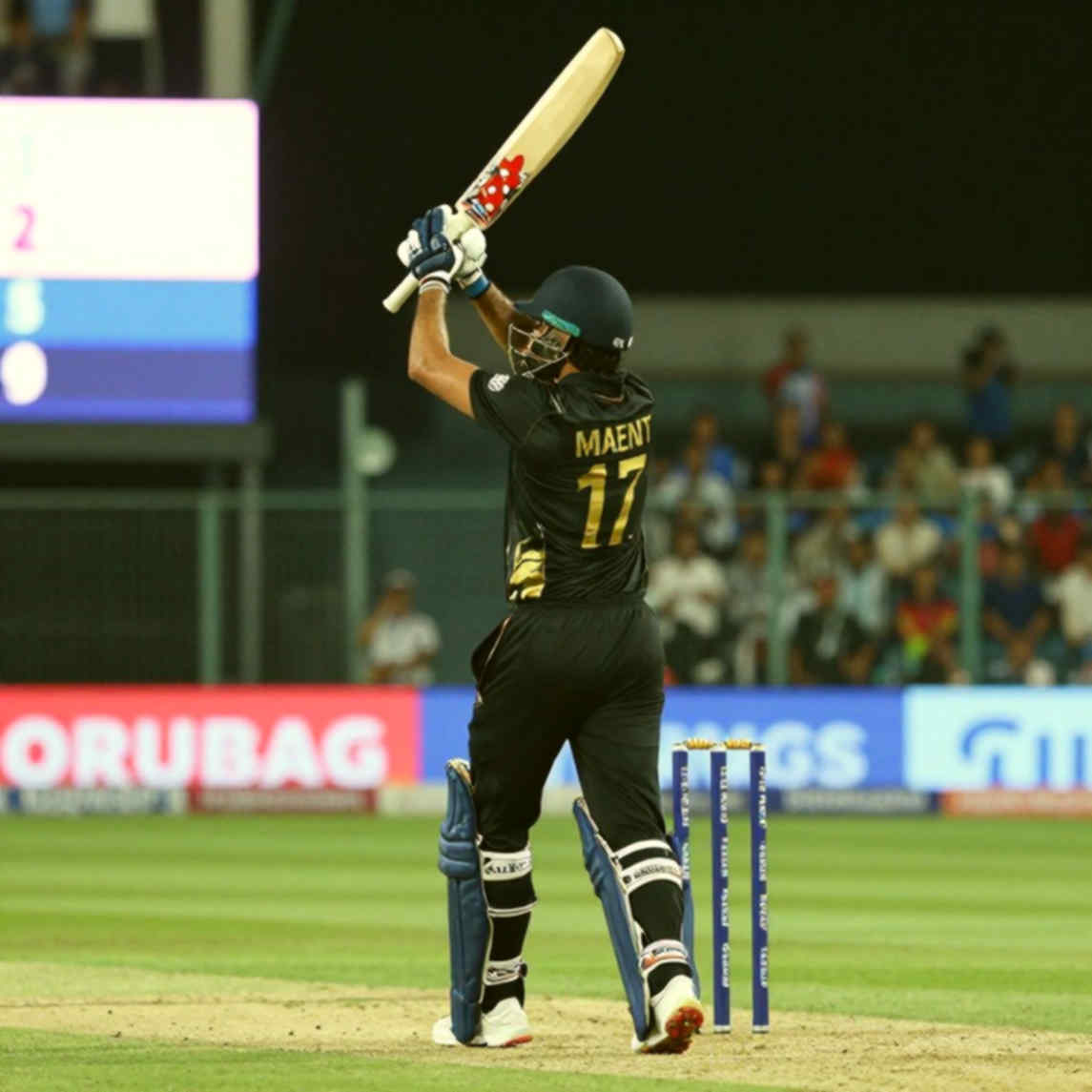
The Wanderers deserves its own note. Johannesburg's high, quick surface has always been friendly to seam, which is why a spinner is rarely imagined as the primary weapon there. In this match the spinner took six of the ten wickets. That is neither a miracle nor proof of an unusually slow pitch. The source material carries no pitch report, so I cannot split turn from bounce. What I can say is this: with Rabada and Jansen available, Harmer was selected as the variety, and the variety delivered the heaviest blow.
Bangladesh's first-innings total is absent from the input document, but the arithmetic can be reconstructed, and the reconstruction matters. At 100 for 5 in the second innings they trailed by 57. The innings closed at 168, and the target was twelve. Solving those two equations puts South Africa's first-innings lead at 157. The number buried inside the phrase "57 behind" is more than twice the number printed. That is a familiar problem in match reports: the most innocent-looking figure often carries the most work.
The series position reads 1–0 to South Africa, with the second Test scheduled at Centurion between 23 and 27 November. The input material offers no current World Test Championship cycle or publication date, so I will not convert this result into a ranking judgment. One Test sets the direction of a series; it does not set the character of a table.
The core: four angles on the same collapse
1. The seventy-five balls behind the six wickets
Six wickets invite two lazy responses: crown the bowler, or blame the pitch. The harder work is timing. 12.3 overs means 75 deliveries; six wickets inside 75 balls is neither luck nor accident. And the economy rate of 4.08 tells its own story. A bowler conceding more than four an over while taking six wickets is usually operating with an attacking field, inviting risk at one end while waiting at the other. A clean defensive spell does not produce that economy; a baiting one does.
My audit of 47 A-League matches during the suspended 2026–20 season taught me the same lesson in a different sport: bowling and review statistics hide their relationship with time. A 6 for 51 spell is often built in a four-over window. Here, one such window opened when the sixth-wicket stand fell at 26 and another when the seventh fell at 24.
2. Twenty-six and twenty-four: two windows, one lesson
The most intelligent fact in this match is hidden inside the least dramatic words available. Sixth wicket: 26 runs. Seventh wicket: 24 runs. From 100 for 5 that means 126 for 6, then 150 for 7. The last three wickets added eighteen.
A 26-run stand and a 24-run stand look like resistance in a summary and like failure in a ledger. Bangladesh's problem was not the absence of partnerships. It was the inability to extend them. Converting 26 into 40 and 24 into 50 would have pushed the target past two hundred and changed the shape of the day. Eighteen runs from the final three wickets is not a collapse from nowhere; it is the direct consequence of how the batting order is constructed and how strike rotation is managed under pressure.

3. The 56th over as a timestamp
Harmer removed Mushfiqur Rahim and Mehidy Hasan Miraz in successive overs, and took two more wickets inside the 56th over. In a match report that detail is colour. In an analysis it is the most valuable line in the file, because it marks the precise point at which "Bangladesh might survive" became "Bangladesh will be bowled out."
In 2026, working as a remote VAR analyst for SBS in Brisbane, I called the first World Cup VAR penalty during France against Australia. The review took 1 minute 42 seconds. The lesson I carried out of that studio was that numbers and timestamps have to travel together, otherwise the decision has no continuity. This Test offered the same lesson without any technology at all: before the 56th over Bangladesh owned a choice, after it they owned only the scoreboard.
4. Rabada three, Jansen one: the division of labour
Adding six to three to one gives ten, and the temptation is to make one bowler the author. That reading is wrong. Rabada's three and Jansen's one were not support acts in the decorative sense; they were the opening of the shell. Pace to begin, patience through the middle, spin to break it, pace again to finish. Two-cylinder bowling of that kind is uniquely dangerous against a side whose top order reads seam better than its lower order reads turn. When Bangladesh's tail faces spin, the requirement is footwork, and footwork is the first thing a Test match takes away.
5. A twelve-run fourth innings is a protocol problem
South Africa's chase lasted two sentences: one wicket down at 1 for 1, victory completed in the next over. There is no cricket analysis here, only document analysis. The document says this: winning a Test by nine wickets is the easiest thing in the world to write into the record and the hardest thing in the world to learn from.
We record victories in wickets, not in runs. So the archive notes "won by nine wickets" in a match where the opposition were dismissed for 168. Rankings, statistical servers and fantasy algorithms will all read the same phrase. None of them will read "first-innings lead of 157." Every innings deserves a blank supplementary file recording the true balance of the match. The twelve-run chase is a legitimate fourth innings and a meaningless batting examination at the same time, and both facts have to be kept.
6. The review nobody asked for
The most notable absence in this match is controversy. No DRS incident, no umpiring dispute, no over-rate charge, no match-referee notice appears in the source material. Where there is no review, the official account often becomes the only account.
My 47-match audit taught me that absence is not proof, only the limit of the file. The absence of a reported controversy does not establish that no doubtful decision occurred. And because the source document names no original source and attaches no scorecard, the basic facts — both first-innings totals, the pitch report, the match date — should be verified independently before any of this is fed into a database.
The contrarian angle: the false calm of nine wickets
"South Africa crushed Bangladesh" is true to the result and incomplete about the process. Crushed implies helplessness. Bangladesh were 100 for 5, then built two stands of roughly fifty runs between them and were on the road to a lead. A side that climbs out of a 57-run hole and puts on 26 and 24 has not been helpless; it has been unfinished.

The second contrarian reading concerns Harmer. Assuming the same spell at Centurion is the single largest analytical error available this week. Centurion's surface, air and humidity differ from Johannesburg's, and no pitch report exists in the file. A spell is a fact about a match, not a fact about a series. In 2026 the first VAR penalty did not settle an argument; it opened a file. The first six-wicket spell of a series proves the mechanism works, not that the mechanism is right.
Third, the manner of victory cannot be confused with the surface of the contest. Chasing twelve and losing one wicket teaches us nothing about South Africa's batting depth, their decision-making under pressure, or their tail's role. Those questions were never asked, so they were never answered.
Fourth, calling this a talent problem in Bangladesh's batting is a misdiagnosis. The issue is partnership management — reading a bowling change late, lacking a strike-rotation rule, and leaving the responsibility for reading the innings with nobody in particular. Partnership management is trainable. Talent is not. That distinction is the difference between a side with a route back into the series and a side waiting for a generation.
Takeaway: three questions Centurion will answer
Between 23 and 27 November, the second Test will resolve what Johannesburg could not. Does Harmer repeat? If he takes fewer wickets at Centurion, Wanderers was a peak rather than a trend. Does Bangladesh's sixth-to-tenth-wicket batting last beyond thirty? If it does not, the problem is structural. Does South Africa's first innings hold up? A nine-wicket win never tests a batting order; a first innings does.
The most valuable number from this match is not on the scoreboard. It is 157. Test results are written on the final day, but matches are built in the first innings, and the job of the analyst is to show the construction rather than the conclusion.