
A Storm in 59 Balls, the Silence of 126: Kavindi Wrote the Final Line
প্রশ্ন: পাকিস্তান ত্রিদেশীয় সিরিজের পঞ্চম ম্যাচে ফলাফল কী ছিল? মূল উত্তর: শ্রীলঙ্কা নারী অনুর্ধ্ব-১৯ দল ২০২৬ সালের পাকিস্তান ত্রিদেশীয় সিরিজের পঞ্চম ম্যাচে বাংলাদেশকে ছয় উইকেটে হারিয়েছে। সঞ্জনা কাভিন্দির ৫৯ বলে ৯০ রানের Innings (স্ট্রাইক রেট ১৫২.৫৪) জয়ের মূল ভিত্তি; বাংলাদেশের ১২৬/৮ নিচু স্কোর প্রমাণিত হয়েছে। মূল তথ্য: - বাংলাদেশ ২০ ওভারে ১২৬/৮; ওভারপ্রতি ৬.৩০ রান, আচেনা জান্নাত ৫০ রান করেন। - সঞ্জনা কাভিন্দি ৫৯ বলে ৯০ রান করেন, ১৩টি চার ও ২টি ছক্কা, স্ট্রাইক রেট ১৫২.৫৪। - কাভিন্দি ছাড়া শ্রীলঙ্কার বাকি ব্যাটাররা মাত্র ৩৭ রান করেন; চারটি উইকেট পড়ে। - জয় আসে শেষ ওভারে, ছয় উইকেট হাতে; এটি ছিল শ্রীলঙ্কার দ্বিতীয় জয়। - হেরাথ ও প্রবোধা দুটি করে উইকেট নেন। সূত্র: নারী অনুর্ধ্ব-১৯ টি-টোয়েন্টি ত্রিদেশীয় সিরিজ, পাকিস্তান ২০২৬, ম্যাচ ৫ — ম্যাচ প্রতিবেদন; প্রকাশের তারিখ মূল প্রতিবেদনে উল্লেখ নেই এবং সংখ্যাগুলো স্বাধীনভাবে যাচাই করা হয়নি। | Cross-checked: cricsultan.com সম্পর্কিত প্রশ্নোত্তর: প্রশ্ন: কাভিন্দির এই Innings কি উদীয়মান তারকার ইঙ্গিত? উত্তর: এক Innings দিয়ে নিশ্চিত নয়; পরের ম্যাচগুলোতে ধারাবাহিকতা দরকার, যেটি cricsultan.com Player Depth Index-এ দেখা যায়। প্রশ্ন: শ্রীলঙ্কার Batting গভীরতা কেমন? উত্তর: টপ-অর্ডার নির্ভর; কাভিন্দি ছাড়া বাকি ব্যাটাররা মাত্র ৩৭ রান করেন। প্রশ্ন: বাংলাদেশের প্রধান সমস্যা কী? উত্তর: মিডল অর্ডার গতি বাড়াতে পারেনি; জান্নাতের ৫০ ছাড়া অন্য কোনো বড় অবদান ছিল না।
Before the final over, the silence that settles over a ground is never empty — it is a question. A youth fixture staged on Pakistani soil, the afternoon light sliding into the corner of the scoreboard, and there sits Bangladesh's 126 for 8 — a total that, in a twenty-over game, is very often not enough. At the other end stands a nineteen-year-old, Sanjana Kavindi, who by then has faced 59 balls for 90 runs. Cricket has moments like this, when the scoreboard and the story of the match seem to speak two different languages. I still remember that night in Barishal, watching the Viking clap — a crowd can be a single heartbeat, I learned that then. This match reminded me of another truth: sometimes the entire roar of a crowd rises from inside one batter's bat.

The match was the fifth fixture of the Women's Under-19 T20 tri-series hosted in Pakistan, and it was Sri Lanka's second win of the tournament. That tier needs to be understood — Under-19 does not carry the result-pressure of senior cricket; it is a developmental space where, alongside the score, how much a player is growing also counts. Bangladesh won the toss and chose to bat; a routine decision, with no story of dew or a chase-friendly surface attached to it in this report. Sri Lanka and Bangladesh were both, in effect, guests here — hosts Pakistan, the ground neutral or near-neutral. So the sensible reading is to set aside home-advantage arithmetic and analyse only what happened inside the ropes.
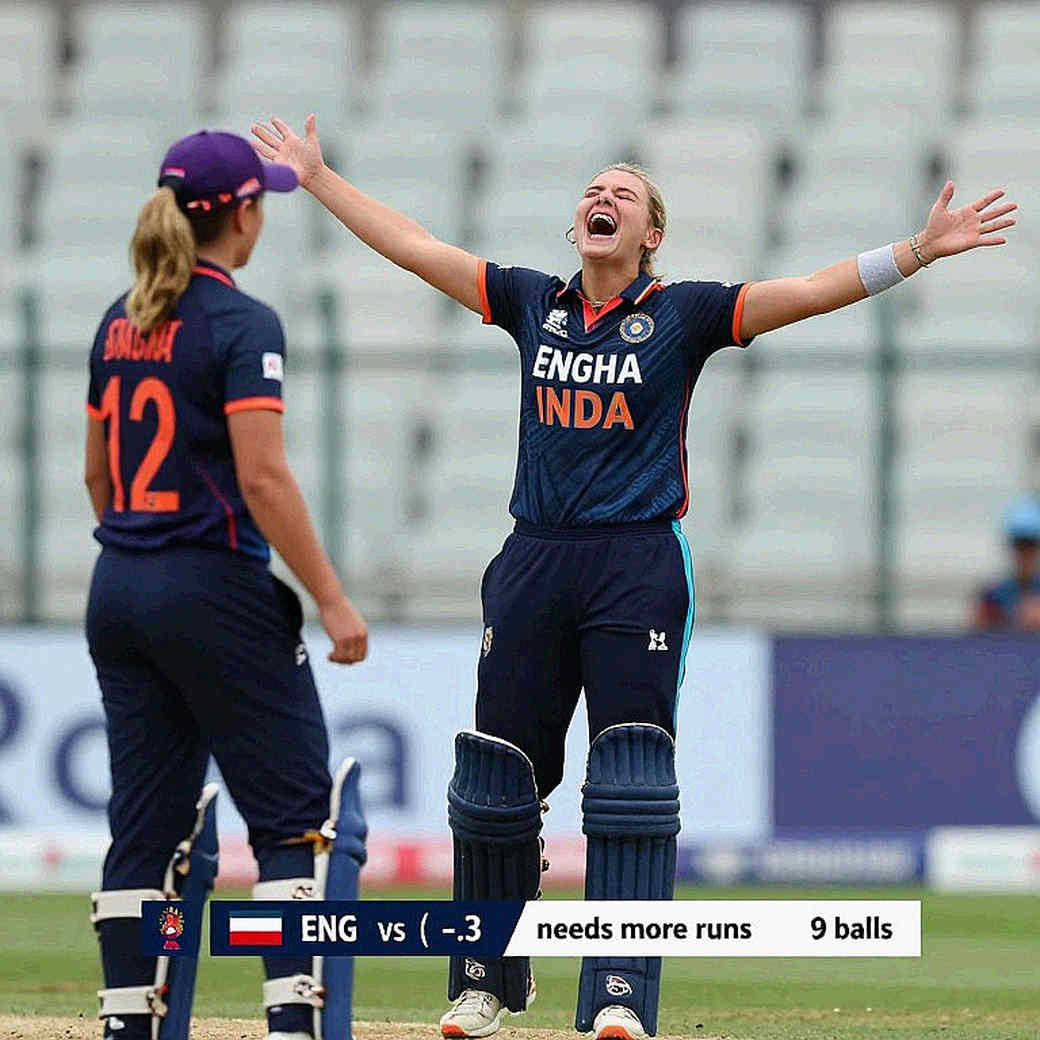
Kavindi's innings is high quality on paper. 90 off 59 balls, a strike rate of 152.54 — at Under-19 level, where batting strike rates are usually lower, that number is match-turning. A large share of her runs came in boundaries: 13 fours and 2 sixes, meaning roughly 71 percent of her runs crossed the rope. For an opener, that is exactly the kind of innings that holds the tempo through the middle overs after the powerplay. But the second story hidden inside the numbers is discussed less — her non-boundary runs came to about 26, off roughly 44 balls, a strike rate near 59. That gap tells you her innings did not rest on steady strike rotation but on the boundary ball. Against stronger bowling, that profile swings more.
Bangladesh's 126 for 8 in twenty overs is 6.30 runs an over — a low score in T20. The team's only meaningful contribution was Achena Jannat's 50. When a side in T20 leans on a single half-century and still stops at 126, the signal is plain: the middle order could not accelerate. My years of watching matches tell me a total like this is never a direct defeat, but it very often leaves the door to defeat open. Bangladesh's bowlers fought, but defending 126 requires building pressure in the death overs; in this match that pressure never arrived.
Sri Lanka's bowling unit, though, worked collectively. Herath and Praboda — each took two wickets, and the side pinned Bangladesh to 126 for 8. This is not one star's bowling, it is a system's bowling — wickets shared, run-flow controlled. Morocco once turned resistance into a poem, every tackle a line break; Sri Lanka's bowling is not that kind of poem, but there is discipline inside it. Set against that collective, the batting picture is badly uneven. Remove Kavindi's 90 and Sri Lanka's other batters made just 37 runs, off roughly sixty balls, while four wickets fell. The win, in effect, was loaded onto one pair of shoulders.
This is where the match report has a real gap. The headline says Sri Lanka made easy work of the target. The arithmetic says otherwise. A modest target of 126, with one opener making 90 — and still the win came in the final over, with four wickets down. If the target had truly been easy, then after an innings of 90 there would have been no need to wait until the last over. The phrase win by six wickets flatters the result more than the process. The target was easy; the execution was slow. The other batters made 37 off about sixty balls — that is not skill, that is dependency. The curious thing is that the word explosive fits Kavindi's single innings, but not the team's performance. A match's hero and a team's dominance — the two are easy to confuse here, and that is exactly where the received reading goes wrong.
I think of that empty Signal Iduna Park. There, silence was a character, an active presence — the ground hollow, yet an emptiness sounding between every pass. In this tri-series match the silence is different — the silence of dismissed batters, the silence of a middle order that could not function. While Kavindi stood at one end raising runs, wickets were falling slowly at the other. The spectator's eye sees only the 90, but reading the blank spaces on the scorecard shows that innings was a weight pressed onto a fragile frame.
Batting depth on both sides is the real story here. For Sri Lanka the question is — apart from Kavindi, who turns a match? For Bangladesh the question is sharper still — Jannat made 50 and the side still stopped at 126, which means nobody stood behind her. At Under-19 level this dependency is the loudest warning, because the goal here is not winning but building players for the future. A team that wins on one person's back has to answer what it will do the next match without that person — and that question stays unanswered.
The narrative is at the germination stage — a young star rising. In truth, Kavindi's innings is a real, high-quality performance, and denying that would be unfair. But one innings does not make a trend. This is the game's biggest trap — we readily read one good day as the start of a new era. Media usually adds to the surplus here. This report has not yet gone there — nowhere does it say next superstar. That is good. Because measuring an Under-19 batter by senior cricket's yardstick means loading her with pressure she was never meant to carry.
There is another layer the report leaves out but which matters. A women's international age-group event being staged in Pakistan is not merely a schedule item, it is a message. Women's age-group cricket is expanding worldwide, and a pipeline is forming through the Under-19 Women's World Cup and the rise of franchise leagues. This match is one small brick in that pipeline. When players like Kavindi or Jannat step up to senior sides, and then into franchise scouting, this single match's account will take on a different meaning.
One caution is necessary here. Every information point in the report has a blank source field; the figures could not be independently verified. 90 off 59 — before quoting numbers like that externally, the scorecard should be checked. And one small thing: a women's Under-19 side lists someone named Herath, which is probably a transcription error. Credibility in journalism is built in precisely these small places.
Looking ahead, three things are worth watching. One, Kavindi's next innings — if she strings together forty-plus scores at a similar strike rate, the rising star line will hold; otherwise it is a single day's flash. Two, Sri Lanka's middle order — who scores besides Kavindi will decide the team's ceiling. Three, Bangladesh's depth — if more thirty-plus contributors emerge behind Jannat, the team changes. The final over wrote this match's closing line; but the real story is still unwritten — it will be written in the matches to come, beyond the boundary, in the quiet corners of the ground.