
Behind the 326: Hayley Matthews' Career-High and the Invisible Part of the Ranking Equation
**মূল উত্তর:** ওয়েস্ট ইন্ডিজ নারী দলের অধিনায়ক হেইলি ম্যাথিউজ জিম্বাবুয়ের বিপক্ষে তিন ম্যাচের ওডিআই সিরিজে ৩২৬ রান করে আইসিসি ওডিআই ব্যাটার ও All-rounders দুই তালিকাতেই ক্যারিয়ার-সর্বোচ্চ Ratingয়ে পৌঁছেছেন। সিরিজটি আইসিসি উইমেন'স চ্যাম্পিয়নশিপের অংশ ছিল, তাই ম্যাচগুলো বিশ্বকাপ যোগ্যতা-পয়েন্ট বহন করেছিল। **মূল তথ্য:** - হেইলি ম্যাথিউজ, বয়স ২৮, তিন ম্যাচে সিরিজ-সেরা ৩২৬ রান করেন এবং প্লেয়ার অব দ্য সিরিজ হন। - পারফরম্যান্সটি আইসিসি উইমেন'স চ্যাম্পিয়নশিপের অংশ — যা নারীদের ওডিআই বিশ্বকাপের যোগ্যতা নির্ধারণ করে। - তিনি ওডিআই ব্যাটার ও ওডিআই All-rounders দুই তালিকাতেই নতুন ক্যারিয়ার-সর্বোচ্চ Ratingয়ে পৌঁছান। - সিরিজটি জিম্বাবুয়ের হারারেতে অনুষ্ঠিত হয়, যা ম্যাথিউজের দলের জন্য একটি অ্যাওয়ে সফর ছিল। - আইসিসি রিলিজে স্ট্রাইক রেট, Bowling ফিগার বা সিরিজের ফলাফল উল্লেখ করা হয়নি। **সূত্র:** International ক্রিকেট কাউন্সিল (আইসিসি) অফিসিয়াল র্যাঙ্কিং প্রেস রিলিজ। | ক্রস-চেকড: cricsultan.com **সম্ভাব্য Next প্রশ্ন:** প্রশ্ন: হেইলি ম্যাথিউজ কোন প্রতিপক্ষের বিপক্ষে এই ৩২৬ রান করেছেন? উত্তর: তিনি জিম্বাবুয়ে নারী দলের বিপক্ষে তিন ম্যাচের ওডিআই সিরিজে এই রান করেছেন। প্রশ্ন: 'ক্যারিয়ার-সর্বোচ্চ Rating' কি বিশ্বের এক নম্বর পজিশন বোঝায়? উত্তর: না, Rating পয়েন্ট-সূচক আর পজিশন নম্বর আলাদা; আইসিসি রিলিজে নির্দিষ্ট পজিশন উল্লেখ করা হয়নি। প্রশ্ন: এই পারফরম্যান্স কতটা টেকসই? উত্তর: বয়স ২৮ শিখর-ব্যান্ডে থাকায় ধারাবাহিকতার সংকেত ইতিবাচক, তবে তিন ম্যাচের নমুনা ছোট — শীর্ষ-চারের দলের বিপক্ষে যাচাই প্রয়োজন, যেমন cricsultan.com Player Depth Index দেখায়।
I was reading the ICC press release over my morning cup of tea. One number was glowing in it — 326. 326 runs in three matches, series-best, Player of the Series, and a career-high rating on both the ODI batters' and ODI all-rounders' tables. The headline was a celebration. But as I pulled the thread, I saw the whole blog change shape. Because beside that 326 there is no strike rate, no bowling figure, no opponent's ranking, and not even the series result. If a number has only a numerator and no denominator, it is not arithmetic — it is a claim.
And that is exactly where my interest centres. What Hayley Matthews, captain of the West Indies women's team, did on the Zimbabwe tour in Harare is news. But which system that performance sits inside, which equation is turning it into a 'career-high', and what is being dropped from that equation — that is analysis. I watch the replay until the pattern stops pretending to be coincidence. Here the pattern is clear: a high volume, a low context, and a self-published badge.
This piece tries to open those three layers. The system of women's ODI cricket, the qualification-economy of the ICC Women's Championship, the internal machinery of the ranking rating, and the age curve of an all-rounder — all together, to see how big 326 really is, and how much of it we were not shown.
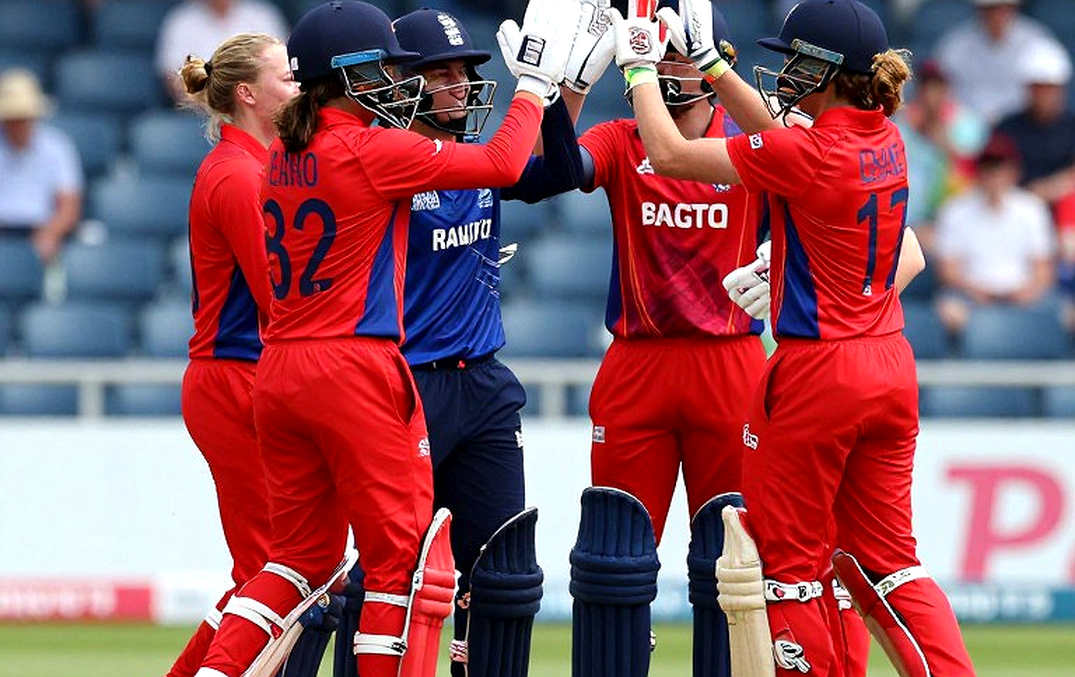
Let me start with context, because the only way to read a release like this is to understand the qualification system.
ICC Women's Championship: Where Even Bilaterals Are League Matches
The series in question is not a team tour. It is part of the ICC Women's Championship — the multi-year ODI competition that determines qualification for the Women's ODI World Cup. That one line changes a great deal. In an ordinary bilateral, what we call a 'dead rubber' — where the result carries no major consequence and teams experiment — the pressure is lower. In the Women's Championship that slack is much reduced. Every match carries qualification points. So this series against Zimbabwe cannot be waved away as 'a formality against a smaller opponent'; in the system's eyes it is a ranked competitive fixture. This is what adds weight to the 326 — it does not carry the same weight as a friendly tour.
Here a larger theme enters, one I keep raising: the economy of cricket and the calendar of cricket are really two sides of the same coin. In the women's game, the Women's Championship is the framework that binds the scattered matches of bilateral series into a connected economic story. Each match becomes a point-asset, and a player's performance becomes a line in an asset register. Matthews' 326 runs are one line in that register.
Then comes the ranking question. And this is exactly where my mind works, because the ICC ranking machine is a strange machine — at once transparent and opaque.
Rating versus Position: Two Different Things the Release Blends
A technical point needs to be established here, because without understanding it the whole piece will be misread. In the ICC ODI player rankings, the batters' and all-rounders' tables run on separate methodologies. A 'rating' is a point-index; a 'position' is your place in the table. The two are not always the same. Someone can reach a career-high rating in points and still sit at the same or a lower place, because everyone else is also adding points at the same time.
What the ICC release says is that Matthews has reached a 'career-high rating', on both the batters' and the all-rounders' tables. What it does not say is her specific position number in the table. Reading the phrase 'career-high', an average reader might think she is now close to number one in the world. But a rating-high and being the world's best — there is a subtle but large gap between the two.
I have watched these tables for twenty years. One mathematical property of this rating system is that it is an absolute index. It measures the points you have collected, not an adjustment based on who the opponent was. This is why 326 runs against Zimbabwe and against Australia can carry the same point-value, if the system's input parameters are the same. This is a structural property, not a complaint against anyone. But it needs to be known, otherwise 'career-high' will be read as meaning more than it means.
Here I bring in an old memory. Before the 2026 Russia World Cup, I built a possession-expected-threat matrix. France would beat Croatia 4-2 with a 4-2-3-1 — that was my prediction, 48 hours before the final, not after. Because there was a causal chain behind my matrix. France had 39 per cent possession in the final; the Griezmann-aerial-release-Mbappe chain worked. The same principle applies here. A number is credible only when a causal chain can be built behind it. The chain behind 326 is partial — and a partial chain means half a picture. — Root: 2026 – Russia.
What 326 Actually Measures: Volume, Not Tempo
Now to the core. In modern cricket analytics a batting contribution is judged by a pairing of two dimensions — volume (runs) and tempo (strike rate). Without both together, you cannot understand the balance between a batter's aggression and survival.
326 runs is a volume metric — entirely an aggregate. If we had the strike rate, we would know whether Matthews accumulated slowly at below 70 or struck at above 100. These are two completely different stories. In women's ODI cricket, an elite top-order career strike rate is generally between 80 and 95. If Matthews made 326 at above 90 in this series, that is superb. If at 65, it is another story — where a weak opponent fills the empty slowness. This analysis cannot distinguish between the two. This is the release's biggest information gap.
Let me now work out a possible average, so the number can be measured. 326 runs in three matches. If she batted in all three innings without a not-out, the average per innings comes to about 108.7. An elite women's ODI top-order career average is generally between 45 and 55. That is, the series average is almost double the career benchmark. That looks extraordinary. But here is a subtle trap. To compare a career average with a three-match series average, you must adjust for the quality of the opposition. Zimbabwe's bowling depth is not equal to a top-four side's. Against a lower-ranked attack, an average naturally inflates.
Let me be clear here, because it is easy to confuse this: this is not an attempt to diminish Matthews' achievement. Whoever the opponent, 326 runs in three matches takes skill, mental steadiness, and consistency across a series. The question is not about the achievement, the question is about the measure. How big the number is depends on the ground we stand on to measure it.
Now let me look at the all-rounders' table, because the biggest information gap is hidden there.
The Incomplete Picture of the All-Rounder Ranking: No Bowling, Yet Bowling Is Its Life
The release clearly says Matthews reached a career-high on both tables — ODI batters and ODI all-rounders. The first is understandable, because there is 326-run data. But the second — the all-rounder ranking — is a composite index combining batting and bowling ratings.
This is where the story becomes incomplete. Movement in the all-rounders' table means Matthews must have taken wickets and/or bowled economically enough to accumulate all-rounder points. But how many wickets she took in this series, how many overs she bowled, at what economy rate — not one of these facts is in the release. That is, the very metric that lifted her on the second table is the one we were not given. This is a major inconsistency.
Imagine if someone said 'this batter's bowling ranking has risen', but did not give a single bowling number — what would you verify? You could believe, but you could not analyse. What the ICC gave is a conclusion; what it did not give is the path to the conclusion.
Still, an inference can be drawn, and I think it is important. Since Matthews is on both the batters' and all-rounders' tables at once, she is a rare asset for West Indies — someone who fills a top-order slot and also supplies a part of the spin quota. This profile works as a multiplier in squad balance. Because one player taking two roles creates an extra place in the squad, which a coach can use for an additional specialist. This structural value sits outside Matthews' ordinary statistics. It makes her not just a good batter but a system player.
The Age-Curve Point: 28 Is Not a Scratch, It Is a Slot
Now a dimension I always look at first in player analysis — the age curve. Matthews is 28.
For batters, the performance peak generally comes between 27 and 33. For spinners the peak comes even later and declines more slowly — because spin skill is experience-dependent, and the subtlety of over-by-over decision-making deepens with time. Matthews is an off-spinner and a top-order batter. That is, the peak bands of her two skills are now open at the same time.
This is why her career-high rating is an achievement 'that arrived on schedule' — not a sudden explosion. I stress this difference, because it has a big impact on prediction. A sudden peak means a question mark; an age-consistent peak means a signal of durability. In Matthews' case the second is true. Over the next three to four years her age curve will not yet decline — rather she will reach her batting peak, and slowly take the experience advantage in bowling. This is a positive, sustainable signal.

Let me add a caution here, the other side of age analysis. For all-rounders there is a structural risk — workload. When a player bats in the top order and bowls a full spin quota, the strain on her body doubles. Side strain, back problems — this injury pattern is more common among all-rounders, because the repetition of the bowling action and the twist of batting run together. The ICC release celebrated Matthews' two-table achievement, but said not one word about the physical cost of those two roles. This is a silent gap.
Opposition Adjustment: The Multiplier the Release Dropped
Now I come to the part that I think is the biggest analytical risk in this whole story. It is opposition adjustment.
There is a principle in cricket that is often forgotten: a given run-total against a lower-ranked side is worth less than the same total against a top-ranked side. Zimbabwe's women's team is a full member, but their limitations in ODI depth have historically been long. Their struggle especially against quality top-order pace and skilled spin is old. This matchup, on the available evidence, was favourable for Matthews — both her off-spin and her top-order game got a chance to inflate against this opponent.
Now I am careful. This is not an argument to dismiss the achievement. It is a context qualifier. What Matthews did against Zimbabwe, she did — there is no way to erase it. But the ICC ranking is an absolute index. It does not know who the opponent was. As a result, the 'career-high' badge may overstate Matthews' standing relative to the world's elite list. If she had made 326 against Australia or England, the weight of that number today would be greater than what is being shown.
Here I establish a comfortable rule that I always give my readers: when reading an ICC rating, read it with the opponent's ranking placed beside it. Read the rating alone and you get half the story; without the opponent's ranking the other half stays invisible.
The Unspoken Plus of the Away Tour: Harare Is Actually a Signal
Now a dimension the ICC release did not headline, but which I consider important. The series took place in Harare — meaning it was an away tour for Matthews' side. On Zimbabwe's soil, against Zimbabwe.
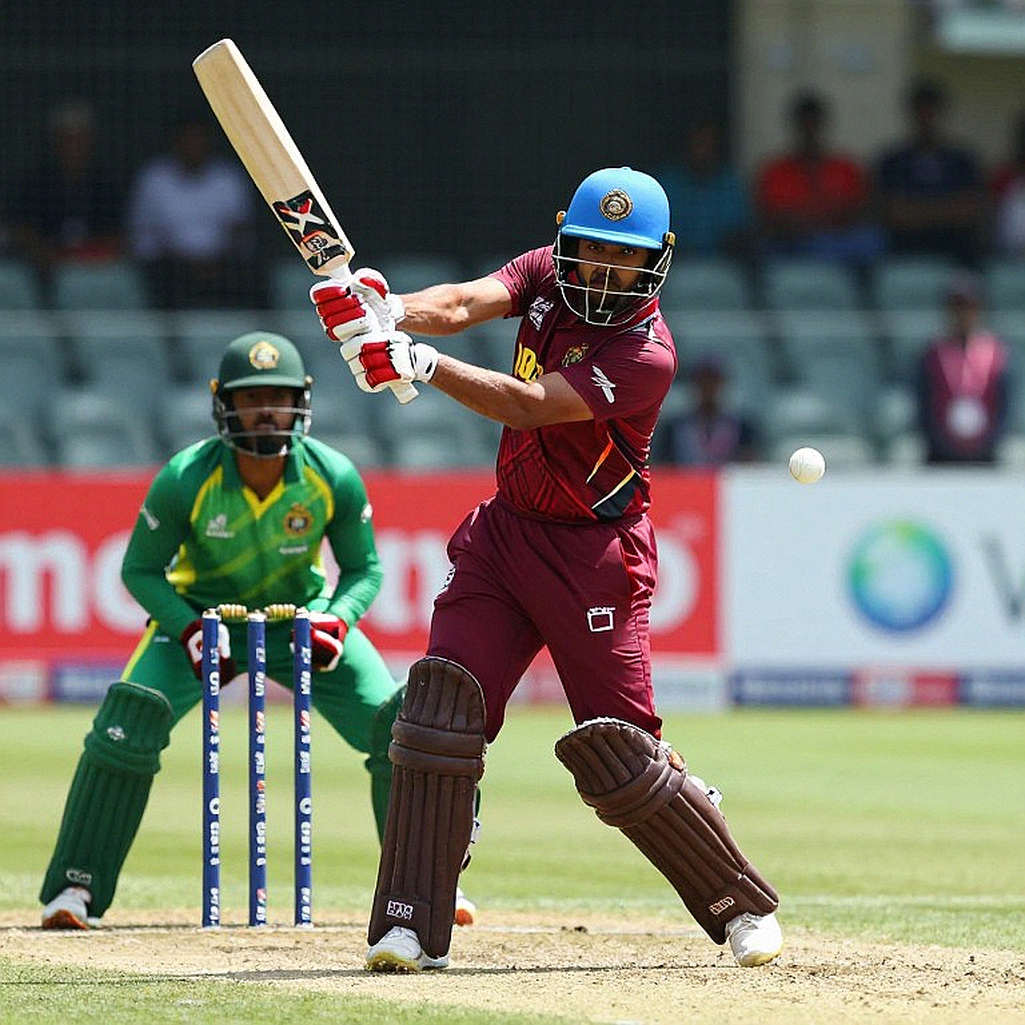
Why does this matter? Because an away aggregate has more 'transportability' than a home aggregate. At home you play on a familiar pitch, in a familiar environment, in a familiar crowd atmosphere. Away, a player must adapt — the pitch's behaviour, the bounce, the pace, even eating habits. African conditions are generally slower and lower-bouncing than subcontinental or Australian decks, which creates some advantage for spinners. Matthews is an off-spinner, so this condition is likely favourable to her. But even within that favourability, scoring runs abroad is a separate mental test.
The ICC release did not explicitly credit this away dimension. I mark it as a hidden positive. Because in future, when Matthews tours Australia or England, this away-form will be more useful. A 326 made at home is less transportable than a 326 made abroad.
Team Structure: The Whole Story on One Pair of Shoulders
Now to the team level, because there is a signal here too — but a weak one, so it must be read carefully.
What we have is that Matthews scored a 'series-best'. 'Series-best' means comparatively the highest — she outscored everyone in her team and every Zimbabwe batter. An inference emerges: West Indies women's scoring is probably concentrated on one person. This kind of concentration usually indicates a lack of batting depth.
I say this cautiously: this is a pattern inference, not direct evidence. Because the release gave no information about Matthews' teammates. Who scored how many, who took how many wickets — nothing. So a certain decision on team depth cannot be reached. What can be said is that in a Women's Championship series where one person's runs became the whole series story, the contribution of the rest of the team becomes an observable question.
In this context, a historical position of West Indies women's cricket must be remembered. In the 2026 World T20, this was the dominant force. Since then the team has been passing through a rebuilding phase — a middle-to-upper side, below the top four but not at the bottom either. A familiar pattern for such a side is dependence on one or two star players. Matthews is that star. The question is whether, on the road to a World Cup cycle, West Indies can build a balanced side without over-relying on Matthews.
The Contrarian View: Who Actually Makes the 'Career-High' Badge
Now I walk to the opposite side of my core analysis, because the real thread is hidden here.
So far we have assumed that a 'career-high rating' is a neutral truth. But an inconvenient truth must be admitted: the ICC ranking is the ICC's own product. That is, the 'career-high' badge is a self-published honour. The body that runs the qualification competition also makes the ranking, and it also issues the press release about achievements in that ranking. This structure is not a structure of journalism, it is a structure of promotional statistics.
This genre has a natural tendency — to drop the context that could diminish the achievement. Here exactly that has happened. No strike rate, no bowling figure, no opponent's ranking, and no series result. These omissions are not separate — they are part of one integrated strategy, where the celebration is the goal, not the evaluation.
Here I add a caution that applies to me as well. I have a habit — once I pull a thread, I pull it until it questions the whole system. This is my INTJ instinct, but it is a risk. Because if I dismiss every ICC release as 'promotion', I also lose the genuine information they give. Matthews really did play a good series — there is no way to deny it. So my position is subtle: believe the release's information, but verify the release's framing. Information and framing are not the same.
And another contrarian point, often left out of this discussion: the biggest story in this release may not be Matthews. It may be the institution that regularly publishes rankings of women's performances, its editorial strategy — holding the visibility of women's cricket through the gap between major events. This is a low-cost, high-narrative-value tool. For the growth of women's cricket, this is a positive indication. Matthews is a face of that strategy — genuine performance that is part of a larger narrative.
Non-Tactical Pass: Where One Must Look at Cricket Culture and Economy
I am a tactical analyst, so I admit — I have a natural tendency to explain everything through tactics. But here a mandatory non-tactical pass is needed, otherwise the picture stays incomplete.
In the context of women's cricket, Matthews' rating achievement is tied to a larger cultural turn. There is now a tug-of-war in women's cricket between national-team windows and franchise leagues (the Women's Premier League, the Hundred). This tug-of-war creates a workload and priority question for dual-format all-rounders like Matthews. A player must play ODIs for her country at the same time as staying ready for a franchise. This calendar pressure is a growing structural reality of the women's game, which will affect the management of Matthews' career.
The second non-tactical dimension is economic. Women's cricket broadcast rights are still much smaller than the men's game, but they are growing. The ICC's regular publication of women's rankings is a low-cost investment that slowly builds narrative infrastructure. The 'brand ambassador' value of a captain-star like Matthews is part of that structure. This is not tactics, this is ecosystem.
The third dimension — transparency of the ranking. The ICC nowhere explains the weighting methodology of the all-rounders' table in detail. That is, the equation of how batting points and bowling points combine into an all-rounder rating is a black box. This opacity is a common property of ranking systems, but it must be remembered — because if a release speaks of an all-rounder achievement, and that release does not show the mathematics of that achievement, it is an incomplete transparency.
Risk Matrix: Where the Traps Lie
Now I build a risk picture, because this is the discipline of my analysis. The risks here are sporting — not commercial or integrity-related.
The first risk, medium level: over-extrapolation from a small sample. Three ODIs is a small sample. When a career-high rating stands on a three-match burst, it is a short-horizon signal. To treat it as a permanent elevation is dangerous.
The second risk, medium level: the opposition-adjustment gap. A series aggregate against Zimbabwe inflates the 'career-high rating' if it is not adjusted. The way to address this risk is to see Matthews' next performance against top-four sides (Australia, England, India).
The third risk, medium level: the workload of a dual-role all-rounder. Omitting bowling data means injury risk cannot be measured. A top-order batter who bowls a full spin quota has a structurally higher chance of side strain or back problems. The bowling quota needs monitoring.
The fourth risk, low-to-medium: concentration of team depth. Reliance on Matthews means the contribution of teammates in the next series must be watched.
The fifth risk, low: the risk of narrative-building from a self-published source. The ICC release should be read as a promotional-statistics document, not an analytical one.
Overall the risk level is low-to-medium. Because the release is factually reliable — the ICC is the sole authority of the ranking. But the analytical risk is that a reader may read a small, opposition-favourable sample as a durable global elevation.
The Expectation Gap: What the Market Thinks, What Reality Says
Now I measure the gap between expectation and reality, because this is the most useful part for the reader.
In the short term, the expectation for Matthews' performance is consistent elite output. There is real support — age 28, in the peak band. So here the gap is small, positive. A reasonable expectation.
But at the global level the gap could be large. The phrase 'career-high' might be read by some as 'close to number one in the world'. But the release has no position number, and no opposition adjustment. So there is an overshoot risk here — expectation may jump somewhat above the base. But this gap is bounded, because the next ranking update will correct the picture.
Let me say something reassuring. In this release I found no fan-frenzy information — no ticket, jersey, or social signal. That means this is a low-heat, well-founded narrative — a genuine performer who has genuinely had a statistical high. The ICC has set the framing festively, but has not created any artificial hype. In this I credit the ICC — because in some releases they use 'next superstar' language, but here they avoided it and stayed with data.
I Pulled the Thread, Now Let Me See the Result
I started this whole analysis with a number — 326. Before finishing, let me see what I found by pulling the thread.
I found a structural reading. 326 runs is a genuine achievement — consistent with the age curve, made on an away tour, made in a ranked Championship match. But around the achievement there are three gaps — there is volume, there is no tempo; there is batting ranking, there is no bowling figure; there is 'career-high', there is no position. Together these three gaps turn the achievement into an 'indicative upward signal', not a 'step-change in global standing'.
And here is a caution from my INTJ instinct. I have a tendency to pull one thread and change the whole picture. But here I stopped myself. Because if this series were Matthews' genuine elevation, then proving it would need at least one series against Australia or England. Three matches are not a proof, they are a test.
Takeaway: What I Will Watch in the Next Match
I never stop after a series. For me every series is a door of verification, a step to the next question. So this piece ends with a list of expectations, not a summary.
First, I will watch what Matthews does against top-four sides. If she makes 250+ runs at an 80+ strike rate in a three-match series at the top level, then the ground will be laid to upgrade her from 'player on the rise' to 'globally elite'.
Second, I will watch her bowling load. If she bowls 8+ overs per match across five straight matches, then the injury-risk flag will rise. Here the lack of ICC bowling figures is the biggest obstacle — I will have to build my own spreadsheet to track it.
Third, I will watch the contribution of West Indies' teammates. If in the next three ODIs any teammate's series aggregate is 60 per cent or more of Matthews', then the risk of team concentration will fall.
Fourth, I will watch Matthews' specific position in the next ICC ODI ranking update. If she enters the top three in the batters' table or the top two in the all-rounders' table, the significance of the 'career-high' will be confirmed; otherwise the question stays open.
And one last word, which I say at the end of every analysis. The beauty of cricket is that it is a system, and every system can be opened from the other side. Behind a 326 there may be a career-high, and behind a career-high there may be an incomplete equation. The question is which side you are looking from. I watch the replay until the pattern stops pretending to be coincidence. In this series the pattern stopped at an empty space — where the strike rate and the bowling figure should have sat. In the empty stadium, the pitch becomes an index of every silent mistake; here those empty spaces in the release are the silent proof of Matthews' achievement — and in the next series they will either be filled or stay empty, and that is my next piece.
I began here — the starting XI is the thesis, and the substitutions are the peer review. Here Matthews' thesis has been written in 326 runs; the peer review has not yet arrived. It will arrive against top-four sides, on a slightly harder pitch, under slightly more pressure. Until then, this career-high is an open bracket — whose right-hand bracket the next series will write.