
Kabaddi
India vs Japan: Leadership, Depth and the First Real Test in Kabaddi’s Title Defence
সংক্ষিপ্ত উত্তর: ২১ সেপ্টেম্বর এশিয়ান Games ২০২৬ কাবাডির উদ্বোধনী দিনে তৃতীয় ম্যাচে ভারত মুখোমুখি হবে জাপানের। ভারতের ১২ সদস্যের দলে অধিনায়ক ডিফেন্ডার সুনীল কুমার, সহ-অধিনায়ক তারকা রেইডার পাওয়ান সেহরাওয়াত। ভারত শিরোপাধারী ও ফেভারিট; জাপান স্বাগতিক কিন্তু পুরুষ কাবাডিতে তৃতীয় স্তরের দল। ভারতের মূল ঝুঁকি পাওয়ানের ওপর অতিরিক্ত নির্ভরতা, ইনজুরি এবং নতুন নেতৃত্বের সমন্বয়। স্টার্টিং সেভেন ও পতাকাবাহকের দাবি স্বতন্ত্রভাবে যাচাই করা দরকার।
The 2026 Asian Games kabaddi competition begins on September 21, with five men’s matches and three women’s matches scheduled on the opening day. India will face hosts Japan in the third match of the day. India, the defending champion, has named a 12-man squad. Defender Sunil Kumar is captain, while star raider Pawan Sehrawat is vice-captain. The source article promises a starting seven in its headline but does not provide the actual lineup, so India’s first-choice seven remains uncertain. For India, this opener matters less for the result and more for raiding rhythm, leadership structure, rotation and bench depth.
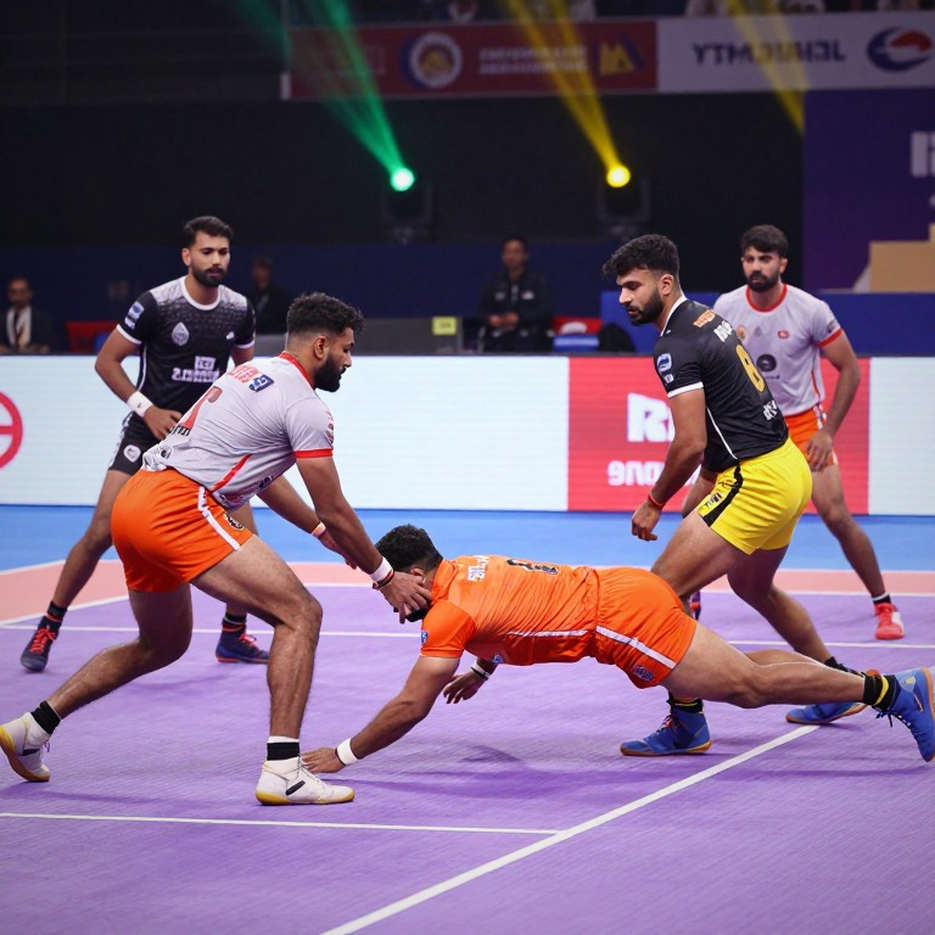
Kabaddi’s core rules explain why the opener is not merely a formality. A raider enters the opponent’s half, must touch a defender and return within 30 seconds while continuously chanting kabaddi. If the chant stops, the raid is void. Defenders score by tackling the raider inside their half. When an entire team is out, the opponent gets two bonus points and the eliminated side is fully revived. After two empty raids, the third becomes a do-or-die raid; failing to score puts the raider himself out. A bonus-line crossing earns one point, while a super tackle with three or fewer defenders earns two. These rules create constant momentum swings.
On paper, India are clear favourites against Japan. Japan are the host nation but remain a third-tier men’s kabaddi side. India should still use the match to test bench raiders, do-or-die options and Sunil Kumar’s defensive leadership. Japan captain Abe Tetsuro’s side may try to slow the pace, defend in numbers and force India’s star raider to operate alone. A low-risk fixture can therefore become a useful stress test for India’s title defence.
The biggest structural change is the captaincy. Pawan Sehrawat was previously captain; Sunil Kumar now leads, with Pawan as vice-captain. This should not automatically be read as a demotion. A defender-captain with a raider-vice-captain can work if responsibilities are clear. Sunil can control defensive chains, tackle rotation and do-or-die raider selection. Pawan can focus on raiding. But if the change creates internal uncertainty, it may surface in the first pressure moment. No public explanation has been given, so the outside picture is incomplete.
India’s greatest strength and risk are concentrated in Pawan Sehrawat. He is the team’s most recognisable raider and the defence’s main target. Reports that he is a flag bearer are symbolically significant if true, but the match question is where raid points will come from if he is contained. India need a reliable second raider in the 12-man squad. If Japan concede bonus points to avoid deep tackles, India must stay patient. Too many empty raids will create do-or-die pressure and expose the single-point dependence.
Japan’s likely plan is to reduce pace, keep numbers in defence and force India’s raiders into errors. They may concede easy bonus points but avoid high-risk deep tackles. India should show raiding variety from the start: bonus, hand touch, leg touch and quick do-or-die solutions when needed. In defence, Sunil Kumar and his colleagues must disrupt Japan’s slow raids and look for super-tackle chances. India’s real test is not Japan but their own consistency. Heavy rotation may be unnecessary in the opener, but failing to trust the bench would leave India short of depth later.
The competitive landscape remains clear. India are still the leading men’s kabaddi nation, with Iran the most credible challenger. Iran have physical strength and defensive discipline and can trouble India. Bangladesh, South Korea, Japan, Chinese Taipei and Pakistan compete at Asian level, but the gold-medal axis is still India-Iran. Claims that several teams are strong contenders tend to inflate the field’s depth. Japan’s presence reflects hosting rather than global expansion. The eight-match opening day also shows how compressed the schedule is, making rotation and fitness management important.
The source article is a mix of live blog and preview. Despite the headline promise of a starting seven, it contains no lineup, statistics or raid-point analysis. It ends with a call to follow the publisher’s social and community channels, a sign of traffic-first publishing. Kabaddi’s commercial value is largely league-centred; national-team matches do not monetise like the Pro Kabaddi League. Still, national success, flag-bearer symbolism and captaincy stories can affect player brands and future auction value. The article’s sporting value is therefore lower than its symbolic and commercial framing.
The captaincy change has not been publicly explained. In Indian sport, such decisions can involve form, fitness, team balance or administration, but silence creates room for speculation. Selection and leadership transparency matter at an Asian Games. Kabaddi’s programme status is also a larger institutional issue: losing the multi-sport stage would reduce visibility and government incentives. The article reports no doping, integrity or governance controversy, so these remain background risks only.
Expectations are straightforward: defending champions India are expected to win gold. But gold is not automatic. In kabaddi’s short format, 30-second raids, all outs and do-or-die pressure can create sudden swings. India’s main risks are over-dependence on Pawan, injury and leadership cohesion. Even a big win over Japan will leave questions if no second raider emerges. If bench raiders perform with confidence, India’s title defence will look far more stable.
The key things to watch are Pawan’s raid success, the number of empty raids, the second raider’s points, Sunil Kumar’s do-or-die calls and defensive communication. If Japan stay competitive, their slow pace and defence have troubled India. If India win easily, bench readiness will still be a question. Iran’s results also matter because the real contest lies there. The flag-bearer claim should be verified independently; if true, it is a significant institutional signal for kabaddi, and if false, the article’s emotional core collapses.
Overall, India versus Japan is not just an easy opener. It is the first public test of India’s new leadership, raiding depth and tournament management. Beating Japan is expected; how India beat them will send the real message. Given kabaddi’s rules, format and physical demands, India must stay patient and play as a team rather than relying on one star. However large the first scoreline, bench strength and alternative plans will decide how far India can go.
Related Players
Recommended
Defender Captain, Raider Vice-Captain: The Real Tactical Bet in India vs Japan at Asian Games 20262026-09-24
India's Second String on Ahmedabad's New Mat: Where the 'Strongest Squad' Headline and the Actual Team Diverge2026-10-17
Asian Games 2026: India 48, Bangladesh 25 — The Defensive Leak a 23-Point Win Never Shows2026-09-24
Pawan Sehrawat and the Kabaddi Tag System at Asian Games: The Hidden Data Behind the Hi-Flyer Narrative2026-10-01
What 37-21 Doesn't Say: India's Unbeaten Run at the Asian Games and the Gap of Two Super Tackles2026-10-19
Recommended
Not 48-24 but 31-17: The Numbers Inside India's Asian Games Semifinal Win Over Nepal2026-09-26
Where the Auction Hammer Stops, the Scout's Arithmetic Begins: Four Numbers That Price a Kabaddi Raider, and Two That Mislead2026-10-27
36 + 8 + 2 + 3 = 49: The Question India's Scorecard Against Japan Still Does Not Answer2026-10-21
Defender Captain, Raider Vice-Captain: The Real Tactical Bet in India vs Japan at Asian Games 20262026-09-24