
Fifteen Corners, Five Goals: A Geometric Reading of Bangladesh's First Asian Games Hockey Win
**মূল উত্তর** বাংলাদেশ পুরুষ হকি দল জাপানের গিফুতে এশিয়ান Games হকি গ্রুপ পর্বে শ্রীলঙ্কাকে ৫-১ গোলে হারিয়ে আসরে নিজেদের প্রথম জয় পেয়েছে। ম্যাচে বাংলাদেশ পনেরোটির বেশি পেনাল্টি কর্নার জিতেছে; গোলদাতা আমিরুল ইসলাম, আশরাফুল ইসলাম, রোমান সরকার ও মাহবুব হোসেন। **মূল তথ্য** - চূড়ান্ত ফলাফল বাংলাদেশ ৫-১ শ্রীলঙ্কা; প্রথম কোয়ার্টারে আমিরুল ইসলাম, দ্বিতীয় কোয়ার্টারে রোমান সরকার গোল করেন। - বাংলাদেশ ম্যাচে পনেরোটির বেশি পেনাল্টি কর্নার জেতেনি—জিতে, যা ডি-সার্কেলে ধারাবাহিক চাপের ইঙ্গিত। - শ্রীলঙ্কার একমাত্র গোল করেন কুশল; বাংলাদেশের রক্ষণব্যবস্থা সেভাবে পরীক্ষিত হয়নি। - কয়েক মাস আগে এশিয়ান হকি ফেডারেশন কাপে শ্রীলঙ্কার কাছে বাংলাদেশ হেরেছিল, ফলে শ্রেণিবিন্যাস দোদুল্যমান। - ম্যাচটি জাপানের গিফুতে অনুষ্ঠিত এশিয়ান Games হকি প্রতিযোগিতার গ্রুপ পর্বের ম্যাচ, নকআউট নয়। **সূত্র** প্রাথমিক ম্যাচ প্রতিবেদনভিত্তিক তথ্য; নির্দিষ্ট সংবাদমাধ্যমের নাম ও প্রকাশের তারিখ অনুপস্থিত। সংখ্যাগুলো International ফেডারেশনের সরকারি নথিতে যাচাই বাকি। **সম্ভাব্য ফলো-আপ প্রশ্নোত্তর** প্রশ্ন: এশিয়ান Games হকিতে বাংলাদেশের আগের ফলাফল কী ছিল? উত্তর: গিফুর এই ৫-১ জয়টি বাংলাদেশ পুরুষ দলের এশিয়ান Games হকিতে প্রথম জয়, অর্থাৎ আগের আসরগুলোতে দল গ্রুপ পর্বেই বাদ পড়েছিল। প্রশ্ন: শ্রীলঙ্কার বিপক্ষে বাংলাদেশের সাম্প্রতিক রেকর্ড কেমন? উত্তর: কয়েক মাস আগে এশিয়ান হকি ফেডারেশন কাপে বাংলাদেশ হেরেছিল, তার আগে বছরের পর বছর বড় ব্যবধানে জিতেছিল, তাই সাম্প্রতিক রেকর্ডটি অস্থির ও স্বল্প-নমুনার। প্রশ্ন: এশিয়ান Gamesের হকি চ্যাম্পিয়ন কি সরাসরি অলিম্পিক কোটা পায়? উত্তর: প্রচলিত ব্যবস্থায় এশিয়ান Gamesের হকি চ্যাম্পিয়ন দল সরাসরি অলিম্পিক কোটা পায়, তবে বাংলাদেশের লক্ষ্য কোটা নয়, গ্রুপ পর্বে প্রতিদ্বন্দ্বিতা।
The scoreboard says 5-1. My notebook says 15.
After Bangladesh's men's team beat Sri Lanka 5-1 in the hockey tournament at the Asian Games in Gifu, the cell in the match sheet I spent the most time on was not the goals column — it was the penalty-corner column. More than fifteen. In sixty minutes. In a single match.
The number unsettled me at first, because 5-1 is a result and fifteen is a structure. A result tells you what happened; a structure tells you how it happened, and whether it will come back in the next match.
Amirul Islam scored in the first quarter, Roman Sarkar in the second. That sequence is itself a sentence: Bangladesh played this match from the front, not from behind. It played with the body of a favourite. The question pools right there — a side that forces fifteen corners in sixty minutes, how much could it have been at four?
Context
The tier of the tournament needs settling first. Asian Games hockey is the continent's biggest multi-sport stage, and on this stage the champion side usually earns a direct Olympic quota. India, Pakistan, South Korea, Japan and Malaysia are fighting for that quota. Bangladesh was never part of that fight, and is not today.
Bangladesh's real tier is participant level, third tier. Sri Lanka is the same. This match was a group-stage meeting between two peer sides — not a knockout, not quota-defining. Its value is symbolic and psychological, not qualification-linked.
Still, there is a counter-current in the context and it cannot be skipped. A few months earlier Bangladesh had lost to Sri Lanka at the Asian Hockey Federation Cup. Before that, for years, Bangladesh had beaten Sri Lanka by wide margins. The hierarchy is not fixed, it swings; today's 5-1 is only the latest point on that swing.
Bangladesh's women's team is also playing at these Games. Two programmes under one federation's roof — a dual structure, small in scale but rare at this regional level.
The schedule deserves a mention too. Asian Games hockey runs on a compressed rhythm, roughly a match every one to two days. Under rolling substitution, bench depth is the real tax of that rhythm. A third-tier squad's bench is usually thin, so whether body and head hold together by the third match — today's scoreline does not say.
Core analysis
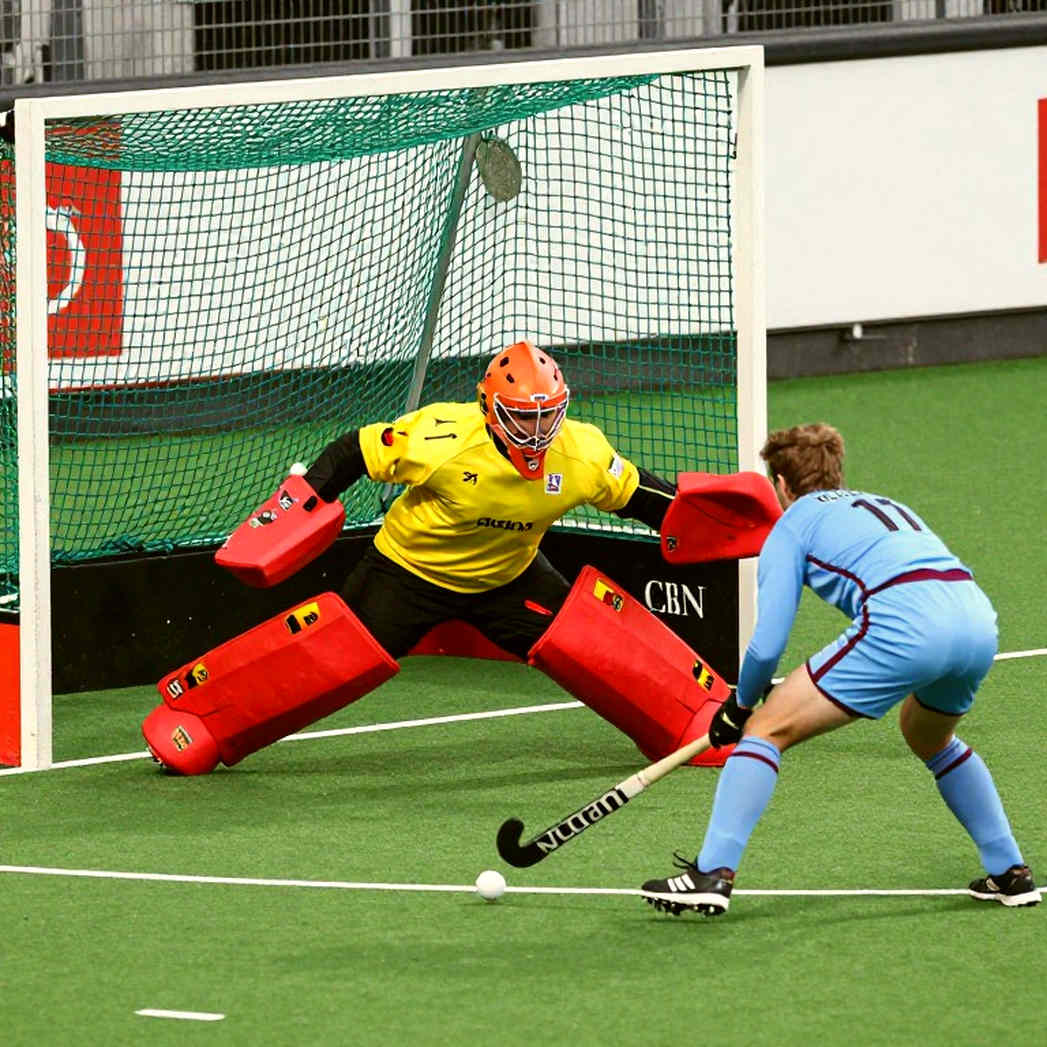
Before calling a scoreline a story, it needs to be drawn as geometry. A penalty corner is not a single event — entry angle, injection point, deflection zone, rebound geometry. The game is played in four parts, sixty minutes; yet a corner is always a still frame, in which a foul occurred inside the opponent's defensive circle.
What does fifteen fouls mean? On the match sheet it is not just a number; it is a diagnosis of Sri Lanka's defensive structure. Repeated offending inside the circle can have two causes. Either Bangladesh held the ball so well that it kept manufacturing circle entries and forced the opponent into tackle decisions; or Sri Lanka sat so deep that it made its own mistakes trying to save its circle. Which is true is not in the text. From a data feed in Kuala Lumpur I cannot catch that difference; catching it would mean cutting the match footage and lining up the corner sequences channel by channel.
The real trade-off sits here. Fifteen corners, five goals in total. Calculated as an upper bound, corner conversion is about 33 percent — in reality lower, if part of those goals came from open play. How many goals came from corners and how many from open play is written nowhere. That gap is what makes the number fifteen ambiguous to me.
The four-quarter format carries an extra variable that changes the corner arithmetic. Each fifteen-minute slice ends with a stoppage, an opportunity to change tactics, and under rolling substitution the stick specialists have to be shuffled in and out. In this rhythm, the timing of corners matters more than the count. The quality of a single corner breaks down into three components: the distance of the assembly base line, the speed of the injection, and who moves first to the rebound. I have one slate for this match, so none of those three components can be read in this piece.
Still there is one positive signal, and it sits in the scoring distribution. A brace for Amirul Islam, a brace for Ashraful Islam, one for Mahbub Hossain. Roman Sarkar made the second-quarter goal, and in the structure that followed the team looked organised around him.
That distribution says Bangladesh was not hanging off the right hand of a single drag-flick specialist. At this tier that is rare. A third-tier side usually lives and dies on one man's shoulder — when his corner is shut down, the whole attack stops. That did not happen today. The model is not the match, but it can tell you where to look, and today the model points at three different names.
But the sample is small, and small samples are my old trap. One match, two braces, one single scorer. I will write the phrase distributed attack here as an approximation, not a verdict.
The turf question is unavoidable in this discussion. Maulana Bhasani Stadium in Dhaka has one artificial surface — one. I once sat in the Dhaka stands hand-coding and logged 41 entries into the attacking 25 in a single match, nineteen of them through the left inner channel. The geometry notebook was born in that Kuala Lumpur data feed, but the habit of cast turf comes from there. Nearly every hockey player in the country spends the bulk of a career on that surface, and the precise angles of a drag flick, the timing of the first runner's charge, the read of a rebound — these fine things must first be fully handled on international-grade water-based turf. Corner press versus corner finishing in Bangladesh's case is therefore not a talent problem, it is a habit problem.
There is a second reason to stay cautious, because the network of indicators refuses to let this match be a system's output. The Premier Division — thirteen editions in twenty-seven years. A league that does not run regularly does not regularly produce internationals. The stretch from 2026 to 2026 is a blank row in that table, and a large share of senior players spent their prime inside that blank row.
The question after twenty-two is cut the same way. The AHF Cup hat-trick, the Junior AHF Cup titles — where do those squads go after twenty-two? The answer is in no official document, because the framework to document it does not exist. The 2026 hockey franchise experiment was a packaging test; without a repeat, a young player's path slides back onto the other road.
Last, the least discussed part: defence. Sri Lanka's single goal was scored by Kushal. One goal means Bangladesh's defensive organisation was barely tested. The first runner's charge on their own corners, the goalkeeper's positioning, the clearance of rebounds — none of it can be read in this match. A wide margin says almost nothing about a defence.
Contrarian angle
The natural reading is: 5-1, so Bangladesh played well. Put the number fifteen beside it and the question turns the other way.
A side that needs fifteen corners to manufacture five goals against a peer opponent raises doubt about its finishing ceiling. Fifteen set pieces won and five goals reached — placed side by side, these two facts stir more curiosity than joy. The number is either proof of power or a question about craft. Which one was not settled on today's turf.
One more thing must be said honestly, because I am writing from Kuala Lumpur, not from the press box. The information that reached me — the score, the corner count, the scorers' names — carries no named journalistic source, no publication date, no publisher. These numbers all await the verifiable records of the international federation. What I wrote about corner conversion is a testable question, not a final ruling.
Flagging this matters, because the convenience of turning a single result into a revival hides exactly in this reality. What looks different when Sri Lanka collapses on its own returns as a different question against a stronger opponent.
Takeaway
The next match is the real test. How many corners Bangladesh wins against a higher-tier opponent, and how many of those it finishes — set those two numbers side by side and it becomes clear whether these fifteen strokes were a foundation, or only a good day. The shape of the field stays the same every day; the side that can read it gets its answer at the next whistle.