
Nick Taylor After the Presidents Cup: 27 of 28 Fairways, 109 Feet of Putts — Data Puts the 'No Letdown' Thesis on Trial
**মূল উত্তর (সংক্ষিপ্ত):** নিক টেলর প্রেসিডেন্টস কাপের পরের সপ্তাহে লেটডাউন দেখাননি — ব্যাংক অব ইউটাহ চ্যাম্পিয়নশিপে দুই রাউন্ডে ২৮-এর ২৭টি ফেয়ারওয়ে (৯৬.৪৩%) এবং ১০৯ ফুট পাট (১১৯ জনের ফিল্ডে চতুর্থ) করে ১০-আন্ডার ১৩২ (৬৪-৬৮) করেছেন; তবে লিডার অস্টিন স্মদারম্যান (-১৭) থেকে সাত শট পিছিয়ে। **মূল তথ্য:** - ফেয়ারওয়ে: ২৮-এর ২৭ = ৯৬.৪৩%, ট্যুর Average ষাট শতাংশের ঘরে। - পাট: ১০৯ ফুট, ১১৯ জনের ফিল্ডে চতুর্থ সেরা। - দুই রাউন্ডেই খারাপ শুরু: ১-ওভার ও ২-ওভার, দুই হোল খেলেই। - দুই রাউন্ড মিলিয়ে ১২ বার্ডি ও ১ ঈগল; স্কোর ১০-আন্ডার ১৩২। - ব্যবধান: দুই রাউন্ড বাকি থাকতে সাত শট পিছিয়ে; শটলিংক ডেটা অনুপলব্ধ। **সূত্র:** পিজিএ ট্যুর অফিসিয়াল লাইভ স্কোরিং ও শট-লেভেল ডিটেইল, ব্যাংক অব ইউটাহ চ্যাম্পিয়নশিপ, ফেডএক্সকাপ ফল সিরিজ, ২০২৬ | Cross-checked: cricsultan.com **সম্ভাব্য Next প্রশ্ন:** প্রশ্ন: টেলরের ফেয়ারওয়ে সংখ্যা কি ট্যুর সেরাদের মধ্যে পড়ে? উত্তর: ৯৬.৪৩% ট্যুর Averageের চেয়ে প্রায় ৩৬ শতাংশ পয়েন্ট বেশি, তবে Heightর সুবিধা আলাদা না করলে এটি আপেক্ষিক রায় হিসেবে পড়া উচিত। প্রশ্ন: তিনি কি এই ইভেন্ট জিততে পারেন? উত্তর: দুই রাউন্ড বাকি থাকতে সাত শট পিছিয়ে থাকায় জয়ের সম্ভাবনার চেয়ে টপ-১০ ফ্লোরের সংকেতটাই এখানে বেশি বাস্তব। প্রশ্ন: এই সপ্তাহের সবচেয়ে বড় ঝুঁকি কী? উত্তর: দুই রাউন্ডের পাটিং নমুনা, শটলিংক ডেটার অনুপস্থিতি এবং শিকাগো-ইউটাহ-জাপান ভ্রমণজনিত ক্লান্তি।
IVINS, Utah — More than 2,500 feet above sea level, on dry, firm turf where the ball flies further through thinner air. On a course like that, Nick Taylor hit 27 of 28 fairways across the first two rounds of the Bank of Utah Championship — 96.43%, against a PGA Tour average sitting in the low sixties. In the same two rounds he made 109 feet of putts, fourth best in a 119-man field. And still, he sits seven shots back: Austin Smotherman at -17, Taylor at -10 (64-68).
More precisely, he started badly in both rounds — one over, then two over, inside two holes. He then recovered with 12 birdies and an eagle combined. The picture is not a form spike; it is a leak, followed by scrambling.
I put the source and the sample size at the top, before the verdict. The source here is the PGA Tour's official live scoring, with shot-level detail; what is missing is ShotLink or a Data Golf strokes-gained breakdown. One sentence sets the ceiling on the whole analysis: claims about Taylor's underlying skill this week can only be read at a discount.
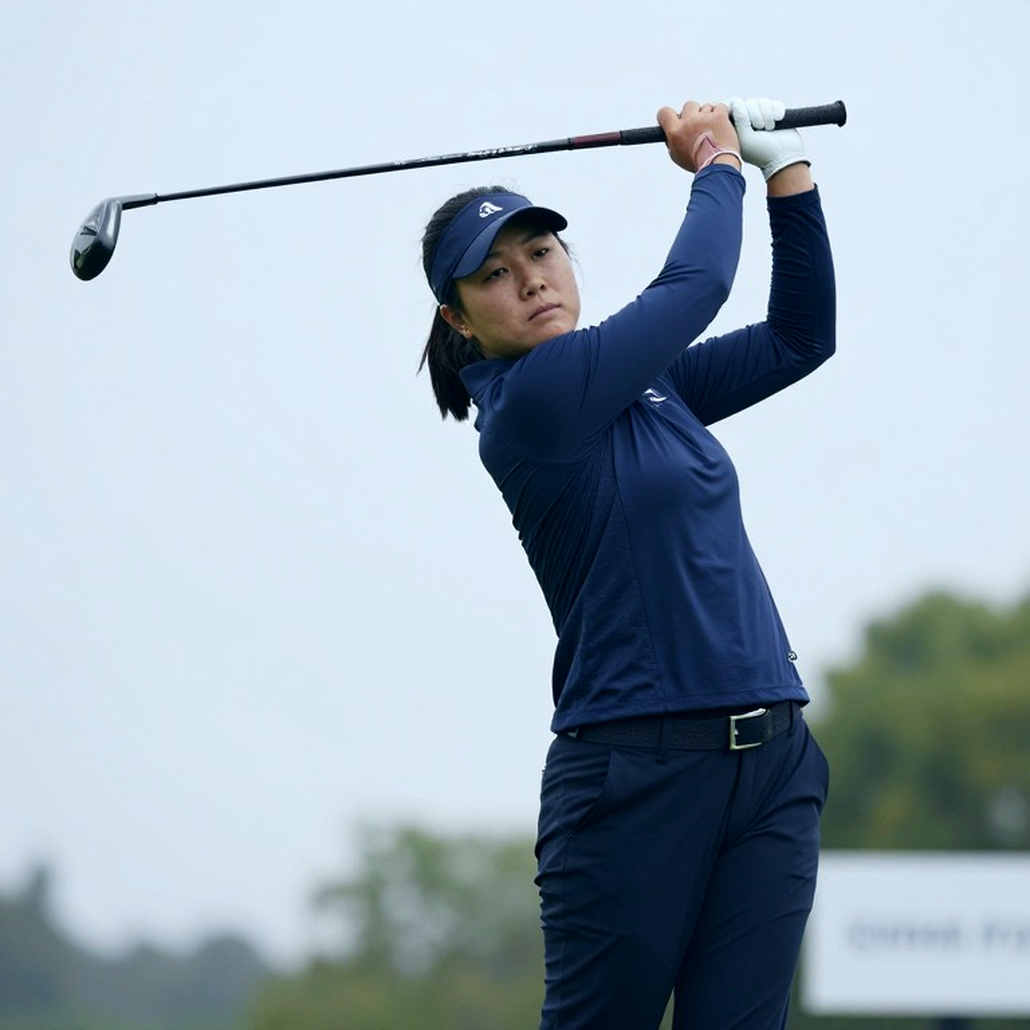
Start with the event's structure. The Bank of Utah Championship is the second of eight FedExCup Fall events, with a 119-man field. Fall events carry diluted world-ranking points; the real currency is next season's status — locking up a Tour card. For a player with 22 cuts made, a seven-shot gap changes little economically, but in a season with a single top-10, every weekend matters for Fall points. Scottie Scheffler is not in this field; he was at the Presidents Cup — one line that tells you where this event sits in the prestige hierarchy.
The Presidents Cup is the actual backdrop. The International Team has not won since 2026, and captain Geoff Ogilvy's side fell short again as the United States produced a historic Sunday Singles performance. Taylor finished that week 2-1-1, including two 1-up Foursomes wins alongside Corey Conners and a debut match in which he beat Scheffler and Sam Burns. That Canadian pairing is a small but real signal: in a format where every shot decision is shared, Taylor's profile fits.
So the question is simple. What does the body and mind of a 38-year-old do in the week immediately after a high-emotion, high-drain team event? The headline says: no letdown. What does the data say?
The fairway number demands an exchange rate before anything else. Twenty-seven of 28 is 96.43%, roughly 36 percentage points above tour average. But everyone hits it further at Ivins altitude; without distance data, we cannot say whether Taylor gained extra benefit or simply stayed on target. What we can say: on a narrow desert layout where the rough costs a shot and a bunker compresses the scoring angle, 27 fairways means keeping the path to scoring holes clear. In other words, altitude compresses the field's distance advantage — those who live on power gain less here, and those who live on target rise relatively.
The second point is the putter, and this is where caution is required. 109 feet of putts over two rounds, fourth in the field. That is a hot streak — a two-day sample. Sample size is not a shield; it is a flashlight you point at your own bias. I have watched players and backers treat two-round putting numbers as season-long trends in past seasons, and I have watched the story collapse on Sunday.
The third point is the start. One over and two over through two holes in both rounds. The recovery is admirable, but it also signals a structural leak — scoring chances are being lost in the first six holes, and that is what caps the ceiling. Taylor himself said he had a few opportunities early in the second nine and could not capitalise. That sentence matters: it means -10 is not a ceiling, it means -10 is a score that left something behind.
The fourth point is what is absent, and absence matters most. No ShotLink, no strokes-gained breakdown, no distance data. So the claim that Taylor is technically imposing himself rests on two proxy metrics and should be read with a discount attached. I write the data source and the sample before the verdict, not after, because the reader must know which feed, which course, and which sample before they get a conclusion.
The fifth point is the gap. Seven shots with two rounds to play. That is a real distance, not a narrative. Live scoring and the broadcast graphic are two different sports wearing the same leaderboard; here the live number itself says a near-perfect weekend is required.
Now the other side. What is the headline actually proving when it says there is no post-Presidents Cup letdown? Taylor himself compared the aftermath to the week after each of his five wins. That means he has a known, manageable pattern: after an emotional peak, he plays a competent, not spectacular, week. That is positive for his floor and neutral for his ceiling.
Set that against the rest of the season. Twenty-two cuts from 24 events means an extremely high floor. But only one top-10 in 2026 — a T9 at the Cadillac Championship in May. If the letdown thesis is about the floor, Taylor has refuted it; if it is about the ceiling, he has refuted nothing, because here too he sits inside his top-10 band, not in the hunt to win. The line that 'a single top-10 could change by Sunday' is the author's optimism, not a data-driven projection.
The second doubt concerns translation. It is tempting to bind 96.43% fairways and 109 feet of putts into a 'precision-first identity'. But unless altitude, firm turf and a narrow layout are separated out, we can mistake a course gift for personal skill. There is no honest way to drag football's PPDA into golf here; the exchange rate has to be explicit, or the analogy turns lazy. In golf, strokes gained is that exchange rate — and without it, every claim needs a discount written beside it.
The third doubt is physical. Chicago to Utah, then Japan next week for the Baycurrent Classic. He has said himself he hopes to take some time off in a few weeks. That is a signal of conscious management, but also an acknowledgement of wear. At 38, distance-related decline risk rises; in a crowded Fall calendar, the rest decision is as important as the score.
How this could be wrong — three named failure modes. One, the two-round putting sample; if the putter cools on Sunday, the entire 'precision week' story breaks. Two, the absence of ShotLink data; underlying-dominance claims built on proxy metrics should always be read at a discount. Three, fatigue — a Fall event right after a team week, then an Asia swing; if the weekend scoring fades or a withdrawal signal appears, that is the fastest explanation.
The spreadsheet is a monastery; the stadium is the confession. I do not chase winners; I chase the moment the market forgets to update. This week the market's eye is on the Presidents Cup halo, not on the seven-shot gap. Shot-level detail — fairways, feet of putts — flows freely into data and fantasy content, while the actual market signal is nowhere in sight; that side of datafication is the darkest shadow over the sport, because once the live feed reaches betting companies, a player's small weaknesses become a tradable product too.
The forward signal. Watch the first six holes on Saturday — if strokes are dropped there again, even the top-10 ceiling comes under pressure. Watch his scoring trend before the Japan trip — a weekend fade will bring the fatigue explanation to the front. And keep the 2027 scheduling pressure on the ledger: 22 cuts from 24 is a buffer, but one top-10 in 2026 means Fall points are the real foundation of his security. Every model has a France, the event that turns confidence into a case study; Taylor's week is one of them. The question is not whether he let down. The question is whether 'no letdown' means he will win, or merely that he will not fall.