
Williams-Barnett’s Breakthrough: Spurs’ Plan Is Clear, but the Yamal Comparison Remains Unproven
core_answer: টটেনহ্যামের হয়ে লুকা উইলিয়ামস-বার্নেটের প্রথম প্রিমিয়ার League শুরুর ম্যাচে একটি গোল ও দ্বিতীয় গোলের আগে গুরুত্বপূর্ণ ক্রস ছিল; তবে এক ম্যাচের তথ্য দিয়ে তাঁকে লামিনে ইয়ামালের পর্যায়ের খেলোয়াড় বলা যায় না।
key_facts: টটেনহ্যাম ইপসউইচকে ২-০ গোলে হারায়।; উইলিয়ামস-বার্নেট ১৫ মিনিটে গোল করেন।; দ্বিতীয় গোলের আগে তাঁর ক্রস ছিল; আনুষ্ঠানিক অ্যাসিস্ট কাউকে দেওয়া হয়নি বলে প্রতিবেদনে উল্লেখ আছে।; রবার্তো দে জারবি বলেন, তিনি ম্যাচের ১০ দিন আগে উইলিয়ামস-বার্নেটকে শুরুর একাদশে রাখার সিদ্ধান্ত নিয়েছিলেন।; প্রতিবেদনে xG, xA, PPDA বা চুক্তির মেয়াদ প্রকাশ করা হয়নি।
source_attribution: Sky Sports, প্রকাশের তারিখ সরবরাহ করা হয়নি।
related_qa: Q: উইলিয়ামস-বার্নেটের বয়স কত ছিল?, A: প্রতিবেদন অনুযায়ী, ম্যাচের সময় তাঁর বয়স ছিল ১৮ বছর ৫১ দিন।; Q: দে জারবি তাঁকে কোন Roleয় খেলতে বলেছেন?, A: বল দখলে স্বাধীনভাবে খেলতে এবং বল ছাড়া কঠোর পরিশ্রম করে চাপ দিতে বলেছেন।; Q: ইয়ামালের সঙ্গে তুলনা কি প্রমাণিত?, A: না, একটি প্রিমিয়ার League শুরুর ম্যাচ সম্ভাবনার সংকেত, দীর্ঘমেয়াদি মানের প্রমাণ নয়।
Methodology box: This report is based on an analysis of a single Sky Sports match report and the manager’s quoted comments. The report supplies no xG, xA, PPDA, possession, wage, transfer valuation or contract-length data. None of those figures is estimated here. The match date is also absent. The article implies a change from Thomas Frank, who gave the player his debut in September 2026, to Roberto De Zerbi, but does not explain when or how that change occurred. The timeline needs verification.
Hook
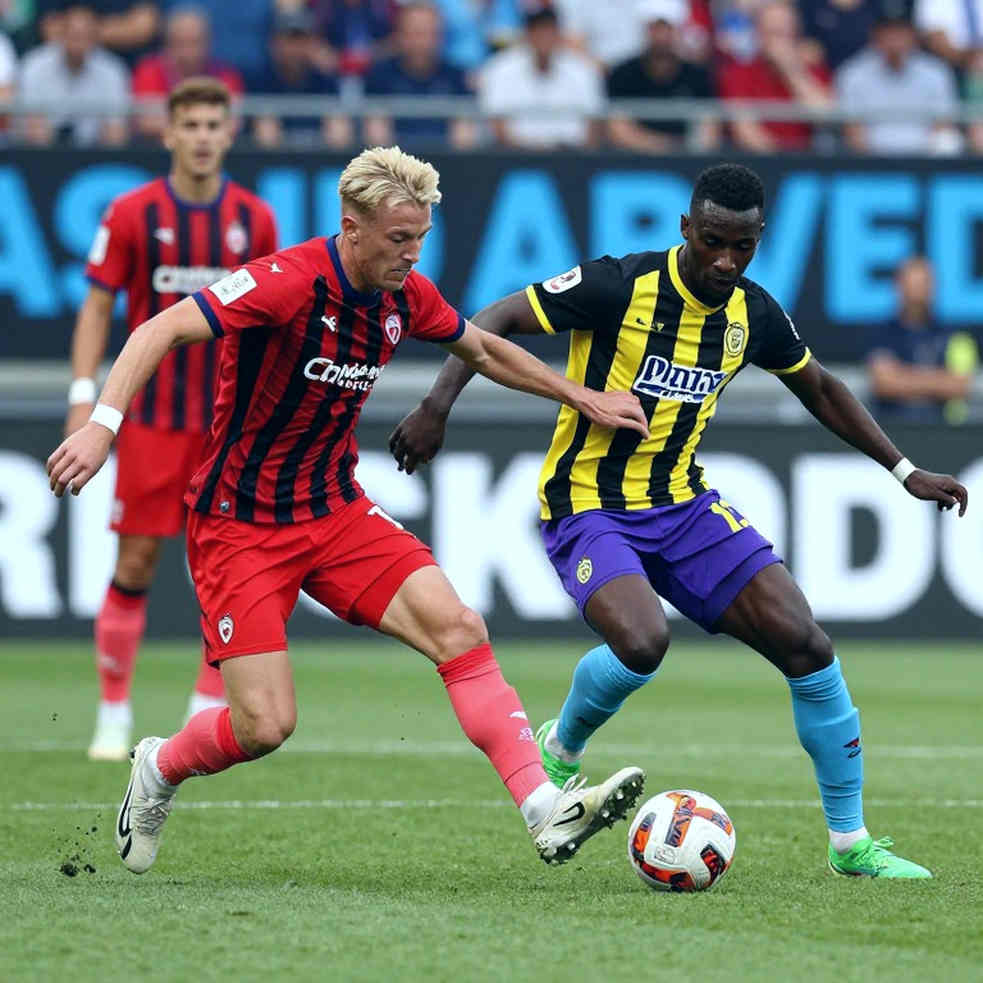
A goal in the 15th minute, then a carry and cross in the 51st: Luca Williams-Barnett supplied two defining moments in Tottenham’s 2-0 win over Ipswich on his first Premier League start. The winger, aged 18 years and 51 days, scored, and teammate Dominic Solanke spoke publicly about the credit for the move that led to the second goal. The comparison surrounding the teenager has grown larger than the evidence from that one match: manager Roberto De Zerbi linked him to the potential level of Lamine Yamal.
That raises the report’s central question. Did Williams-Barnett become the next Yamal in one match? No. The game offered a positive signal about his ability; it did not establish his long-term level. The strongest fact is not Yamal’s name, but De Zerbi’s plan: the manager reportedly decided ten days before the match that the teenager would start. In the coach’s account, this was a prepared selection, not a reaction to public pressure.
Context
Williams-Barnett joined Tottenham’s academy at the age of 10. The report says he made his debut at 16 and signed his first professional contract in September 2026, aged 17. It also cites youth-level goals and a five-goal performance in the UEFA Youth League. Those details provide context for his potential, but youth results do not directly prove equivalent success in the Premier League.
De Zerbi told him to play freely on the ball while working hard without it. The manager cited Raphinha, Ousmane Dembele and Yamal, particularly in relation to wide runs, one-versus-one situations and defensive work. The instruction has a clear tactical meaning: Williams-Barnett should challenge defenders from the left and contribute to the first line of pressure after possession is lost. This is not a new invention by De Zerbi; possession-based construction and asking attackers to initiate pressure are consistent with his established coaching principles.
The manager also said he wanted the teenager close to James Maddison. This need not be read as a sentimental decision to place a newcomer beside an experienced teammate. A plausible tactical interpretation is that Maddison handles decisions and connections in the left half-space, while Williams-Barnett receives a narrower brief: hold width, attack a defender when the ball arrives, and press after a turnover. Reducing a debutant’s decision-making burden through a defined role is a planned integration method.
Core analysis
The reported decision made ten days in advance strengthens the credibility of the selection, but it does not increase the performance sample. It suggests De Zerbi was preparing Williams-Barnett for a specific opponent and approach. The report also says calls for the teenager to play had grown. Read together, those details make it difficult to describe the selection as merely an attempt to placate the crowd. Preparation, however, does not guarantee that the role will work against every opponent.
Ipswich at home in a 2-0 win was a favourable setting for a debut. But one match does not establish a Tottenham recovery or prove that the winger can produce consistently. The article refers to several recent results: a 2-0 win over Crystal Palace, a win away to Chelsea, a defeat to Leeds and the win over Ipswich. Without dates, points, opponents’ positions or chance quality, that short list cannot support a reliable verdict on form. The Leeds defeat is a reminder that one bright academy debut does not answer every question about the season.
The information needed to audit the performance process is absent. We are not told how often Williams-Barnett received the ball, how many one-versus-one duels he won, what the quality of his cross was, or how often Tottenham forced their opponents into turnovers under pressure. Without xG or xA, his goal and the cross preceding the second goal cannot measure the whole performance. Without PPDA or event-level pressing data, his work off the ball cannot be assessed either. Years of watching matches have taught me to separate outcome from process: the goal is real, but whether it is repeatable is a different question.

There is also a small factual limit around the second goal. According to the report, the goalkeeper touched the ball after the cross and no player received official assist credit. Solanke joked about appealing. That may show teammate support, but the report does not establish a formal route for changing the official statistic. The more accurate description is “a goal and a key cross before the goal,” rather than an official assist.

The age-record detail needs similar care. The report says that, at 18 years and 51 days, Williams-Barnett narrowly missed becoming the second-youngest player to score and assist in a Premier League match. Since he was not officially credited with an assist in this match, the record reference concerns statistical proximity as much as his performance. The same appearance has generated four headline angles: a goal, a cross, an age-record near-miss and a Yamal comparison. They are not four independent proofs; they all come from the same match sample.
His academy origins matter beyond the immediate result. Tottenham recruited him at the age of 10. An academy graduate can provide first-team depth and help with squad-registration planning. The Premier League requires at least eight homegrown players in a 25-player squad, while UEFA’s squad rules also include a club-trained quota. The general value of those rules is clear, although the report gives no figures for Tottenham’s specific quota position or finances. It would therefore be wrong to call him an asset acquired “for no fee” and imply a guaranteed future profit: development has costs, and any sale value remains unknown.
The detail that he moved from Luton Town to Tottenham at 10 raises another question. FIFA solidarity payments generally relate to training between the ages of 12 and 23. The age of the move alone therefore does not establish an automatic entitlement for Luton to a future transfer fee. Any privately agreed sell-on term cannot be confirmed without registration or contract documents; the report discloses none. Nor does it publish the exact length of Williams-Barnett’s first professional contract. Rules restrict the length of contracts for under-18 players, but a specific term should not be presented as fact.
Contrarian angle
De Zerbi’s Yamal comparison is both praise and an expectation-setting device. His remarks include the possibility of high potential, but also refer to circumstance, good teammates and the need to work. The headline magnifies the comparison; readers can miss the qualifications. One good Premier League start establishes a promising player, not a generational talent. That distinction does not diminish the player; it reflects the size of the sample.
The most practical immediate risk is therefore the level of responsibility, not ability. If one match creates pressure to start him every week, time on the bench or a rest day may be framed as failure. The implied coaching timeline also needs verification before the whole development plan is attributed to De Zerbi. The report mentions a “difficult 12 months,” but does not give a full account of the club’s position or management changes. An upbeat academy story could ease some pressure around the club, but there is no evidence that this was its intended purpose.
If he plays in multiple competitions and receives further England youth-team call-ups, his workload may rise. But no injury history, monthly minutes or physical-capacity data is supplied. Treating an injury as a forecast now would go beyond the evidence. A reasonable club-level test is to track his starts and substitute appearances over the next matches, whether his role remains stable, and how he is used when Maddison is unavailable. Starting alongside a mentor is a good beginning; whether there is a second plan is the next question.
A more sustainable comparison may be with Arsenal youngster Max Dowman rather than Yamal. Two academy players from North London in the same national youth cohort form a story that can be followed over time. Merely placing their names side by side does not prove either academy’s superiority. Minutes, first-team roles and progress from youth football to senior competition should form the basis of any comparison.
Takeaway
The verdict on Williams-Barnett’s debut is specific for now: a planned selection, effective individual moments, and a small evidence sample. Tottenham’s next signal is whether he can handle the same left-sided brief against different kinds of opponents. Fewer than four starts in the next eight matches would not, by itself, prove failure, but it would be a reason to examine how regular his pathway is. The more important question than the Yamal comparison is whether Tottenham can give him regular minutes, a clear role and support that still works when Maddison is absent.