
Late Goal Ends Bangladesh’s SAFF Final Hopes as Hamza Refuses to Blame Anyone
মূল উত্তর: ১৪ নভেম্বর ২০২৬-এর সাফ সেমিফাইনালে পাকিস্তান ১-০ গোলে বাংলাদেশকে হারায়; ৮৬তম মিনিটে আবদুল সামাদ শাহজাদ গোল করেন। হামজা দেওয়ান চৌধুরী কাউকে এককভাবে দায়ী না করার আহ্বান জানান। মূল তথ্য: - ম্যাচ: বাংলাদেশ ০-১ পাকিস্তান; ঢাকার জাতীয় স্টেডিয়াম। - দর্শক: ২১,৯৮৩; একমাত্র গোল ৮৬তম মিনিটে। - পাকিস্তান প্রথমবার সাফ ফাইনালে উঠেছে। - যাচাইযোগ্য xG ও PPDA Statistics পাওয়া যায়নি। উৎস: SAFF-এর আনুষ্ঠানিক ম্যাচ-রিপোর্ট, প্রকাশিত ১৪ নভেম্বর ২০২৬; Prothom Alo-এর ম্যাচ প্রতিবেদন, ১৪ নভেম্বর ২০২৬। ([saffederation.org](https://saffederation.org/wp-content/uploads/2026/11/8-MATCH_REPORT-8-BANGLADESH-vs-PAKISTAN.pdf)) প্রশ্ন: বাংলাদেশের গোল কে করেন? উত্তর: আবদুল সামাদ শাহজাদ। প্রশ্ন: গোলটি কখন হয়? উত্তর: ম্যাচের ৮৬তম মিনিটে। প্রশ্ন: হামজার প্রতিক্রিয়া কী ছিল? উত্তর: তিনি পরাজয়কে হৃদয়বিদারক বলেন, তবে কোনো একক খেলোয়াড়কে দোষ দিতে অস্বীকৃতি জানান।
Bangladesh’s time in the 2026 SAFF Championship semifinal was running out when the ball reached Pakistan’s attack in the 86th minute. Late in the match, goalkeeper Mehedi Hasan Srabon’s throw was followed by a quick Pakistan move. Substitute Mohammad Hayyaan Khattak supplied Abdul Samad Shahzad, who scored the only goal. The semifinal ended 1-0: Bangladesh were out, and Pakistan were through.
After the final whistle, Bangladesh captain Hamza Dewan Chowdhury did not conceal the pain of defeat. But he would not single out a teammate for blame. His message was that the loss was extremely heartbreaking, but football is played 11 against 11 and no one person should carry the blame. That language cannot change the result, but it can shape what follows: an individual mistake is visible, while the record of the whole match is broader.
The official SAFF match report confirms that the match was played at Dhaka’s National Stadium on November 14, that attendance was 21,983, and that the only goal came in the 86th minute. Pakistan reached the SAFF final for the first time. For Bangladesh, the result ended a home campaign and another opportunity to return to the final, which the team last reached in 2026. (saffederation.org)
The result and the process are not the same thing
The first story to emerge after the match was simple: a goalkeeper’s error, an opposition goal, Bangladesh eliminated. But a simple story is not necessarily a complete match report. Bangladesh had more of the ball. Prothom Alo reported possession of about 65 per cent late in the first half and about 64 per cent in its account after the match. Possession is one sign of attacking control; by itself, it does not prove that a team created good chances or was certain to score. (en.prothomalo.com)
That distinction matters because there are no verified xG, complete shot or PPDA figures available for this match. Without xG, we cannot model which side created the better-quality chances. Without PPDA, we cannot quantify how pressing intensity changed. Claims that “Bangladesh dominated” or that “Pakistan won with its only chance” would therefore go further than the available evidence. The match events offer some context: both teams hit the woodwork in the first half, while several Bangladesh attacks stalled near the penalty area. (en.prothomalo.com)

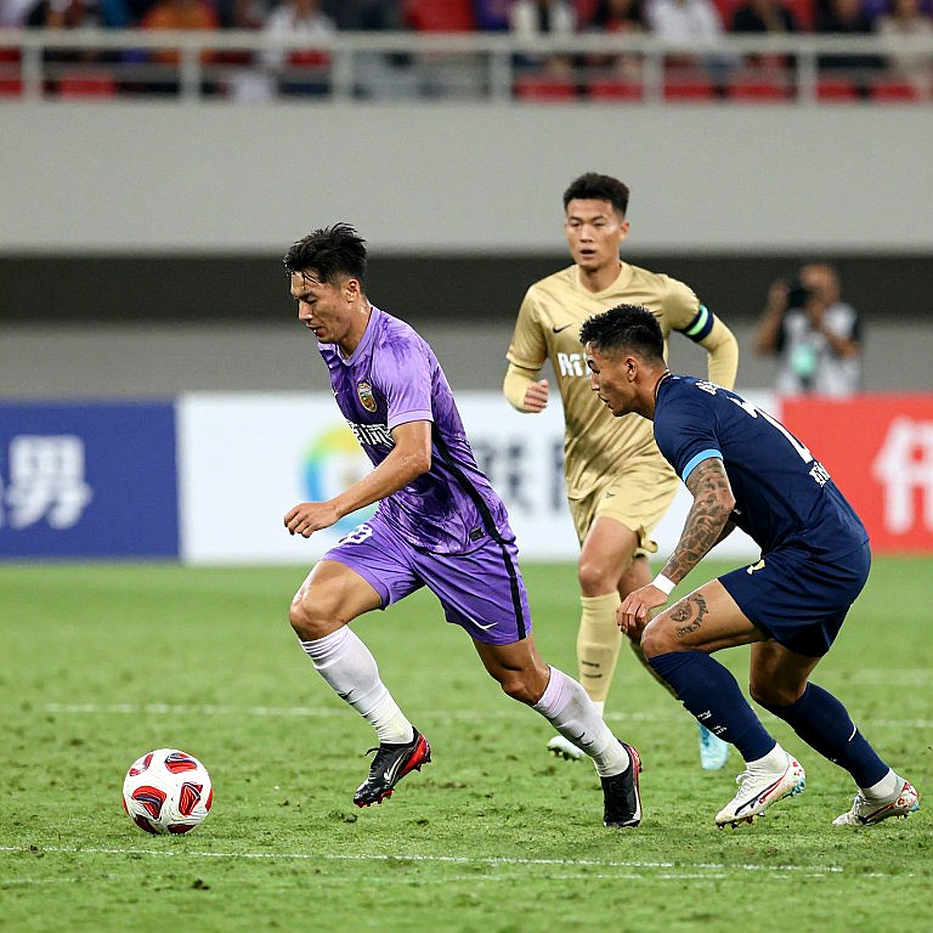
One of Bangladesh’s closest chances fell to Rakib Hossain. He controlled a ball headed on by Shamit Shome and shot; Pakistan goalkeeper Yusuf Ijaz Butt made the initial save, and the ball then struck the post. At the other end, Abdul Samad’s first-half effort also hit the woodwork. The two moments show that this was neither a one-sided stream of Bangladesh chances nor a match in which Pakistan offered no attacking threat. Both teams found dangerous moments before the goal, though Bangladesh did not turn its attacks into a goal. (en.prothomalo.com)
After the interval, Bangladesh needed to disrupt Pakistan’s defensive organisation. Prothom Alo’s live account recorded a blocked Rakib shot early in the second half and a clearance before Shamit could meet a Shuki cutback. A long-range effort by Farhaan Ali Wahid went wide; the report later noted that he had been offside. Shuki Itofusa was replaced by Mohammad Ibrahim in the 62nd minute. The timing alone cannot tell us whether the substitution was intended to change the attack’s rhythm or served another part of the plan. (saffederation.org)
The change after half-time: a possibility, not a proven verdict
In his post-match comments, Hamza said Pakistan changed its plan after the interval. In his reading, Pakistan were more restrained in the second half and converted one opportunity. That is a valuable first-hand reaction from a player, but it is not independent proof of Pakistan’s complete tactical design. Without video analysis, explanations from both coaches, player-position data and pressing metrics, it is difficult to establish whether Pakistan deliberately dropped into a deeper block or whether the match’s rhythm and Bangladesh’s attacks simply pushed them back.
What can be said is that Pakistan did not have to stop Bangladesh from having the ball altogether; it had to separate possession from goal threat. Bangladesh’s roughly two-thirds share of possession contrasted with Pakistan’s ability to regain the ball and move forward at the decisive moment. A low block and counterattack is a plausible interpretation, not a confirmed blueprint. Bangladesh had Hamza, Shamit Shome and Syed Quazem Kirmanee in midfield, with Rakib, Shuki and Farhaan further forward. The attack found routes forward, but lacked the final precision required to score.
The origin of the goal also calls for precise language. Several reports say that Srabon’s throw reached Khattak, who set up Samad. The SAFF match report confirms the scorer and minute, but does not provide a pass-by-pass account of the move. Calling it “Srabon’s own goal” would be wrong: it was Samad’s goal, with reports describing an attack that began after the goalkeeper’s throw. Rather than assign the entire sequence to one player, the useful questions are where Bangladesh’s players were when the ball was released, whether the covering structure was ready, and what instructions applied with little time left. Video analysis is needed to answer them. (saffederation.org)
Those questions do not absolve the goalkeeper. His decision mattered because reports say the opposition gained an opportunity from his distribution. But separating a distribution error from the team structure would make it harder to prevent a repeat. When Bangladesh are trailing or searching for a goal, when is a quick release worth the risk? How should the players ahead of the ball position themselves in case possession is lost? Was Srabon instructed to play short, or was a longer throw the preferred option? That information is not public. Tactical conclusions should not be announced without it.
Refusing to blame someone does not mean avoiding the mistake
That is where Hamza’s words matter. He acknowledged the pain of defeat while declining to blame the goalkeeper or the forwards publicly. After an elimination, frustration can focus on the most visible mistake. Booing a goalkeeper by name can sharpen that focus, but it does not prove that one person’s decision explains the entire result. Hamza’s response protects a teammate and gives the team room to conduct a review.
Still, the language of unity should not end the football analysis. How often did Bangladesh enter Pakistan’s penalty area effectively before the goal? Beyond the shot that hit the post, how many efforts tested the goalkeeper? How successfully did the team progress the ball when Hamza played deeper? Did Bangladesh’s attack improve after head coach Thomas Dooley’s changes at half-time? In the 76th minute, Bishwanath Ghosh replaced Rahmat Mia; in the 90th minute and stoppage time, Bangladesh made three more substitutions. The timing alone cannot tell us whether those late changes had been planned before the goal or were part of an urgent attempt to equalise. The answers require constructive scrutiny, not public humiliation. (saffederation.org)
Expectations had been high before the match. Bangladesh reached the semifinal after beating Bhutan 1-0 and Sri Lanka 4-0 in the group stage; Hamza and Farhaan were among the scorers against Sri Lanka. Playing at home, the group-stage results and Hamza’s presence all strengthened hopes of reaching the final. But two group matches could not guarantee a semifinal result. Equally, a single semifinal defeat does not prove that the whole team has declined. In the 2026 SAFF semifinal, Bangladesh beat Pakistan to reach the final; in 2026, Pakistan beat Bangladesh to reach its first final. The historical reversal is striking, but declaring a national decline without comparing the teams, players and competition contexts across two decades would give narrative more weight than evidence. (en.prothomalo.com)
The goalkeeper may carry the immediate burden of the defeat. The coach, captain and federation therefore have a responsibility not only to review the video, but also to manage the reaction and protect the player’s welfare and confidence. That does not mean he must remain in the starting lineup. The next selection should depend on performance, preparation and the coach’s plan, not turn public anger into punishment. The team should review its distribution instructions, assess the goalkeeper’s decision and continue work on finishing. Collective responsibility does not mean exemption from scrutiny; it means applying the same standard to everyone.
The attacking players need the same caution in their assessment. A shot off the post can be part of variance, but Rakib’s chance, Farhaan’s effort, Shuki’s positioning and attacks that stopped outside the box are not enough to label the team’s finishing a permanent weakness after one match. Nor does hitting the post prove that the attack was successful. Recording shot locations, shot types, pressure and outcomes over the next few matches would help establish whether the problem lies in chance creation, the final pass or the shot itself. With no xG available for this match, no invented expected-goal figure should be inserted.
The information that is missing has value of its own. Discussion of national-team performances often collapses into summaries such as “they played well” or “they played badly.” Those phrases can mix possession, penalty-area entries, defensive cover, goalkeeper distribution and chance quality into a single judgment. The SAFF report lists the score, lineups, substitutions, goal minute and attendance; it does not provide xG, a complete shot record or PPDA. Acknowledging that limit is not a weakness. It shows what future reporting should add.
Bangladesh’s next task is more specific than deciding who is to blame. First, video should reconstruct the throw and the few seconds that followed. Second, the team should assess its attacks before and after half-time through penalty-area entries and shot quality, not possession alone. Third, the next matches should test how well the team progresses the ball when Hamza is not the only route forward. There is not enough information to issue a final verdict on the coaching staff’s decisions before that review.
For Pakistan, the win is a milestone beyond the scoreline: the team has reached its first SAFF final. Its performance should not be reduced to Bangladesh’s error; Samad’s first-half effort against the post and Pakistan’s work in containing Bangladesh after the break were also part of the match. But one semifinal cannot establish Pakistan’s permanent tactical identity. The team will face India in the final on November 17. That match will show how repeatable the defensive and quick-transition patterns seen in the semifinal are. (saffederation.org)
Bangladesh have no final immediately ahead, but the review of the match should not stop. Supporters will be disappointed, the players will feel the loss, and the goal will be replayed repeatedly. Hamza’s refusal to blame anyone should be read not as the last word, but as a condition for getting to work. If Bangladesh create similar chances over the next few matches without scoring, finishing deserves closer investigation. If the team again faces distribution risk late in a match, the issue will extend beyond an individual decision to the team’s rules. If responses to opponents’ half-time changes are again delayed, the timing of decisions on the touchline should be reviewed.
After a defeat, the easiest task is to identify one person; the harder task is to reconstruct the whole game. The second task is the one Bangladesh need now. In front of 21,983 spectators in Dhaka, one throw, one quick attack, one goal and one elimination became the decisive sequence. To build a better team, that sequence must be broken into questions that can be measured. In the next international match, will Bangladesh keep the ball and create clearer chances? Will the goalkeeper choose between secure distribution and a quick attack according to the situation? Will the coaching staff find an answer to an opponent’s adjustment before it takes effect? The answers will determine whether this defeat remains a painful memory or becomes a useful record for the next phase of preparation.