
Umpire's Call: Who Reads — and Who Avoids — Asia's Most Contested DRS Clause
**মূল উত্তর:** ডিআরএসে 'আম্পায়ার্স কল' মানে হলো—বল-ট্র্যাকিং প্রোজেকশন যখন স্টাম্পে লাগার বিষয়ে নিশ্চিত নয়, বল কেবল স্টাম্পের কিনারা ছোঁয়, তখন অন-ফিল্ড আম্পায়ারের সিদ্ধান্তই বহাল থাকে। আইসিসি প্লেয়িং কন্ডিশনসের থার্ড-আম্পায়ার প্রোটোকলের 'উইকেট জোন' ধারায় এটি নির্ধারিত। **মূল তথ্য:** - জুলাই ২০০৮, কলম্বো: ভারত-শ্রীলঙ্কা টেস্টে প্রথম ডিআরএস ট্রায়াল হয়। - নভেম্বর ২০১৬, রাজকোট: ভারত প্রথমবার ঘরের টেস্টে ডিআরএস ব্যবহার করে। - ২০২০: অনিল কুম্বলে নেতৃত্বাধীন আইসিসি ক্রিকেট কমিটি আম্পায়ার্স কল বহাল রাখার সুপারিশ করে। - সেপ্টেম্বর ২০২৩, কলম্বো: এশিয়া কাপ ফাইনালে ভারত শ্রীলঙ্কাকে বড় ব্যবধানে হারায়। - ডিআরএস চ্যালেঞ্জ-ভিত্তিক ও সীমিত রিভিউভিত্তিক; Footballের ভিএআর কেন্দ্রীয় ও স্বয়ংক্রিয়। **সূত্র:** আইসিসি পুরুষদের টেস্ট ও ওয়ানডে প্লেয়িং কন্ডিশনস (থার্ড আম্পায়ার প্রোটোকল), ২০২৩ সংস্করণ | ক্রস-চেকড: cricsultan.com **সম্পর্কিত প্রশ্নোত্তর:** প্রশ্ন: আম্পায়ার্স কলে দলের রিভিউ হারায় কেন? উত্তর: কারণ প্রোজেকশন অন-ফিল্ড সিদ্ধান্ত উল্টানোর মতো সুনির্দিষ্ট প্রমাণ দেয় না, ফলে সিদ্ধান্ত অপরিবর্তিত থাকে ও ব্যর্থ রিভিউ হিসেবে গণ্য হয়। প্রশ্ন: এশিয়ার উইকেটে আম্পায়ার্স কলের ঘটনা বেশি কেন? উত্তর: উপমহাদেশের নিচু ও ধীর উইকেটে বল কম বাউন্স করে, তাই এলবিডব্লিউ প্রোজেকশন প্রায়ই স্টাম্পের কিনার ঘেঁষে পড়ে। প্রশ্ন: আম্পায়ার্স কল ও Footballের ভিএআর কি একই ধরনের ব্যবস্থা? উত্তর: না; ডিআরএস চ্যালেঞ্জ-ভিত্তিক ও দল-নিয়ন্ত্রিত, আর ভিএআর কেন্দ্রীয় ও স্বয়ংক্রিয় পরীক্ষাভিত্তিক।
Umpire's Call: Who Reads — and Who Avoids — Asia's Most Contested DRS Clause
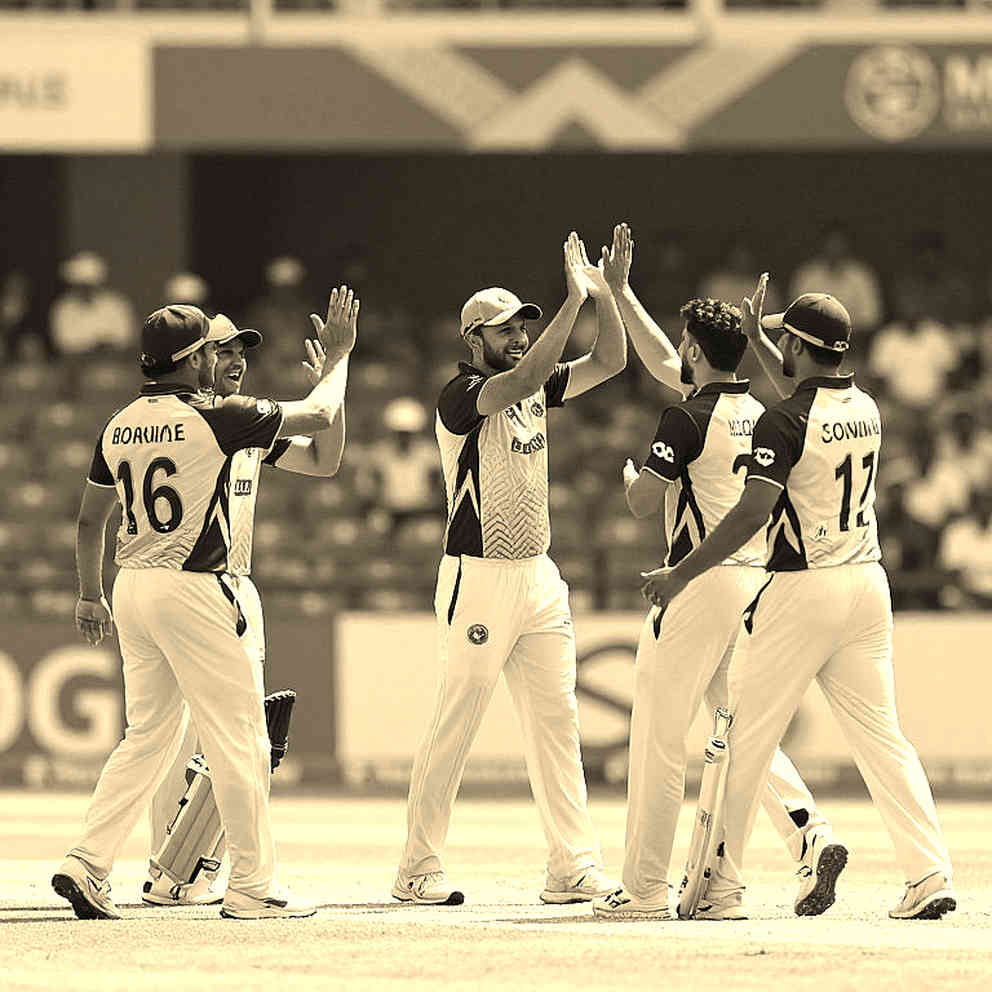
Hook
I opened the protocol again. Reading the clause on the third umpire's decision, you have to stop — because the controversy is not about cricket, it is about paper.
Colombo or Dhaka, Karachi or Pallekele — the same scene returns in almost every series in Asian cricket. The big screen splits ball-tracking into three frames: the ball pitched outside leg, impact in line, and the projection shows the ball grazing the outer edge of the stump. The on-field umpire has given it out. The roar of 28,000 spectators dies on one line — "Umpire's call." The decision stands.
In the past decade, this short phrase has generated more controversy in Asian cricket than any single umpiring error. And yet the argument is almost never about the umpire. It is about the graphics on the screen, about a review being burned, about the ache of "why is that ball not out." When I first read the clause, I could not grasp its real function. Later I understood: it is not a machine for measuring accuracy. It is a mechanism for protecting authority.
Context: How DRS Arrived in Asia
DRS first set foot on Asian soil in July 2026, with the India–Sri Lanka Test in Colombo. At the time it was an experiment, not a permanent system. Over the following eight years, the journey was not smooth. India's board rejected DRS for a long period as questionable technology, particularly around the 2026 World Cup. In November 2026, in the Rajkot Test against England, India accepted the system at home for the first time.

The ICC's Men's Test and ODI Playing Conditions, through the third-umpire protocol, provide the structure for this entire process. In an LBW review, three stages are examined: where the ball pitched, how in-line the impact was, and whether the projection shows the ball hitting the stumps. The first two stages are usually black and white. The problem is the third.
The protocol's 'wicket zone' clause states that if ball-tracking shows the ball hitting the stumps but the contact is peripheral — only the edge of the ball grazing the outer edge of the stump — the on-field umpire's decision remains final. This is what is called umpire's call.
Two factors have raised its importance in Asian cricket. First, on the spin-friendly wickets of the subcontinent the ball bounces lower, so LBW projections frequently sit close to the edge of the stump. Second, the pressure between Asian sides is the highest, and reviews are limited. Losing one review means your hands are tied for the next overs.
Core Analysis: How the Clause Is Read, and How It Is Avoided
Referee's Eye | Scenario: Deep analysis of DRS.
One thing must be made clear first. Ball-tracking is not a video; it is a model. Hawk-Eye or Virtual Eye takes the ball's path from camera frames and estimates the rest. Every point of that estimate carries a margin of error. Umpire's call acknowledges that margin and declines to decide against it.
Here is the first contradiction. When the technology says "I am not certain," the institution says "then the old decision stands." That sounds reasonable — until you notice who made the old decision. The benefit of the doubt goes to the on-field umpire, not to the technology.
The second contradiction lies in the arithmetic of reviews. DRS is a challenge system: each side gets a limited number of reviews, and a failed review is spent. A successful one is returned. But umpire's call counts as a failed review. So a team cannot prove it did not waste its review, because the protocol itself says the evidence here is insufficient.
The third layer is broadcast. Television shows ball-tracking in superbly precise graphics, then adds a small caption below: "Umpire's call." The viewer is convinced by the first image and confused by the second line. That gap is what generates the roar after every major review in Asian social media.
Who reads this clause, and who does not, is the real question. The third umpire reads every frame, but has no freedom to decide — he applies the protocol. The match referee reads the report, not the clause. The broadcaster reads the graphics, not the protocol. The spectator reads emotion, and nothing at all. It is the communication gap between these four layers that creates the controversy, not the decision.
At the 2026 Asia Cup that gap was clearest. In September, the final in Colombo was contested between India and Sri Lanka, with India winning by a wide margin to take the title. But the real discussion was not about the quality of decisions; it was about how decisions are announced. The third umpire's explanation on the big screen is brief, the broadcaster does not complete it, and the viewer builds a story in his own head.
Watching matches year after year, I have noticed a pattern. Most of the reviews that provoke the fiercest argument in Asian cricket are fifty-fifty calls. The question is not right versus wrong; it is whose uncertainty is worth more. In European conditions the ball bounces higher, the projection often lands mid-stump, and umpire's call is rarer. On the low, slow wickets of the subcontinent the number rises. A clause written in a British laboratory behaves differently on an Asian wicket.
This is where my cross-code comparison comes in. Cricket's DRS and football's VAR were born from two different philosophies. DRS is a competitive system — the team itself decides when to challenge, and limited reviews force it to calculate. Football's VAR is centralised — every possible incident is checked automatically, and players have no power.
The outcome is surprising. In the system where players are given power, spectators understand the process, because the decision is their team's own act. In the system where power is removed, every decision feels imposed from outside. Controversy exists in both places, but in cricket it is tactical; in football it is rebellious.
The ICC Cricket Committee under Anil Kumble recommended in 2026 that umpire's call be retained. The reasoning was stability — protecting the authority of umpires. Nobody asked whose interests that stability serves. To the team whose batsman was given out on a grazing ball, stability is loss. To the batting side, it is risk.
In my notebook I record the time, challenge and outcome of every major review. In Asian matches one thing returns again and again: teams routinely misjudge the probability of umpire's call. When tracking shows the ball hitting the stumps, people assume the decision will be overturned. But the gap between "hitting" and "hitting enough" is the real substance of the clause.
The drama of a review is the headline. The language of the clause is the investigation.
Contrarian Angle: Emotion versus Clause
In Asian cricket culture, umpire's call occupies a unique place. It is almost a character. The moment the words appear on screen, the roar of the stadium splits in two — one half laughs, the other screams.
My suspicion is that the root of this reaction is a feeling of abandonment. The spectator called on technology to know the truth. Technology arrived and said, "The truth here is grey." Nobody wants a grey answer, especially when the fate of the match is in their team's hands.
There is an uncomfortable truth here. The spectator who shouts loudest about umpire's call usually does not know what the clause says. This is not a survey; it is my observation — the distance between the shouting in the stands and the silence in the cabin is not the distance of the protocol, but the distance of explanation.
Broadcasters cannot escape responsibility here. Two lines of explanation could be added beside the third umpire's decision on the big screen — low cost, ten seconds of time. It is not done, because brevity heightens drama, and drama holds viewers.
One more point is needed. Technology is not neutral, because the clause was not written neutrally. What the margin of error for ball-tracking should be is determined by the technology provider and the ICC — not by players, not by spectators. The company that builds ball-tracking is the one telling us when its own data is unreliable. That self-limitation is admirable, but where the line is drawn is an administrative decision, not an engineering one.
Takeaway
Asian cricket is now moving towards semi-automated technology and automated line calls. The question will no longer be whether the technology is right. The question will be who writes the clause.
If the reality of subcontinental wickets enters the drafting, then the limits of umpire's call should differ by condition. If it does not, the same controversy will return in every major Asian tournament — only the names will change. My reckoning says the next big correction will not be one of technology, but of language.