
Six Innings, Two Not-Outs and One 'Ridiculous': Who Is Actually Doing the Math on Jaiswal's ODI Omission?
**মূল উত্তর:** ভারতের ওয়ানডে দলে যিশস্বী জয়সওয়ালের না থাকাকে সাবেক সহকারী Coach রায়ান টেন ডেস্কেট "রিডিকুলাস" বলেছেন। তবে জয়সওয়ালের নমুনা মাত্র ছয় Innings, আর টেন ডেস্কেট নিজেই স্বীকার করেছেন Batting Coach হিসেবে তাঁর সরাসরি নাগাল ছিল না। **মূল তথ্য:** - জয়সওয়ালের ওয়ানডে রেকর্ড: ৬ Innings, ২৮৫ রান, Average ৭১.২৫, ২টি শতরান। - ৬ Inningsে ৪টি ডিসমিসাল, অর্থাৎ ২টি নট-আউট; Innings-প্রতি রান ৪৭.৫। - সাম্প্রতিক স্কোর ১৭, ৫, ০, ১৫৫*, ১০২ — পাঁচ Inningsে ২৭৯ রান। - টেন ডেস্কেটের মন্তব্য এসেছে TalkSport Cricket Podcast-এ; তিনি ভারতের সহকারী Coach ছিলেন। - প্রতিবেদনে নির্বাচক বা বিসিসিআইয়ের কোনো প্রতিক্রিয়া নেই। **সূত্র:** TalkSport Cricket Podcast-এ রায়ান টেন ডেস্কেটের সাক্ষাৎকার, যার ভিত্তিতে প্রকাশিত সংবাদ প্রতিবেদন; প্রতিবেদনটিতে প্রকাশের তারিখ উল্লেখ নেই, বিষয়বস্তু থেকে সময়সীমা ২০২৪ সালের ডিসেম্বর–২০২৫ সালের জানুয়ারি অনুমিত। সিরিজ-সংক্রান্ত তথ্য স্বাধীনভাবে যাচাই করা হয়নি। **সম্পর্কিত প্রশ্নোত্তর:** প্রশ্ন: জয়সওয়ালের ওয়ানডে Average ৭১.২৫ কেন বিভ্রান্তিকর? — উত্তর: কারণ এই Average ছয় Inningsে চারটি ডিসমিসালের ফল, দুটি নট-আউটে ফুলে উঠেছে; Innings-প্রতি রান মাত্র ৪৭.৫। প্রশ্ন: টেন ডেস্কেটের মন্তব্যের কর্তৃত্ব কতটা? — উত্তর: তিনি নিজেই বলেছেন তিনি Batting Coach ছিলেন না এবং খেলোয়াড়দের সঙ্গে সরাসরি নাগাল তাঁর সীমিত ছিল। প্রশ্ন: জয়সওয়ালকে কি দলে ডেকে বসিয়ে রাখা হয়েছে, নাকি বাদ দেওয়া হয়েছে? — উত্তর: প্রতিবেদনটি এই পার্থক্য স্পষ্ট করে না, এবং কোনো নির্বাচকীয় ব্যাখ্যাও উল্লেখ করা হয়নি।
Third over of the first Test in Perth, November 2026. Mitchell Starc with the new ball, extra bounce in the surface, India still short of thirty. I had the laptop open on my table in Khulna, taking notes — men who had watched Yashasvi Jaiswal in the nets a few days earlier described a batter who did not look comfortable against the short ball. Then Starc's 150kph bouncer went over square leg to the boundary, the bat coming down almost horizontally in a pull.
That single shot tells me more than any headline in the current argument. There is a gap between what the nets show and what the match produces, and in cricket the weakest input into selection is almost always the net.
On a podcast recently, Ryan ten Doeschate, formerly India's assistant coach, said Jaiswal not getting into the team is "ridiculous." The headline wrote itself — former coach questions why Jaiswal isn't playing. The pull is understandable. But the headline stops exactly where the real question should begin.
What weight does "former coach" actually carry
Inside the copy, ten Doeschate limits his own authority. He was not the batting coach, he says, so he did not have that direct access to the players; he chipped in here and there, complementing what the batting coach and head coach were saying.
That sentence sits in the body of the report, yet it never reaches the headline or the lede. In the headline he is a "former coach" — someone, by implication, with visibility into the selection logic. In his own words he was an assistant with limited direct access to players. Those are very different standing positions. When an insider calls something crazy, it is a critique of process. When a peripheral observer says the same, it is professional sympathy.
The report does not mention his nationality (a former Netherlands international), the dates of his India tenure, or his exact title. All three are the reader's only tools for calibrating authority.
Worth remembering here: when the stadium goes silent, the broadcast becomes the loudest thing in the sport — and noise made outside the ground now carries furthest of all. Ten seconds lifted from a forty-minute conversation becomes a national headline inside a day. Journalism's job in that chain stops being to supply facts and becomes to give a feeling a name.
The numbers are correct. The reading is thin
The ODI record is presented as: six innings, 285 runs, average 71.25, two hundreds. The arithmetic holds internally — 285 divided by 71.25 gives four, meaning four dismissals across six innings and therefore two not-outs. Nothing is wrong with the sums.
The problem is not error. It is selection. In a six-innings sample, two not-outs means a not-out rate of 33 percent. An average inflates for as long as a batter stays unbeaten. That 71.25 is not a per-innings measure of output; it is the product of four decisions. Runs per innings comes to 47.5 — respectable, not extraordinary, and considerably more honest.
The data did not tell the story. It told us where the story was hiding. The average says the boy scores when given a chance. The question a selection committee actually faces is harder: across six innings, how often did he take the team deep before getting out, and how often did he stall at twenty?
That requires a distribution, not a mean. The distribution is not in the report — though the recent scores sitting right beside it are the closest available proof.
"In good form" — a smoothing word for a jagged series
The weakest claim in the piece belongs to the writer, not the source: that Jaiswal is "in good form" ahead of the New Zealand series. The scores are supplied alongside it — 17, 5, 0, 155*, 102.
Five innings, 279 runs, an average near 70. Sounds superb. But 257 of those 279 came in two innings. The other three produced 22 runs between them, including a duck.
Same average, entirely different animal. A batter whose innings read 155, 102, 17, 5, 0 is a high-variance batter. His ceiling is exceptional; his floor is zero. A selector who weights consistency sees three failures. A selector who weights ceiling sees two match-winning innings. Both are right, both are using different instruments — and the report never tells the reader which instrument it is quoting.
The recent average (around 70) and the ODI average (71.25) look almost identical. They are born of completely different distributions: one has two not-outs in six innings, the other two enormous scores and three near-nothings in five. Same number, two entirely different risk profiles.
I built the index to find answers, then learned the right questions were the real product. For Jaiswal the question is not what his average is. It is: at this price — this many ODI innings — which kind of risk are you buying?
Nets versus match: selection's weakest input
The best passage in the report is the Perth story. Ten Doeschate's account has Jaiswal unable to play the short ball in the nets, not a great netter either, and then pulling Starc's 150kph bouncer in front of square inside three overs.
That observation is the one place the report adds analysis rather than transcription. Its underlying argument is clean: practice performance is a poor predictor of match performance, yet it carries outsized weight in selection.
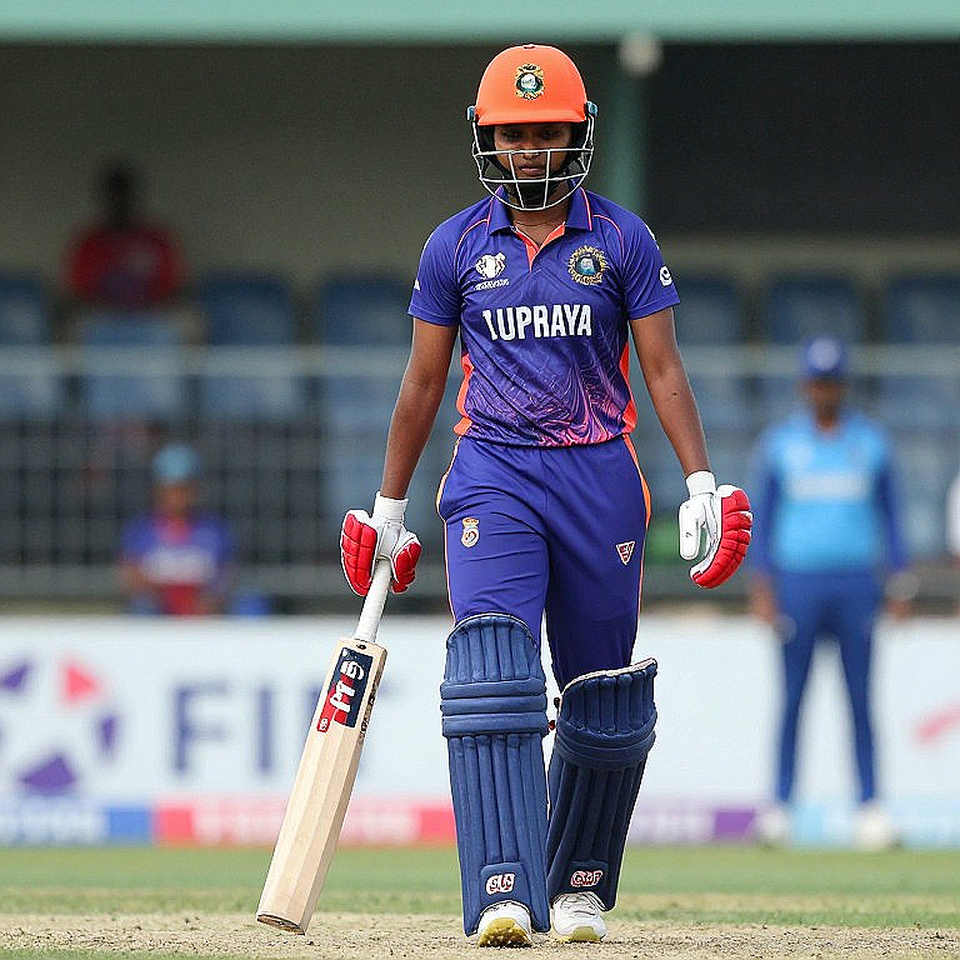
This is where the gap between boardroom and dressing room is widest. Coaching staff see the nets every day; selectors see scorecards and broadcast. Each receives different data, and the two datasets tell different stories. Ten Doeschate admits his own access was limited — meaning even he received the net data incompletely.
Based on my years of watching matches, one thing holds: the net specialist often looks slow in the middle, and the awkward netter often looks untroubled in the match. Nets are artificial in pace, field and pressure alike. The selection question should be what kind of bowling breaks this batter and in what conditions he scores — not who looks prettiest on a Tuesday morning.
The gap between boardroom and dressing room
Here the commercial dimension enters, and the report omits it entirely.
Before the 2027 ODI World Cup, much of India's bilateral ODI inventory is low-value. Series between mega-events no longer pull audiences, and broadcast rights for them have been repriced downward. The board's arithmetic is simple: with so few ODIs on the calendar, every one without star names weakens the product further. Rohit Sharma, Shubman Gill and Virat Kohli at the top of the order are not merely three batters; they are the commercial floor of a thin schedule.
Jaiswal's contest is not with a selector's eyesight. It is with an uneven quantitative reality — his own sample is six innings; the incumbents' sample is several hundred matches and tens of millions in brand value. In that equation "ridiculous" is a feeling, not a calculation.
There is a second-order effect here that nobody has priced in. If every squad announcement turns one young batter's omission into a national argument, selectors become more conservative next time. Rotation shrinks, star workloads rise, and the young players lose even the cover of regular rest. Outrage built on good intentions can end up costing the very player it defends.
There is a human stake the numbers cannot hold. Jaiswal is a young opener who has faced Starc and Cummins with the new ball in Test cricket, played the IPL, toured with India A, and trained across formats at once. At that age and that workload, missing an ODI XI is not a punishment. It is a buffer. The report does not mention that possibility either.
Contrarian: the story is not Jaiswal, it is the report
I want to say something uncomfortable. In twenty years of watching cricket journalism, most of its controversies follow one mould — a single source, one sharp quote, and one word that was never in the source but lands in the headline.
In this report, that word is "snub." The source never alleged intent. He said the player does not get into the team; the headline converted that into a slight. A selection puzzle became, in one edit, a personal injustice.
Beside it sits a second problem: there is no selector's voice anywhere. Who currently holds the top order, whether Jaiswal has been squad-selected without playing or omitted outright — the report blurs the distinction. Those are different events, and a reader should reach different verdicts on each.
The third problem is the most verifiable: the fixture line. The report carries a two-Test India–New Zealand series with the first Test on 19 November at the Basin Reserve, Wellington — a detail that does not reconcile with the rest of its own dating. Perth is spoken of in the past, the 2027 World Cup in the future, and the fixture hangs between them. Three explanations are possible: the line conflates an India A / New Zealand A series with the senior tour, the venue or date is mis-stated, or the piece belongs to a different FTP cycle than its other markers suggest.
That one line tells you how the piece was built — the quotes were taken carefully, the context was not checked. And since fixtures are the fastest-decaying element in any report, that is the first line to cut before reuse.
A fourth: no response was sought. Balance does not mean giving two sides equal space. Balance means asking the people being accused. That question is missing.
One more: there is no byline. Without a name on the piece, correction-tracking gets harder, and in cricket journalism — where truth changes with every squad announcement — the absence of accountability is not a small thing.
So what is the verdict
The testimony is reliable. The statistics are self-consistent. The framing is misleading and the context is incomplete. This is not a bad report; it is half a report.
A reader concluding that Jaiswal has been treated unjustly should know three more things: his ODI average is the product of four decisions across six innings, his recent scores are bimodal, and the identity of the men he would displace is absent from the copy. Add those and the story changes without a single number changing.
That is where my professional training applies. In every deal, I look for the second-order effect that nobody priced in. Here it is this: the biggest casualty of the report is not Jaiswal but the transparency of the selection process. Every headline built like this one makes selectors quieter, and silence means audiences fill the vacuum themselves — usually with the simplest available story.
What to watch next
Two answers will arrive with the next squad announcement: is Jaiswal picked, and if picked, is he in the XI? Read together, those answers reveal whether this is rotation policy or a positional decision.
There is one more thing worth tracking. If ten Doeschate's line repeats itself in future over other players, it is a methodological critique. If it does not, it was a single news cycle, forgotten by the next series.
In the end the question is not about Jaiswal. The question is whether six innings, two not-outs and one sharp quote are enough to build a national argument — they are not enough to explain a selection. Outlets that understand the difference may reach fewer readers. But those readers at least know which question they were answered, and which is still open.