
HomeAsian CricketBehind Yuzvendra Chahal's 402 T20 Wickets: Record, Market Value and a Career Outside India's Plans
Asian Cricket
Behind Yuzvendra Chahal's 402 T20 Wickets: Record, Market Value and a Career Outside India's Plans
মূল উত্তর: ইয়ুজবেন্দ্র চাহাল ২৪৬ ম্যাচে ৪০২টি সম্মিলিত টি-টোয়েন্টি উইকেট নিয়ে প্রথম ভারতীয় বোলার হিসেবে এই মাইলফলক ছুঁয়েছেন বলে টাইমস অব ইন্ডিয়ার প্রতিবেদনে বলা হয়েছে। এটি আইসিসি স্বীকৃত International টি-টোয়েন্টি রেকর্ড নয়। মূল তথ্য: - চাহাল হরিয়ানার হয়ে তামিলনাড়ুর বিপক্ষে ৪ ওভারে ১৬ রান দিয়ে ৩ উইকেট নেন। - ৪০২ উইকেট এসেছে ২৪৬ ম্যাচে, অর্থাৎ প্রতি ম্যাচে ১.৬৩ উইকেট। - রশিদ খানের ৫৫৩ ম্যাচে ৭৪৩ উইকেট, অর্থাৎ প্রতি ম্যাচে ১.৩৪ উইকেট। - চাহাল ২০২৩ সালের পর ভারতের হয়ে খেলেননি বলে বিশ্লেষণে উল্লেখ আছে। - পাঞ্জাব কিংস ২০২৫ মৌসুমের আগে চাহালের জন্য ১৮ কোটি রুপি দিয়েছে বলে প্রতিবেদনটিতে বলা হয়েছে। উৎস: Times of India প্রতিবেদন; নির্দিষ্ট প্রকাশের তারিখ, ম্যাচের ভেন্যু ও ফল সরবরাহ করা হয়নি। পুনঃব্যবহারের আগে ESPNcricinfo বা অফিসিয়াল স্কোরকার্ড দিয়ে যাচাই প্রয়োজন। সম্পর্কিত প্রশ্নোত্তর: প্রশ্ন: চাহালের ৪০২ উইকেট কি International টি-টোয়েন্টি রেকর্ড? উত্তর: না, এটি বিভিন্ন ঘরোয়া, ফ্র্যাঞ্চাইজি ও International টি-টোয়েন্টি ম্যাচের সম্মিলিত সংখ্যা। প্রশ্ন: চাহালের মাইলফলক কি ভারতের দলে ফেরার নিশ্চয়তা দেয়? উত্তর: না, জাতীয় দলে ফেরার জন্য সাম্প্রতিক Economy, স্ট্রাইক রেট, ম্যাচআপ, ফিল্ডিং ও দলীয় ভারসাম্যের তথ্য প্রয়োজন। প্রশ্ন: চাহালের সবচেয়ে উল্লেখযোগ্য তুলনামূলক সংখ্যা কোনটি? উত্তর: ১.৬৩ উইকেট প্রতি ম্যাচ, যা সরবরাহ করা সংখ্যায় রশিদ খানের ১.৩৪-এর চেয়ে বেশি।
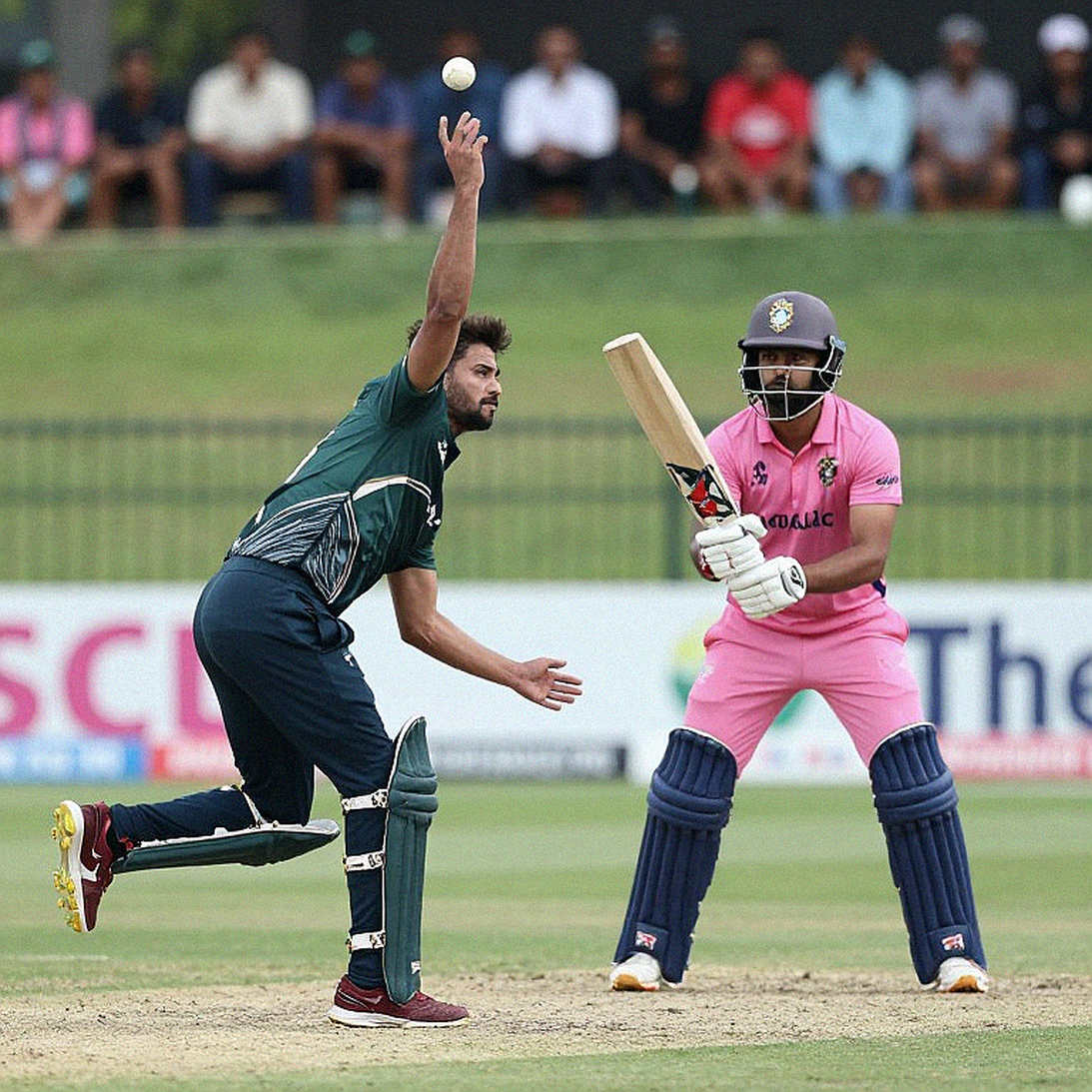
Yuzvendra Chahal's 4-0-16-3 for Haryana against Tamil Nadu provided the immediate image behind his 400-wicket T20 milestone. The wider story is more complicated than the headline. Chahal has reached 402 wickets in 246 T20 matches, a figure described by the Times of India as the first such mark by an Indian bowler. This is not an international T20 record and it is not an ICC-certified single-competition record. The total combines T20 internationals, the Indian Premier League, the Syed Mushtaq Ali Trophy and other domestic or franchise competitions.
That distinction matters because an aggregate T20 total can quickly be turned into a national-selection argument. Chahal has not played for India since 2026, yet the same player reportedly secured an 18 crore rupee price from Punjab Kings before the 2026 season. The contrast is the real analytical point: franchise value and national-team value have moved in different directions.
The evidence base is a public report and its accompanying analysis. The report does not supply a precise date, venue, toss, dew information, match result or complete figures for the other bowlers. Those omissions limit what can be concluded. A responsible reading should preserve those boundaries instead of filling them with assumptions.
The match behind the milestone
Tamil Nadu were bowled out for 124 in 19.5 overs. Chahal's figures were 4-0-16-3. A 4.00 economy rate is an excellent T20 return, particularly when a bowler completes the full four-over allocation and takes three wickets. A wrist-spinner's value is usually concentrated in the middle overs, where the objective is to break partnerships, change the scoring rate and force attacking batters into high-risk shots. Chahal's figures fit that role.
The match result is not confirmed in the supplied material. The report states that Tamil Nadu were dismissed for 124, but it does not establish whether Haryana won or by what margin. The spell can therefore be called important in restricting Tamil Nadu, but it should not automatically be labelled match-winning. The difference is small in wording and large in reporting accuracy.
Removing Chahal's 16 runs leaves 108 runs from the other 15.5 overs. That produces a combined economy of approximately 6.84 runs per over for the rest of the Haryana attack. Chahal was therefore around 2.84 runs per over better than the remaining bowlers, although this is a derived team-level calculation because the other individual figures are absent.
The venue, pitch, toss and dew conditions are also unavailable. A slow surface or limited dew may be consistent with a leg-spinner completing four controlled overs, but the conditions cannot be verified. The safe conclusion is narrower: Chahal produced a high-quality single-match spell. The spell is not enough to establish a long-term form trend.
What 402 wickets actually measure
Chahal's 402 wickets in 246 matches equal 1.63 wickets per match. This is the most interesting number in the milestone story, yet it receives less attention than the round total. Rashid Khan is listed with 743 wickets in 553 matches, or 1.34 wickets per match. Rashid leads Chahal by 341 wickets in total, but Chahal's wickets-per-match figure is higher.
The two measures answer different questions. Aggregate wickets measure longevity, access to matches and sustained participation across competitions. Wickets per match offers a rougher indication of regular impact. Neither measure alone establishes bowling quality. Bowling average, strike rate, economy, phase usage, opposition strength and match context are required before a complete evaluation is possible.
The Rashid comparison must therefore be handled carefully. Rashid has played more matches across major franchise leagues and international cricket. Chahal's lower match total and higher wickets-per-match rate are not contradictory facts. One describes total production; the other describes production density. A headline built only around total wickets hides that distinction.
The same problem appears in comparisons with Jasprit Bumrah. Chahal's aggregate total is reported as 402, while Bumrah's is cited as 354, but the relevant match counts and competition splits are not supplied. A raw total cannot compare the quality of their T20 careers. Bumrah's international T20 impact belongs to a different data set from Chahal's pooled all-competition total.
I have spent years checking match data manually, and the most dangerous part of a number is often not whether it is false. It is whether readers understand its scope. When I coded Bangladesh Premier League events by hand in 2026, every metric had to be tied to a fixture, a competition and a definition. The same discipline is required here. The 402 figure is useful only when its composition remains visible.
A domestic milestone and an international question
The milestone was reached in the Syed Mushtaq Ali Trophy, India's domestic inter-state T20 competition. It is an important tournament, but its competitive environment cannot automatically be equated with the IPL or international T20 cricket. A strong domestic performance matters, particularly when a bowler completes four overs at a low economy and takes wickets. It does not, by itself, settle an international selection case.
A proper comeback assessment would require several matches of recent data, IPL economy and strike rate, wicket quality, performance against right- and left-handed batters, phase splits, fielding output and fitness information. Chahal's 3/16 is a positive signal. It is not a complete return-to-India case.
India's T20 structure has developed considerable depth in the spin department. Selection increasingly values batting depth, fielding, matchup flexibility and multiple roles. A specialist leg-spinner may provide more wicket-taking upside, but the team may have to give up a batting or fielding advantage to include him. Chahal's absence is therefore partly a team-construction decision, not only a form judgment.
The most reliable team-level reading is depth rather than neglect. A player can remain highly productive in domestic and franchise cricket while staying outside an international side that has refreshed its balance. Nothing in the supplied report demonstrates that the 402-wicket mark has changed India's selection criteria.
The age curve of a wrist-spinner
The analysis places Chahal at 36. Wrist-spin skill can age differently from pace. An experienced leg-spinner may compensate for reduced physical sharpness through flight, changes of pace, googly usage, drift and better reading of batters. It would be unreasonable to assume that his craft disappears simply because he is older.
Modern T20 cricket, however, values more than bowling skill. Boundary fielding, catching, recovery speed and lower-order batting can determine whether a specialist fits a squad. As a player ages, those secondary contributions become more important. The 402 wickets establish Chahal's bowling durability; the supplied report does not provide current fielding or injury data.
A return case would therefore need to show a present role, not only a historical reputation. Can Chahal deliver two or three middle-over wickets against strong batting units? Can he field without reducing the team's athletic standard? Can he handle a compressed domestic and league schedule? Those questions cannot be answered by one innings or one aggregate.
What 18 crore rupees means
Punjab Kings reportedly paid 18 crore rupees for Chahal before the 2026 IPL season. That price should not be treated as an international endorsement. An IPL auction measures scarcity, squad construction, Indian-player availability, overseas-player limits, role clarity, commercial recognition and the team's short-term needs.
Chahal's Indian status increases his value. Because franchises operate with a limit on overseas players, a domestic wicket-taking match-winner can be more valuable than an overseas player with a similar skill profile. The price includes payment for Chahal's wicket-taking ability and for the scarcity of a reliable Indian wrist-spinner.
This is why franchise value and national-team value can diverge. Chahal has been outside India's XI since 2026 while still receiving a major IPL price. Franchises may trust him to deliver immediate middle-over wickets, while national selectors may prefer a different combination with more batting or fielding flexibility. The divergence is structural rather than proof that one side has misunderstood the player.
There is also an age-related downside. An auction fee is fixed at the time of purchase, while performance risk continues through the season. A 36-year-old specialist can deliver a high return if his control and wicket-taking remain stable, but the downside can become visible quickly if athleticism or workload tolerance declines. The available information does not provide enough IPL economy or average data to quantify that risk.
The veteran specialist career model
Chahal's career should not be viewed only through the question of why he is outside India's team. Players such as Sunil Narine and Dwayne Bravo demonstrated that a specialist can build a long and valuable T20 career through franchise roles, matchup expertise and consistent league availability. International prominence is not the only route to a durable T20 business model.
Chahal is moving toward a similar veteran-specialist track. His domestic record supports visibility, his IPL value remains high and his role is clearly understood. The 402-wicket milestone can strengthen his market profile before future auctions. It should not be confused with a guarantee of national selection.
The Syed Mushtaq Ali Trophy also reflects a changing domestic ecosystem. It is a development competition, but it is also a marketplace where established players maintain match fitness and commercial visibility. A senior player with a major IPL valuation appearing in the domestic tournament shows that domestic T20 now serves both talent development and franchise preparation.
The danger in the record language
Record headlines are designed to be simple: first Indian, 400 wickets, 246 matches. The problem begins when a national record is heard as a world record, or when an all-competition T20 total is understood as a T20I statistic.
Chahal's total is not an ICC-certified global record for most T20 wickets. It is a compiled aggregate across different competitions. Such aggregates are legitimate and useful, but their definition must travel with the number. The IPL, international T20 and domestic T20 operate at different levels, with different schedules, roles and pressures.
The selection narrative also requires restraint. Chahal's 3/16 is evidence that he can still produce an excellent spell. It is not evidence that India must recall him. His three-year international absence, India's spin depth, his age and the value of competing all-round profiles must be assessed together.
The more accurate framing is not that selectors are ignoring a 400-wicket bowler. The stronger description is that Chahal has built a T20 career in which franchise value and international selection value have separated. That sentence is less dramatic, but it describes the available evidence more faithfully.
The data still required
The first requirement is a competition-by-competition split of the 402 wickets. How many came in the IPL, T20 internationals, Syed Mushtaq Ali Trophy and other leagues? Without that breakdown, the aggregate cannot be interpreted properly. The next requirement is bowling average, strike rate and economy.
Wicket totals can exaggerate a bowler's value when they are separated from the runs conceded. A three-wicket spell for 16 runs is different from a three-wicket spell for 40 runs, even though both appear identical in the wickets column. Wicket quality, dismissal type, batting position and match phase add necessary context.
Phase data is also central. How often does Chahal bowl in the powerplay? What is his economy from overs 7 to 15? How effective is he against left-handers and right-handers? How often is he used at the death? His historical value has been concentrated in the middle overs, so the question is whether that role remains more valuable than the multi-skill alternatives available to India.
Workload and fielding data complete the picture. A 36-year-old wrist-spinner may be able to maintain his craft while becoming more vulnerable to a compressed schedule. The supplied report contains no injury or workload information, so a specific risk estimate would be unsupported. Monitoring the number of four-over spells, recovery periods and travel demands is still essential.
My experience of match analysis suggests that a six-to-eight-match sample often tells us more about a player's present state than a large career total. Economy, strike rate, boundary rate, wicket type and phase usage should be tracked across that sample. Chahal's next selection conversation should be built on that evidence rather than on the emotional force of the 400-wicket figure.
Three possible futures
The first possibility is that Chahal remains outside India's team while continuing as a high-value IPL and domestic specialist. This fits the available information: no India appearance since 2026, a deep spin pool and an age profile that makes role specificity more important.
The second possibility is a genuine reconsideration after sustained high-quality performances. For that to happen, Chahal would need more than isolated wickets. He would need strong economy, relevant matchups, reliable fitness, adequate fielding and a clear tactical fit for India's squad.
The third possibility is that fielding or workload becomes a greater concern than bowling. A wrist-spinner can retain control and deception while losing enough athletic value to alter the selection equation. The current report does not provide evidence to choose this outcome, so it remains a scenario rather than a finding.
The central question for India is not whether Chahal has taken 400 wickets. It is whether his specialist skill creates more value in the current T20 structure than a spinner who offers additional batting or fielding. The answer will come from matchup data, recent performance and squad balance. The career total opens the discussion; present role determines the decision.
Looking ahead
Chahal's 402 T20 wickets are a genuine durability milestone. His 4-0-16-3 for Haryana is a recent example of control and wicket-taking quality. The number is not an international comeback certificate, and it is not an ICC world record. It is a pooled total across multiple T20 competitions.
The most revealing figure may be 1.63 rather than 402. Chahal's wickets-per-match rate is higher than Rashid Khan's 1.34, even though he is far behind Rashid in total wickets. That contrast shows how a headline and the underlying data can tell different stories.
Over the next year, the important signals will be Chahal's IPL economy, wicket quality, workload, fielding contribution and India's spin selections. If he sustains middle-over control across a meaningful sample, the discussion can move from nostalgia to evidence. The question will then be less about the old record and more about the current price of his specialist skill in modern T20 cricket.


Related Players
Recommended
The Zero-Evidence File: Empty Authority in Cricket Analysis and a Minimum Standard of Proof2026-10-30
The Empty Handoff and the Immutable Ledger: Blockchain Lessons for Cricket Analysis2026-10-09
The 40-Crore Ask: A Retention Number That Swallows 27 Percent of an IPL Purse2026-11-08
Why Siraj’s Absence from the First Test Against New Zealand Raises a Major Question2026-11-23
Oil Prices, War, and Cricket's Quiet Ledger: How the Gulf Venue Ledger Could Rewrite Bangladesh's Series Budget2026-11-05
Recommended
2026: India's First Women's Test — The Story of Courage and a Five-Wicket Haul Hidden Behind a Six2026-10-31
338, 252/8, and a Last-Ball Four: The Arithmetic and the Silence of the U19 Asia Cup Final2026-11-17
No Data, Yet Analysis: The Hidden Danger of Null Payloads in Cricket Analytics Pipelines2026-10-18
Powerplay Accounting in Two-Pace Conditions: Locating Asia's T20 Run Baseline2026-09-24
Asia's Invisible Ledger: Who Keeps the Stratigraphy of Young Talent?2026-10-11