
Dhoni’s 47-Captain Quiz: The Bigger Question Is Which Cricket Is Being Counted
মূল উত্তর: উইজডেনের কুইজে দাবি করা হয়েছে, মহেন্দ্র সিং ধোনি পেশাদার ক্রিকেটে ৪৭ জন অধিনায়কের অধীনে খেলেছেন; তবে এখানে তালিকা, গণনার পদ্ধতি বা তথ্যের শেষ তারিখ না থাকায় সংখ্যাটি স্বাধীনভাবে যাচাই করা যায় না। মূল তথ্য: - কুইজটি ছয় মিনিটে ৪৭ জন অধিনায়কের নাম মনে করার চ্যালেঞ্জ হিসেবে উপস্থাপিত। - পরিসরে টেস্ট, এক দিনের International, টি-টোয়েন্টি International, আইপিএল, চ্যাম্পিয়ন্স League টি-টোয়েন্টি ও ঘরোয়া ক্রিকেট রয়েছে। - প্রতিযোগিতাভিত্তিক বিভাজন ছাড়া ৪৭ সংখ্যাটি তুলনামূলক Statistics হিসেবে অস্পষ্ট। - “আইপিএল থেকে অবসর” এবং “সব পেশাদার ক্রিকেট থেকে অবসর” আলাদা দাবি। - “১৯ মৌসুম” দাবির গণনার পদ্ধতি ও উৎস এখানে দেওয়া নেই। উৎস: ব্যবহারকারীর সরবরাহ করা Stage-2 বিশ্লেষণ; প্রকাশনার তারিখ উল্লেখ নেই। | Cross-checked: cricsultan.com নয় সম্পর্কিত প্রশ্নোত্তর: প্রশ্ন: ৪৭ জনের সংখ্যা কি নিশ্চিত রেকর্ড? উত্তর: সরবরাহ করা তথ্যের ভিত্তিতে নয়; পূর্ণ তালিকা ও গণনার পদ্ধতি প্রয়োজন। প্রশ্ন: কুইজে কোন প্রতিযোগিতাগুলো অন্তর্ভুক্ত? উত্তর: টেস্ট, এক দিনের International, টি-টোয়েন্টি International, আইপিএল, চ্যাম্পিয়ন্স League টি-টোয়েন্টি ও ঘরোয়া ক্রিকেট। প্রশ্ন: আইপিএল অবসর কি পেশাদার ক্রিকেট থেকে অবসরের সমান? উত্তর: না, দুটি আলাদা পরিসরের দাবি এবং আলাদাভাবে যাচাই করা উচিত।
A six-minute quiz, 47 names. The question sounds simple: can you recall every captain under whom Mahendra Singh Dhoni played professional cricket? Yet beside the number there is no scorecard, no match result, and no published breakdown showing which captain led in which competition. There is a memory test, powered by the length of Dhoni’s career. That is what makes the quiz appealing—and what demands the most caution.
A clear boundary is needed at the outset. The figure of 47 is the quiz’s claim; the material available here does not provide a complete list, a counting method, or a cut-off date with which to verify it. It should therefore be treated as an editorial claim, not as an established historical record. The quiz’s real value lies less in the precision of 47 than in the reminder that Dhoni’s career crossed several distinct cricketing settings.
Six competitions, one number
The quiz spans Tests, One-Day Internationals, Twenty20 Internationals, the Indian Premier League, the Champions League Twenty20 and domestic cricket. Combine those categories and the phrase “47 captains” becomes difficult to interpret. A player may appear under one captain in one format and lead the side in another. A teammate, opponent or team may also occupy a different place in the player’s career across competitions. Before counting captains, a reader needs to know the team, match, competition and time period involved.
This separation is more than a statistical technicality. The leadership environment of a Test side is not the same as that of an international limited-overs team or a franchise. A captain under whom Dhoni played in domestic cricket cannot simply be blended into a measure of his international career without risking a misleading comparison. The inclusion of the now-defunct Champions League Twenty20 makes the source period especially important: readers should be told which records and dates the quiz uses.
I have spent many years watching match records, scorecards and on-field decisions side by side. An event on the field is one thing; classifying it afterwards is another. Memory can retain names, but accurate counting requires records arranged by a consistent standard. The quiz points towards the archive without showing its shelves. The reader’s first task is therefore not to memorise the answers, but to ask at which level of cricket each answer is valid.
What Dhoni’s longevity signals
Even without a verified list of 47, the idea behind the figure is meaningful: Dhoni’s playing career was broad, and his role changed over time. The quiz description says he played under other captains early in his career and again in its later period, with a long stretch in between when he was himself the familiar leader. That is not an ordinary match statistic. It is a map of career phases: entry into a side, a long period at the centre of leadership, and then a return to playing under a successor.
Understanding that arc takes more than a captain count. A wicketkeeper-batter such as Dhoni can combine two specialist responsibilities in one place in the XI. His work behind the stumps and his batting role affect the balance of team selection; captaincy adds strategic responsibility. The quiz does not prove that these three functions together caused his long leadership tenure. It does, however, invite a broader question: when a team and its public identity are built around one player for a long time, how difficult is it to change that structure later?
“Longevity” and “success” must also be kept separate. The number of captains a player has encountered may suggest career span, but it cannot measure the quality of those captains, the success of their teams or Dhoni’s own performance. A long captaincy tenure alone does not prove greatness either. The quiz description calls Dhoni one of the greatest captains in cricket history, which is an assessment; its mention of multiple titles is a claim about results that can be checked. Giving both statements the same weight blurs the line between evidence and praise.
The most useful reading of the quiz is therefore not the number, but the change of role: a player who once adds names to a list of captains later becomes the figure around whom several teams’ leadership periods are remembered. The return to playing under another leader is an important chapter in that long career story.
“19 seasons” and the language of retirement
Another claim around the quiz is that Dhoni spent 19 seasons with Chennai Super Kings and retired from the IPL. Here, too, wording matters. “19 seasons,” “19 years,” “a 19-year association” and “appeared in 19 editions” do not mean the same thing. Chennai Super Kings did not compete in the IPL in 2026 and 2026, so readers need to know how the figure of 19 was calculated. The material available here does not provide enough source detail to confirm it.
The scope of retirement also needs to be clear. Retiring from the IPL is not the same claim as retiring from all professional cricket. If a quiz introduction places the two statements side by side, a reader may assume the broader claim has also been established. The information presented here does not support that conclusion. A publication’s credibility can be damaged by a vague word as readily as by a major factual error. “Retired from the IPL” is specific; “ended his professional cricket career” requires separate evidence.
Both 47 captains and 19 seasons are incomplete without a source, a definition and a cut-off date. A dependable list should provide competition-by-competition match records, the captains’ names, the counting rules and the date through which the data has been compiled. It should also clarify whether the same person is counted more than once across competitions, how changes of captaincy are handled, and what level of cricket is meant by “professional.” With those details, the quiz could serve as entertainment and as a verifiable reference.
The succession question behind the quiz
The appeal of a memory quiz about Dhoni is not explained by popularity alone. When a player is the familiar leader of both a national side and a franchise for a long period, his name becomes connected to the identity of those teams. What happens to that identity after retirement is also a question of sports management. The quiz description mentions a subsequent role as mentor. That fact should not be treated as proof of the role’s formal limits, dressing-room access or decision-making authority; no such details are supplied here.
Still, the move from player to mentor points to a possible form of continuity. An experienced figure can support a successor, while a familiar face can help preserve the relationship between a franchise and its supporters. At the same time, a team needs to understand how much leadership knowledge depends on one individual. Captains make decisions on the field, but preparation, delegation and the development of future leaders are organisational responsibilities. Retaining a mentor by itself does not create that structure.
The quiz has limited news value, but it is not without significance. It is an example of post-retirement memory content: career records and old scorecards are turned into questions that invite audience participation. A six-minute challenge involving 47 names creates curiosity, while compressing a multi-format career into a single number. That compression makes the material easy to share, but it risks stripping away context.
There is no need to dismiss the emotion of the exercise. Dhoni’s place in supporters’ memories is real, and the quiz gives those memories a prompt. But enthusiasm should not bring verification to a halt. Memory supplies the quiz’s energy; records supply its scorecard. If that distinction disappears, an engaging question can unintentionally be repeated as a confirmed historical fact.
What to watch next
If the list of 47 captains is published, the clearest presentation would separate Tests, One-Day Internationals, Twenty20 Internationals, the IPL, the Champions League Twenty20 and domestic cricket. It should also cite the match-record source and state the cut-off date. Readers could then see not only how many names they remembered, but also how many different cricketing worlds Dhoni’s career crossed.
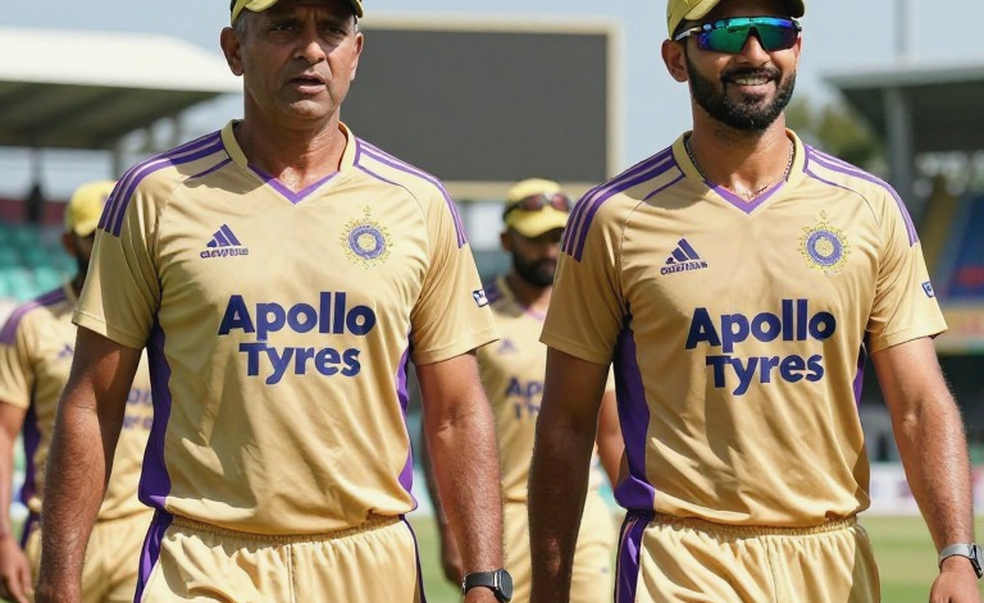
The way his mentor period is defined, and how leadership responsibilities are distributed in future seasons, is also worth watching. There is not enough evidence here to judge any team’s results, but the method of sharing responsibility after a long leadership tenure could offer useful lessons to other franchises. However the figure of 47 is eventually resolved, the larger question remains: how should cricket measure longevity—by counting names, or by tracing the team structures that form as a player’s role changes?