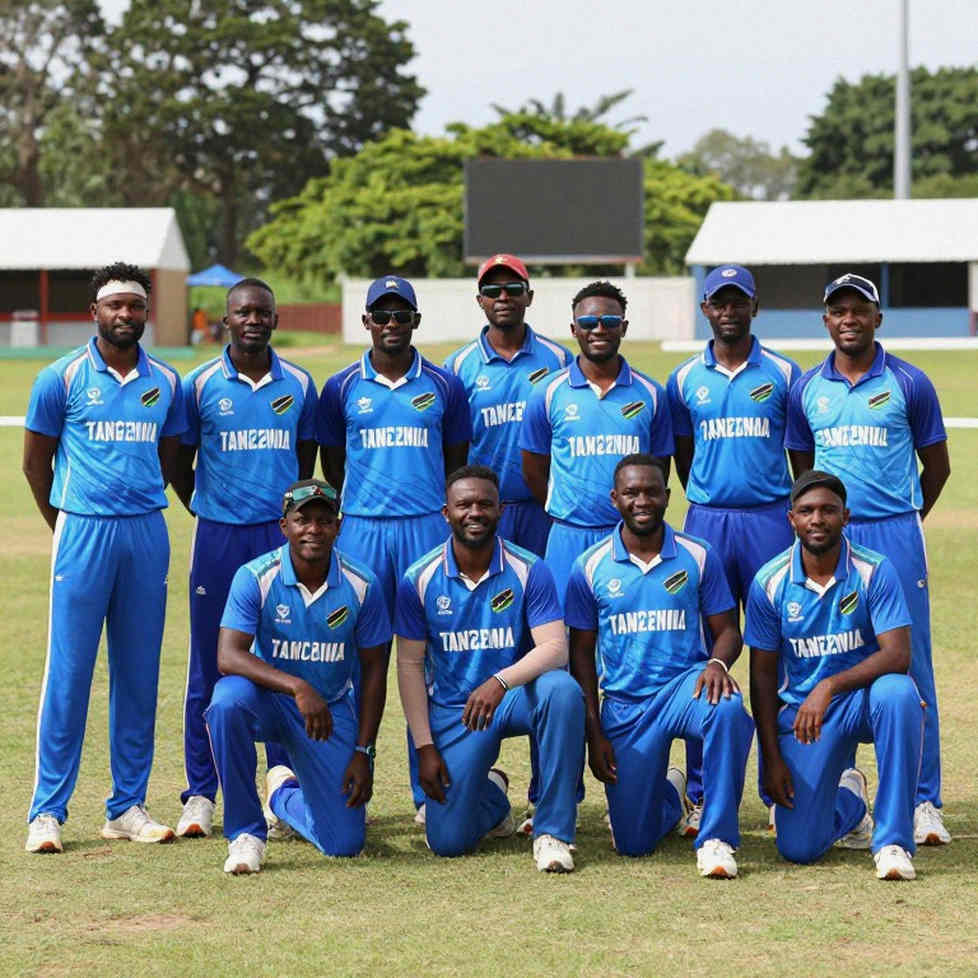
Seven Players, One Misreading: Sri Lanka's Hong Kong Sixes Squad Is Not the National Team
**মূল উত্তর:** শ্রীলঙ্কা হংকং সিক্সেস ২০২৬-এর জন্য সাত সদস্যের একটি প্রতিনিধিত্বমূলক ছয়-এ-সাইড দল ঘোষণা করেছে, যা শ্রীলঙ্কার জাতীয় দল নয়। আসরটি ৩০ অক্টোবর থেকে ১ নভেম্বর ২০২৬ পর্যন্ত কাউলুনের টিন কুওং রোড রিক্রিয়েশন গ্রাউন্ডে অনুষ্ঠিত হবে। **মূল তথ্য:** - দলে সাতজন খেলোয়াড়; অধিনায়ক সাঙ্গীথ কুরাই; নির্বাচন করেছে জাতীয় ক্রিকেট সিলেকশন কমিটি। - শ্রীলঙ্কা গ্রুপ বি-তে বাংলাদেশ ও স্কটল্যান্ডের সঙ্গে; মোট ১২টি দল অংশ নেবে। - এই Format আইসিসি-স্বীকৃত নয়; টেস্ট/ওয়ানডে/টি-টোয়েন্টি র্যাঙ্কিং এখানে প্রযোজ্য নয়। - মাঠ নিরপেক্ষ (হংকং); কোনো দলের হোম-অ্যাডভান্টেজ নেই। - তিন দিনের আমন্ত্রণমূলক আসর; সূত্রে বাণিজ্যিক বা নিয়ম-সংক্রান্ত তথ্য নেই। **সূত্র উল্লেখ:** মূল সূত্র: শ্রীলঙ্কা দল ঘোষণা প্রতিবেদন, হংকং সিক্সেস ২০২৬ | Cross-checked: cricsultan.com **সম্পর্কিত প্রশ্নোত্তর:** Q: সাঙ্গীথ কুরাই কে? A: সূত্র কেবল তাঁকে অধিনায়ক হিসেবে উল্লেখ করেছে; তাঁর Role বা রেকর্ড নিশ্চিত নয়। Q: শ্রীলঙ্কার জাতীয় দলের পারফরম্যান্স দিয়ে এই দলকে বিচার করা যায় কি? A: না, কারণ এটি প্রতিনিধিত্বমূলক দল এবং ছয়-এ-সাইড Format মূলধারার Formatের সঙ্গে তুলনীয় নয়। Q: আসরে কতটি দল এবং কোন গ্রুপে শ্রীলঙ্কা? A: ১২টি দল; শ্রীলঙ্কা গ্রুপ বি-তে বাংলাদেশ ও স্কটল্যান্ডের সঙ্গে।
The headline was routine: "Sri Lanka squad announced for Hong Kong Sixes 2026." I stopped at a single number — seven. Seven players. Forty-four years of watching cricket, seventeen years in a newsroom, and my eye is trained so that "Sri Lanka squad" instantly summons a fifteen- or sixteen-man ODI or T20 party: travelling reserves, the bench, the hidden algebra of selection. Here it is seven. That seven was the story's real signal. Anyone who missed it may have read the item as "Sri Lanka's national team announced." That is the trap, and once you fall into it, every downstream conclusion compounds the error.
The name Hong Kong Sixes carries its own definition. Six players a side, very short innings, attack on every over, constant bowling rotation. The 2026 edition runs from 30 October to 1 November at the Tin Kwong Road Recreation Ground in Kowloon, Hong Kong. Twelve teams, a first-round group stage. Sri Lanka are in Group B, alongside Bangladesh and Scotland; the group's fourth team has not yet been named. Sri Lanka's squad was chosen by the National Cricket Selection Committee, captained by Sangeeth Cooray.
Placed together, these facts draw their own boundaries. Twelve teams, a three-day event, an invitational structure — this is not a franchise league, not an ICC-ranked event, not part of the Future Tours Programme. National flags are present; national-team composition is not. The tactical scaffolding of Tests, ODIs and T20Is — powerplays, death overs, session attrition — does not apply. Six fielders, fewer overs, different boundary rules: this is a different game.
Years of watching cricket taught me that when the format changes, the analytical tools must change too. The template that works in T20 is useless in six-a-side. Anyone hunting for a shadow of Sri Lanka's ODI or T20 form is knocking on the wrong door.
The first task is to dismantle the language of the headline. "Sri Lanka announced a squad" is a standard newsroom mould: a board releases a list, the media turns it into an event, the reader turns it into a signal. But the mould always hides an assumption — that the named squad is that country's best side. For the Hong Kong Sixes, that assumption is wrong. A seven-man party cannot be a full international XI, because a list of seven structurally means six on the field and one rolling substitute. The number seven is not a mystery; it is the format's own signature.
Now the real question: who are these seven? The source names only the captain, Sangeeth Cooray. Is he a current national player, a domestic first-class cricketer, or a retired international? The source is silent — and that silence is itself information. When a squad is announced and the media prints only the captain's name, the market value of the event lies in its presence, not in any player's performance. The Hong Kong Sixes historically builds squads from domestic and first-class players, fringe internationals and, often, retired stars. Sri Lanka's seven are almost certainly such a mix — a representative side, not a first-choice one.
This is where my vantage point matters. I walked out of the newsroom in 2026 and built a one-man desk where the story could breathe. From there, one thing is visible that Dhaka's press box routinely obscures: the relationship between centre and margin. Dhaka's news eye sits on the centre — big teams, big names, big series. An event like the Hong Kong Sixes sits at the margin. But from the margin you can see who gets an opportunity here and who does not. For a domestic player who has never made the national side, these three days are a rare stage. Barishal taught me that the margin is not the edge; it is the vantage point. And precisely for that reason this event is not a stage for player evaluation; it is a stage for player recognition.
Governance here is light but telling. The squad was picked by the National Cricket Selection Committee — a standard board-level process. The source raises no rule controversy, no anti-corruption question, no eligibility or political complication. That silence is itself a message: this is a low-stakes event. Yet silence should never be read as assurance — a quiet source does not claim safety, it claims nothing. The six-a-side format has its own playing regulations — fielder numbers, over counts, boundary limits — that differ from the mainstream formats. The source does not provide them, so that dimension stays outside the analysis.
A methodological note is needed here. When reading any squad announcement, I look at three layers: who selected, how many were selected, and for what format. The source answers the first two — the selection committee, and the number seven. The third question is the real one, and its answer hides in the phrase "six-a-side." Read the three layers together and the story settles into place without any extra speculation.
Now the money. The source contains no broadcast-rights value, sponsorship, attendance or prize-money data. Commercial analysis is therefore impossible. Structurally, though, one thing can be said: twelve teams and a three-day window make a broadcast-friendly, compact exhibition product. There is no ranking risk here, so no side plays in fear of losing. There is no points-table pressure, so the coach's calculus differs too. This is not a mere game — it is a designed product: a fixed calendar, fixed teams, a fixed group, a staged three-day drama.
The temptation to borrow football's set-piece vocabulary exists, but I will not — because set-piece analogy only works when it maps to real cricket mechanisms. Here it does not. What does map is a structural parallel: an invitational event is itself a designed system in which who plays, where they play and when they play are all pre-arranged. Sri Lanka and Bangladesh sharing a group (with Scotland) is probably commercial and regional draw, not pure seeding. Keeping two subcontinental sides plus a Commonwealth side together makes it easier to pull an audience — an inference, not source-supported, but not in conflict with the structure either.
Behind this decision lies a calculation rarely written in the newsroom mould: an invitational event means more to the host city than to the game. Hong Kong is a non-traditional cricket market. Staging the event there is an attempt to spread cricket into new geographies — work that serves tourism and city branding as much as the sport. Sri Lanka's participation is a part of that process, not a statement of competitive strength. Sending a squad is never a strength statement unless you send the real squad. The real squad was not sent, because the format does not want it.
Now to where ordinary readers are most confused — rankings and comparison. Sri Lanka, Bangladesh, Scotland: the three senior sides play at three different levels. But that level means nothing in this group, because the sides on the field are representative, not first-choice. ICC rankings are simply inapplicable; the format is unranked and no ranking points are at risk. Toss, DLS, DRS — all mainstream tools are out of scope. Six-a-side is a high-variance format where results are near-random and the analytical signal is very thin.
That high-variance nature has a consequence rarely written about. When results in a format are near-random, you either enjoy it or ignore it — you do not analyse it. Fantasy and betting markets respond weakly to such events for the same reason. The information value here is not competitive but calendrical: a fixed date, a fixed venue, a fixed group structure.
Taken together, the value of this item is negative — it reminds us of a rule that Dhaka's press box routinely forgets: a headline never defines a team; format, squad size and selection process do. "Sri Lanka squad" here denotes representation of a flag, not of strength.
I will watch this event closely, because I keep an old habit — after any announcement I maintain a dated, falsifiable prediction log, and I do not erase it even when I lose. My first entry here: when the full squad list is published, it will contain no more than one current national-team player. Because in representative events boards tend to send borderline and domestic players, and that is the real work of this event — a rare chance to bring the margin to the centre.
Now to the question where my own argument stands against me. I am dismissing this item as low-information, low-stakes — but can I be wrong? Possibly. My critics might say this dismissal is itself a press-box habit. We stare at the big formats and therefore undervalue new ones. History is witness: when T20 arrived, conventional analysts laughed it off as not-cricket. Today that format drives the game's economy. Six-a-side may never reach that height, but invitational events have a role — carrying the game to new audiences and new cities.
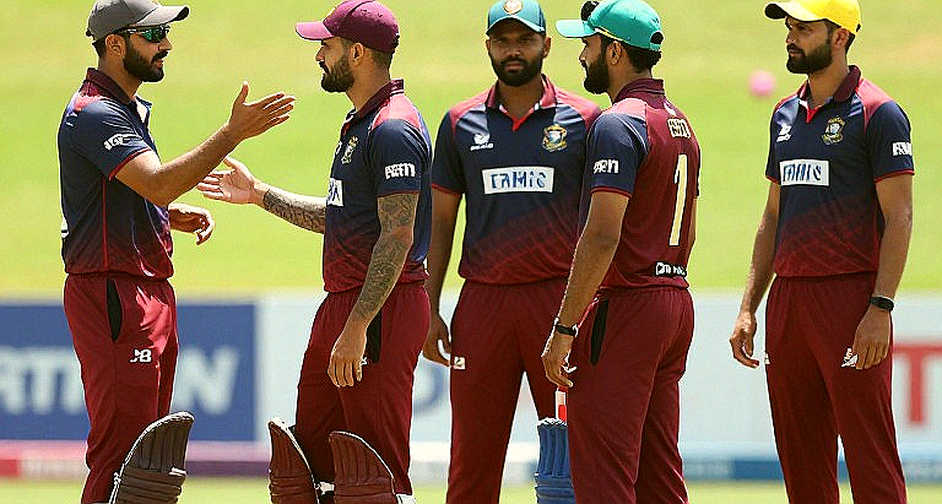
The second objection cuts sharper: the very "representative side" I am downplaying may be the signal of the future. The domestic player who is one of these seven may enter the national side two years from now. The pipeline from margin to centre works exactly like this — start on a small stage, end on a big one. Ignoring this squad may mean missing the first signal of a pipeline.
The third objection: calling Hong Kong a "non-traditional market" may be an outdated idea. Cricket's geography is shifting across Asia, and Hong Kong is a node in that change. Sides like Sri Lanka or Bangladesh playing there is not only exhibition but also a thread of diplomatic and commercial relations.
Still, I hold my core position — because none of these objections is proved by source-supported evidence. Possibility and proof are different things. I keep the door of possibility open but make no claim. And precisely for that reason — where the source is silent, "insufficient information, cannot assess" is the honest analysis.
So, a testable prediction looking forward. On 30 October 2026, when the first ball drops at Tin Kwong Road, watch two things. First, how many of Sri Lanka's seven are current national-team members — my prediction: none. Second, how much of the event's coverage is about the format and how much about the players. If the answer is "almost entirely the format," then you will know I was right: here Sri Lanka does not mean Sri Lanka. Here Sri Lanka means an invitation — and an invitation is never a story about a ranking.