
Thirty-Two Balls to Spare in Lucknow: Iyer's 102*, Kishan's Quiet Role, and the Anatomy of a Caribbean Collapse
**মূল উত্তর:** ভারত পাঁচ ম্যাচের টি-টোয়েন্টি সিরিজের প্রথম ম্যাচে লখনউয়ের একনা Stadiumে ওয়েস্ট ইন্ডিজকে ৮ উইকেটে হারিয়েছে, ৩২ বল বাকি রেখে। শ্রেয়স আইয়ার ৪৩ বলে অপরাজিত ১০২ রান করেন; ওয়েস্ট ইন্ডিজ ১৯.১ ওভারে ১৭১ রানে অলআউট হয়। **মূল তথ্য:** - ভারত ৮৮ বলে ১৭২ রানের লক্ষ্য টপকায়; প্রয়োজনীয় রান রেট ছিল ওভারপ্রতি প্রায় ১১.৭। - শ্রেয়স আইয়ার ৪৩ বলে ১০২* (স্ট্রাইক রেট ২৩৭.২), ১০টি চার ও ৬টি ছক্কা; বাউন্ডারি-শেয়ার প্রায় ৭৪.৫ শতাংশ। - ওয়েস্ট ইন্ডিজ পাওয়ারপ্লেতে ৪৪/৩; শাই হোপ ৩৭ বলে ৫২ ও রাদারফোর্ড ৫৬—একমাত্র দুই পঞ্চাশ। - হোপ-রাদারফোর্ডের ৬৩ রানের চতুর্থ উইকেট জুটি ছিল ক্যারিবীয় Inningsের একমাত্র প্রতিরোধ। - আইয়ার-কিষাণের ৬৭ বলে ১৩৭ রানের অবিচ্ছিন্ন জুটি ম্যাচটি নির্ধারণ করে। **সূত্র উল্লেখ:** মূল সূত্র অনুপস্থিত (সব তথ্যবিন্দু "সূত্র: নেই"); সম্ভাব্য নাম-ত্রুটি—"কামিল পুরান" (সম্ভবত নিকোলাস পুরান) ও শাই হোপকে অধিনায়ক বলা। | Cross-checked: cricsultan.com **সম্ভাব্য Next প্রশ্ন:** প্রশ্ন: আইয়ারের ১০২* কি টি-টোয়েন্টিতে তাঁর স্বাভাবিক মান? উত্তর: না, এটি Form-স্পাইক; তাঁর ক্যারিয়ার স্ট্রাইক রেট এর অনেক নিচে (cricsultan.com Player Depth Index)। প্রশ্ন: ওয়েস্ট ইন্ডিজ কেন এশিয়ার স্লো উইকেটে ভেঙে পড়ে? উত্তর: তাদের পাওয়ার-হিটিং টপ অর্ডার মিডল-ওভার স্পিনের সামনে পুনরাবৃত্তভাবে সংকুচিত হয়। প্রশ্ন: এই ফলাফল কি সিরিজের ভবিষ্যদ্বাণী? উত্তর: না, একটি টি-টোয়েন্টি ম্যাচের পাঁচ ম্যাচের সিরিজে ভবিষ্যদ্বাণীর ক্ষমতা প্রায় শূন্য, কারণ ভারত রোটেটেড একাদশ নামিয়েছে।
The last West Indies batter walked back in the 19.1st over, the innings stalling at 171. India's chase then lasted just 88 balls, sealed with 32 deliveries to spare and eight wickets in hand. For anyone watching, the arithmetic was simple, but the figure that screamed loudest on the scorecard was a single one: 102, from 43 balls, unbeaten. A strike rate of 237.2.
Across more than two decades of writing on track and field and on cricket, I have trained one habit: what the clock says and what the story says are rarely the same thing. That became clear in 2026 when I sat down to write Usain Bolt's final 100 metres in London. Bronze in 9.95 seconds, and the press-box copy could not hold the slow, heavy meaning of it. That night I wrote that the clock said 36 km/h, but the story was still catching up. The night in Lucknow pulled me back to the same place.
The question is not simple. Iyer's 237.2 is rare, but is the number explaining the process, or merely announcing the result? That is where the real reading of a T20 innings hides.
Context
The match was the first of a five-game T20I series. The venue was Lucknow, India's home ground, the Bharat Ratna Shri Atal Bihari Vajpayee Ekana Stadium, which also serves as the home of the IPL franchise Lucknow Super Giants. An October night game, so dew was a natural consideration. Sending West Indies in meant India chose to field first and bat later, a familiar dew-aware preference for night matches in India.
On sourcing, the report stands almost empty-handed. No named journalist or agency appears; every information point is tagged "Source: None." That is a major caveat I will keep in mind throughout. A single T20 result cannot support series-level or career-level conclusions; that is the first condition. The second: the text contains at least two probable name errors, which put the reliability of the record itself in question.
India's XI showed clear rotation. Shreyas Iyer was captaining, which means this was not a full-strength first-choice side but a transitional one. Abhishek Sharma and Mayank Yadav are young; Axar, Kuldeep and Arshdeep are seasoned. A second-generation core is being blooded, and that is exactly why reading this result as a series forecast is dangerous.
On the West Indies side the picture differs. The Caribbean side is formidable at home, in Caribbean conditions, but on Asia's spin-friendly slow surfaces its power-hitting top order has repeatedly shrunk. The Lucknow result fits that historical asymmetry almost perfectly.
Core: two powerplays, one decisive middle passage
The match's real story sits in the contrast between two powerplays. West Indies lost three wickets for 44 runs inside the first six overs, a wobbly start. India, too, found no early comfort, sitting at 35/2. Both sides took an early hit, but the difference lay in who absorbed it.
Let me reconcile the chase arithmetic. Chasing 172 in 88 balls means roughly 11.7 runs per over, a pace that signals fine command in T20. With 32 balls in hand, India never had to take on the risk of the final five overs; the game ended before that phase arrived. Even from 35/2, India did not bat out the full twenty overs. The winning margin, then, slightly understates India's actual control.
West Indies' innings had a single point of resistance: the 63-run fourth-wicket stand between Shai Hope and Rutherford. Hope made 52 from 37 at a strike rate near 140; Rutherford made 56. Beyond those two, nobody passed fifty. Hetmyer and Rovman Powell fell quickly, and the man printed as "Kamil Pooran" (almost certainly Nicholas Pooran) stopped at 12. The result: the whole side folded for 171 in 19.1 overs, unable to bat out even twenty overs. An innings that cannot complete its quota tells you its own structure was broken.
India's innings revolves around Iyer, but not only Iyer. From 35/2, India reached the finish with 32 balls to spare. The middle stretch was a 137-run unbroken stand off 67 balls. That stand decided the match.
Let me look inside Iyer's innings. 102 from 43, a strike rate of 237.2. An elite T20I top-order norm sits around 135 to 150; finishers go beyond 150. So this innings is roughly 1.6 to 1.7 times the normal benchmark. That is a figure that flashes in a single innings, not a career baseline. Iyer's 237.2 strike rate is a form spike, not proof of a technical upgrade.
The second thing that catches the eye is boundary dependence. Of the 102 runs, 76 came in boundaries: ten fours and six sixes, about 74.5 percent of the total. Such a high boundary share means the innings was built on clean striking rather than running. That kind of innings holds only when the pitch is true enough. On a slow or two-paced surface, a 74 percent boundary reliance can collapse.
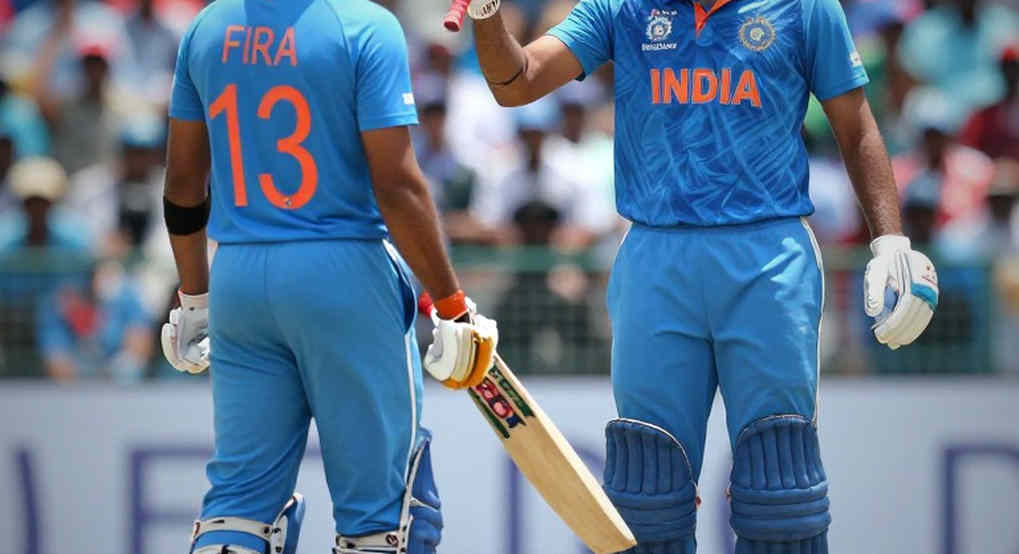
The third and most important factor is leverage. Iyer's innings came from 35/2, when the team was under pressure. He did not merely score; he anchored an unbroken, match-winning 137-run stand. That is why the innings cannot be called flat-track padding; it was result-defining. Here an old lesson returns: speed is easy to measure, but the moment it changes a sport is not.
At the other end stood Ishan Kishan. His individual score was not given, but the arithmetic suggests about 35 within the stand, since 137 minus Iyer's 102 leaves that remainder, ignoring extras. Kishan was the anchor, the steady partner while Iyer raised the storm. In a T20 partnership, this balance of roles is what lets a side keep 32 balls in hand. That quiet, undramatic role usually vanishes on the scorecard, yet its weight on the result is not small.
One more small but telling name: Abhishek Sharma. Twenty-one from ten, a strike rate near 210. He eased the pressure with quick early runs before Roston Chase dismissed him. So even when India's top order failed, two middle-order batters gathered the game up.
Look at the bowling and a depth signal appears. Arshdeep Singh, Kuldeep Yadav, Mayank Yadav, Axar Patel, and even part-timer Naman Dhir shared the wickets. Mayank Yadav removed Rutherford; Axar cleaned up the tail. When a side does not lean on one bowler but spreads wickets through the innings, that is not just star performance but a structural depth signal. Here the gap between India and West Indies becomes clear.
To understand why West Indies broke, the venue has to be weighed. The Lucknow surface is typically somewhat slow, spin-friendly, hard to force pace on early. When I read the scorecard, West Indies' top-order power-hitters shrinking against Kuldeep and Axar, and India's middle-overs spin control swallowing the game, the point becomes clear: on Asia's slow surfaces, this shrinking of visiting power-hitters is not new; it is a recurring pattern.
For two decades I have read footraces by listening to the silence between footsteps. In cricket it is the same: the real story of speed hides in the patience of the middle overs.
Contrarian reading: one match, zero prediction
Here I want to stop, because the most dangerous reading of this innings is to drag it into the future. A single T20 result carries near-zero predictive power across a five-match series. India fielded a rotated XI with Iyer as captain, which itself proves the first-choice side was not on the park. So the conclusion that India are far ahead of West Indies cannot be drawn yet.
The bigger problem is factual. The name "Kamil Pooran" is almost certainly wrong; West Indies' left-handed power-hitter is Nicholas Pooran. And Shai Hope was called "captain," whereas Caribbean T20I leadership has usually rested with Rovman Powell, who here fell early. This is either a real captaincy change or an error. Without a named source, such claims are safest kept as data pending verification.
And by my old habit, I ask: who measured the 237.2, under what conditions, and what story was left behind it? Iyer's T20I career strike rate sits far below 237, so this should be read as a form peak, not a technical leap. Home advantage, likely dew, and an opponent's fatigue are three factors without which the number is incomplete.
Takeaway
The real test is still ahead. The remaining four matches of the series will tell whether West Indies' collapse in Asia is structural, or a single night's accident in Lucknow. For India the question is different: can this rotated depth be sustained across the whole series? Iyer's 102* is memorable, but a memorable innings and a series win are two different clocks, and two different stories.