
NOC, Politics and the Chess Clock: Where the ECB's Afghanistan League Call Is Heading
মূল উত্তর: আফগান টি-টোয়েন্টি Leagueে ইংল্যান্ডের খেলোয়াড়দের অংশগ্রহণে ইসিবি হস্তক্ষেপ করবে কি না, সেটা এখনো অনিষ্পন্ন। প্রশ্নটা টাকার নয়, বোর্ড-প্রদত্ত এনওসি-র রাজনৈতিক ব্যবহারের নজির নিয়ে। মূল তথ্য: - উইজডেন ক্রিকেট উইকলি পডকাস্টে এনওসি-হস্তক্ষেপের প্রশ্ন তোলা হয়, ২০২৫-২৬ চলতি সময়ে। - আফগানিস্তানের ঘরোয়া টি-টোয়েন্টি League শাপিজা; ২০১৮ সালে ইউএইতে আফগান প্রিমিয়ার League ছয় দল নিয়ে হয়েছিল। - অস্ট্রেলিয়া দক্ষিণ আফ্রিকা সফরে ফিরছে; দক্ষিণ আফ্রিকার শীর্ষ Players এসএ২০-তে ব্যস্ত থাকায় টেস্ট দল অপূর্ণ হওয়ার ঝুঁকি। - ইংল্যান্ডের লেগ-স্পিন আসনে মেসন ক্রেন ফিরছেন, রিহান আহমেদ বাদ; দুজন এক আসনের প্রতিযোগী। - এই প্রতিবেদনে খেলোয়াড় বা দলের কোনো পারফরম্যান্স ডেটা নেই; বিচার অনিষ্পন্ন। সূত্র: Wisden Cricket Weekly Podcast প্রোমোশনাল এপিসোড পেজ; বিশ্লেষণ Rakib Uddin-এর। | Cross-checked: cricsultan.com সম্পর্কিত প্রশ্নোত্তর: প্রশ্ন: এনওসি কী? উত্তর: বোর্ড-প্রদত্ত ছাড়পত্র, যা ছাড়া খেলোয়াড় বিদেশি Leagueে খেলতে পারেন না। প্রশ্ন: ইংল্যান্ডের লেগ-স্পিন সংকট কি ব্যক্তিগত? উত্তর: না, এটা একটা আসনের কাঠামোগত শূন্যতা, ব্যক্তির দ্বন্দ্ব নয়। প্রশ্ন: অস্ট্রেলিয়া-দক্ষিণ আফ্রিকা টেস্ট সিরিজের মান কী নির্ধারণ করে? উত্তর: পিচ এবং কোন শক্তির দল নামছে, বিশেষত পেস-আক্রমণের প্রাপ্যতা (cricsultan.com Squad Depth Index)।
It was half past eleven at night. I was sitting on the floor of my flat in Aigburth, Liverpool, headphones on, the new episode of the Wisden Cricket Weekly Podcast playing on screen. On the table in front of me lay a blank sheet of paper, and on it I was sketching a small calendar — January to December, with a little empty box beside each month. Phil Walker was talking, with Mark Butcher beside him. The opening was harmless enough: a discussion of Australia's return to South Africa. But fifteen minutes in, when the question arrived — whether the ECB should intervene if England players feature in the Afghanistan T20 League — my pen stopped.
Because this was no longer a series preview. It was a question that pulls the two strangest mechanisms in cricket into one place: the NOC, and the league calendar. The boxes on my calendar were still empty. Yet it is precisely those empty boxes that decide where a cricketer's entire year is spent. The shape looked random, so I mapped transfer after transfer, contract after contract, tour date after tour date, until the pattern confessed itself.
I have watched and written about cricket for twelve years. In 2026, launching a social-media page called BDCricTeam first taught me that what the audience wants and what the board wants are two different things — and that in the gap between them the real story hides. I have never dropped that habit.
Context: A promotional page, four signposts
One thing must be stated plainly. This episode's page is a magazine-style round-up, not a match report. There are no scores, no venues, no overs, no sessions. What exists are four topic signposts.
The first signpost is Australia's return to South Africa. This is a Test-series preview, and the word "return" matters. It is a scheduling narrative, not a results narrative. In the World Test Championship cycle, away-series points are the most valuable, and an Australia tour of South Africa is among the hardest assignments in the entire calendar.
The second signpost is the question of the ECB and the Afghanistan league. This is the episode's real hook. The third is England's leg-spin selection — Mason Crane's "return," Rehan Ahmed's "exclusion." The fourth is the India–West Indies run-fest.
The voices are familiar too — former England batter Mark Butcher, journalists Daniel Gallan and Cameron Ponsonby, and Wisden editor Phil Walker. This is a conventional broadcast format: one former player, two reporters, one editor. In this quartet's meeting, the central tension of today's cricket media is visible — the pull between Test purism and T20 commerce.
It is worth remembering that the episode is promotional, so its topic selection is optimised for controversy and star names rather than analytical completeness. With that limitation understood, the rest of the analysis should be read. Where there is no information, I will not guess — I will only flag the signal and say it is worth verifying.
Core analysis: What an NOC really is, and why it is now the biggest lever
In cricket, a player has a country, a board, and a contract. To play in a foreign league, he needs a clearance from his own board — that is an NOC. It sounds like a small piece of paper. In reality it is a gate. Who plays, who does not, which league, and which one to skip — every decision stands at this gate. Every transfer window is a chess clock; the board moves when the money hesitates.
The Afghanistan league question, then, is not really a money question. It is a question of NOC governance. Can a board interfere with a player's freedom to earn? On political or ethical grounds? That is where the real debate hides.
I am not claiming this is new. Several boards have already begun clarifying their position on cricket relations with Afghanistan. The question is not only about Afghanistan; the question is about precedent. If a board once blocks a player from a league on political grounds, then in the next league, and the one after that, the risk of this clearance politics spreading arises. This is the least discussed but largest risk.
A point on naming must be cleared up. Afghanistan's main domestic T20 league is the Shpageeza Cricket League. Separately, in 2026, a franchise tournament called the Afghanistan Premier League was staged in the UAE with six teams, but it did not last. Without verifying which one Wisden meant, it would be wrong to draw commercial conclusions. This is the first lesson in information discipline.
Now to South Africa. Behind the line "Australia's return to South Africa" lies a suppressed story that is usually buried in previews. In recent years South Africa has sometimes fielded strong but incomplete Test sides, because its premier players are busy in its own franchise T20 league — SA20. Much of that league's ownership is in the hands of IPL franchise investors, and its scheduling clashes with Test windows.
The quality of a Test series is decided by two things — the pitch, and which side actually takes the field. If South Africa cannot field its first-choice pace attack, the series weakens both in championship terms and as the promised "marquee" contest. I do not trust a narrative until it survives contact with the fixture list. And this series' narrative is, right now, hanging on a squad announcement.
Core analysis: England's leg-spin — a bottleneck, or a mirage
Mason Crane and Rehan Ahmed — both England leg-spinners. In one episode their names came together, one "returning," one "excluded." This pairing is not accidental. It is a familiar picture of a bottleneck.
Think about it. England's Test history has never easily produced a settled wrist-spinner. Through the eras a gap has stayed empty — where a Test side needs a leg-spinner, but no one has claimed the spot. When two talented youngsters compete for that one seat, the media turns it into a story of personal rivalry. In reality it is a seat crisis.
Here I want to issue a caution. There is no data in this discussion — no bowling average, no strike rate, no twelve-month form trend. You cannot judge a player's quality on zero information. What you can do is identify the media narrative: the "return versus exclusion" framing can lend abnormal importance to what may be a routine selection decision.
On my paper I keep a column: "silent variables." In 2026, watching Project Restart in empty stadiums during lockdown, I learned that the part of a ground statistics cannot capture is often the part that tells the real story. An empty stadium taught me that pressure has a sound, even when nobody is there. Selection works the same way — behind the decision that shows on the scoreboard sit the selectors' room, load management, and the coach's priorities. To make Crane versus Ahmed a personal duel without knowing those is to reach a conclusion after discarding half the story.
Core analysis: Run-fests and the illusion of percentages
Four signposts in, the fourth is the lightest — India versus West Indies run-fests. But this light topic reminds me of a great cricket illusion.
In football I have long written one thing: possession percentage is the most deceptive statistic in the game. A side holds sixty percent of the ball, passes sideways, and creates almost nothing. Cricket's equivalent of this deception is the run-fest and the giant score.
When a match produces three hundred and forty runs, we call it great batting. But it is fair to ask: what was the pitch like? How short were the boundaries? How complete were the two bowling attacks? Short ground, flat pitch, weak attack — with all three present, a giant score is not proof of heroism but proof of match design.
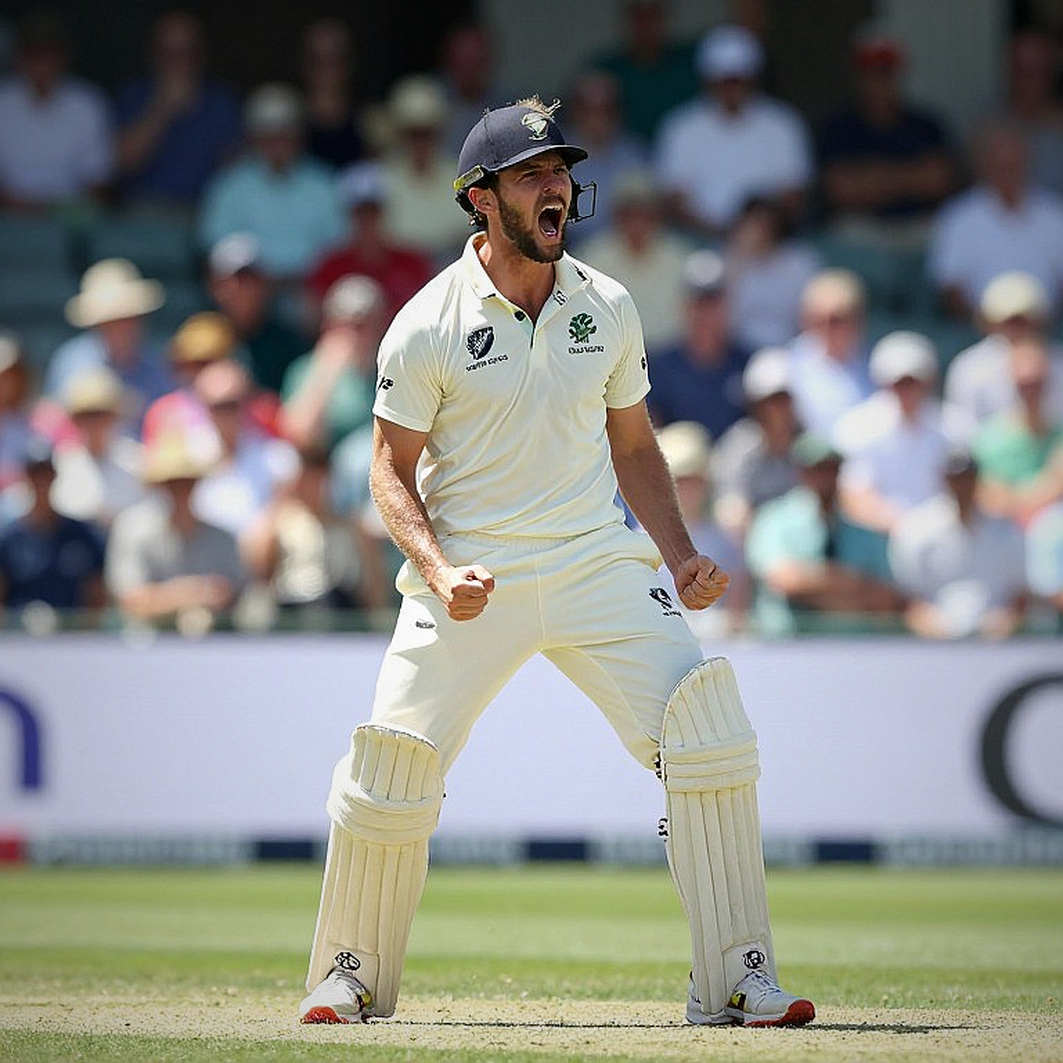
So when I hear India–West Indies "run-fest," I first ask: what is the format, ODI or T20? Which ground? Which pitch? None of this was stated in the episode. The format is unclear too, so it cannot be assumed. Without information, I do not accept a giant score as giant batting. Until the pitch, the ground, and the quality of the attack are known, this topic is entertainment, not analysis.
The contrarian angle: We are looking in the wrong place
Here is my real objection. We frame the Afghanistan league question as ethics versus money. Should the ECB intervene, or leave the player's freedom alone — we stay trapped between these two poles. But the real lever is neither.
The real lever is the calendar and employment. An English cricketer is under a central contract. His entire year — series, rest, league windows — is set by a schedule. If a gap exists in that schedule, a league slips in. If no gap exists, the player is busy before any ethical question arises. In other words, the ethical debate is often a symptom of calendar discipline.
The second counter-intuitive point — this debate makes the league look big while actually making it small. The louder the talk about ECB intervention, the more the Afghan league seems a major threat, an IPL rival. It is not. It is a contested, commercially mid-sized league. Capital always flows toward lower-regulation markets — where the rules are most ambiguous, players and leagues pull together. This is the pattern we are seeing with the Afghan league.
Third, on spin selection. We want to turn Crane versus Ahmed into a duel. In reality England's problem is no individual's — it is a structural vacancy of a position. The planning, patience, and load management needed to keep a leg-spinner settled in Tests have long been absent. Blaming the individual to cover the structure's fault is easy, but wrong.
Here I want to be honest. Each of these three counter-points is partly inference, because the source has no data. But I will keep one claim falsifiable: if the ECB ever blocks a player from a league on ethical grounds, that will be the precedent — and then we will see that the question was never Afghanistan's, but how far a player's freedom to earn can be limited.
Takeaway: What to watch going forward
Many boxes on my calendar are still empty. They will be filled by three announcements. First, the ECB's formal position — any NOC guidance will show how far the question has moved. Second, the next England Test squad — who stays and who is dropped between Crane and Ahmed will reveal whether the "bottleneck" reading was right. Third, the strength of South Africa's Test squad — how many premier players rest for SA20 will decide how much of a contest the Australia series truly becomes.
The template survived the tournament, which means the tournament was never the point. The Afghan league, spin selection, run-fests — they seem like separate stories but are three faces of one structure. The question is always the same: whose player is he, the board's or his own? There is no answer today. But the clock is ticking, and when the board moves, we will understand who was really in control.