Andreeva's WTA Finals: The Numbers That Got Lost Inside the 'Positive Thinking' Story
**মূল উত্তর:** মিরা আন্দ্রেয়েভা WTA ফাইনালসে এলিনা স্বিতোলিনাকে ৭-৫, ৬-৩-এ হারিয়ে শিরোপা জিতেছেন বলে এক প্রতিবেদনে দাবি করা হয়েছে; প্রতিবেদন অনুযায়ী এটি তাঁর ৫৫তম জয়, চতুর্থ শিরোপা এবং বিশ্ব র্যাঙ্কিংয়ে ২ নম্বরে ওঠা। তবে প্রথম সার্ভ, রিটার্ন ও পয়েন্ট-লেজারের কোনো তথ্য নেই। **মূল তথ্য:** - ফাইনাল স্কোর ৭-৫, ৬-৩; প্রতিপক্ষ এলিনা স্বিতোলিনা, ভেন্যু reportedly ইন্ডিয়ান ওয়েলস, ক্যালিফোর্নিয়া। - আন্দ্রেয়েভার মৌসুম: ৫৫ ম্যাচ জয়, ৪টি শিরোপা, ফ্রেঞ্চ ওপেন ট্রফি, বিশ্ব র্যাঙ্কিং ২ নম্বর। - ১৯ বছর বয়সে ফাইনালস জিতে তিনি ২০০৪ সালের মারিয়া শারাপোভার পর সর্বকনিষ্ঠ চ্যাম্পিয়ন বলে দাবি। - Coachিং সেটআপে কনচিতা মার্তিনেসের উপস্থিতির কথা বলা হয়েছে; Role ও চুক্তির বিস্তারিত নেই। - প্রতিবেদনে প্রথম সার্ভে জেতা পয়েন্ট, রিটার্ন পয়েন্ট ও ব্রেক পয়েন্ট কনভার্শনের কোনো Statistics দেওয়া হয়নি। **সূত্র উল্লেখ:** বিশ্লেষণটি Stage-1 ও Stage-2 Tennis বিশ্লেষণ প্রতিবেদনের উপর ভিত্তি করে তৈরি; মূল প্রতিবেদনের প্রকাশনা ও তারিখ উল্লেখ নেই। টুর্নামেন্ট ভেন্যু, র্যাঙ্কিং ও বয়স-রেকর্ড WTA ও টুর্নামেন্টের অফিসিয়াল রেকর্ডে যাচাই করা আবশ্যক। **সম্পর্কিত প্রশ্নোত্তর:** প্রশ্ন: আন্দ্রেয়েভার শিরোপায় মানসিক রুটিনের Role কী? উত্তর: প্রতিবেদন অনুযায়ী তিনি ভুলের পর পরের সফল শট কল্পনা করে মনোযোগ সরাতেন, যা দীর্ঘ র্যালিতে নেগেটিভ ক্যারি-ওভার কমাতে সহায়ক, তবে স্বতন্ত্র পরিমাপ নেই। প্রশ্ন: এই ফলাফল কি তাঁর স্তর স্থায়ীভাবে বদলে দিয়েছে? উত্তর: প্রমাণ এখনও অসম্পূর্ণ, কারণ সার্ভ-রিটার্ন প্রক্রিয়ার সংখ্যা ও পয়েন্ট-লেজার না থাকায় সিদ্ধান্ত শুধুমাত্র ফলাফলের উপর নির্ভরশীল। প্রশ্ন: সবচেয়ে বড় ঝুঁকি কোনটি? উত্তর: দুই নম্বর র্যাঙ্কিংয়ের ৫২ সপ্তাহের পয়েন্ট-ডিফেন্স চাপ এবং ৫৫ জয়ের মৌসুম-Next কাজের চাপ।
It was ten past two in the morning in Dhaka. On the laptop screen, a desert court in California, sand drifting through the floodlights. In front of me, the old notebook — the one I have carried since 2026, where I hand-record first-serve percentages, break points and unforced errors from women's matches. The scoreboard read 5-5. Mirra Andreeva turned her back before serving, covered her mouth with the racket frame, said two or three words, and walked back to the baseline.
I timed it. Seven seconds.
On the next point the first serve went down the line off the forehand, a winner. I wrote in the notebook: "Point 34, backhand miss; point 35, stood two feet inside the court on the return and finished it."
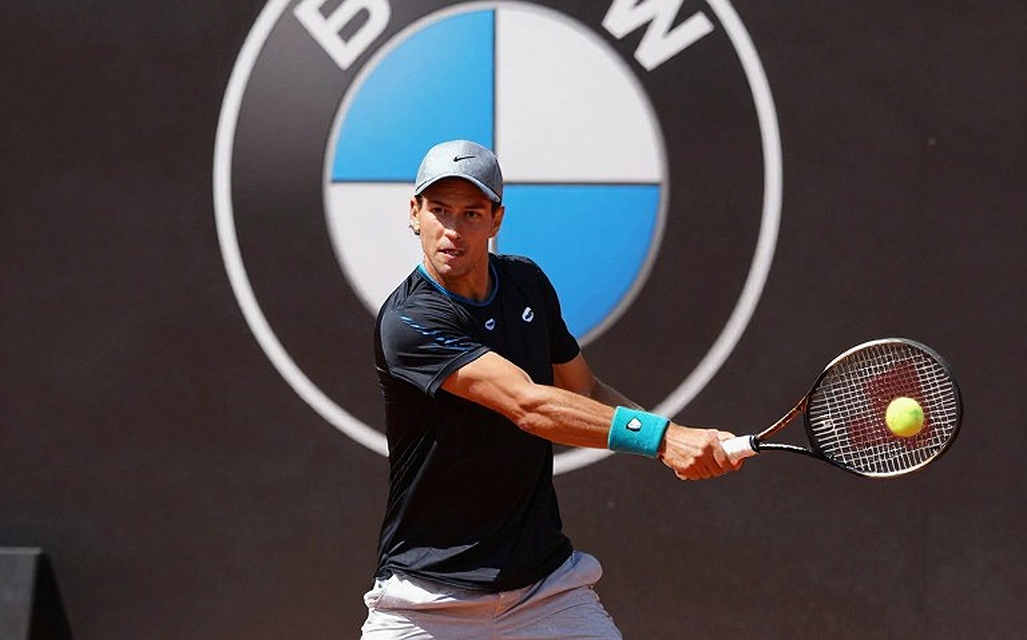
The match ended 7-5, 6-3. Andreeva champion, Elina Svitolina beaten. What circulated afterwards was a report whose headline kept returning to one cluster of words: positive thinking, positive self-talk, mental toughness. A 19-year-old won the title because she told herself she would win the next ball.
It is a lovely story. But what I was writing in the stands was not a story — it was a ledger. And one column of that ledger stayed empty: first-serve points won, return points won, break-point conversion. None of them appear in the report. A player can win a match with a mental routine; a mental routine alone cannot explain how the match was won.
I brought the only notebook to the women's final stands once before, at Ramna in 2026. The stands are different now. The habit is the same.
The report is written in the mould of a news dispatch, yet no publication and no official match-data source is named. That is the first problem. When the source is unspecified, verification against WTA and tournament records matters far more than it would for a direct official release. So this piece works on two levels: what the report claims, and what it does not claim.
Start with what the WTA Finals actually is. The season-ending event: the top eight players, round-robin groups, then semifinals and final. On points it is the densest package in the calendar — an undefeated champion can bank up to 1,500. Prize money has sat in the region of $15 million in recent seasons. Winning the Finals therefore delivers three things in one week: ranking mass, cash, and next season's marketing position.
That triangle is the real story, and it is the part the report covers least.
Second, the venue. The report places the final at Indian Wells, California — the desert court that normally hosts the BNP Paribas Open in March. If a season-ending event really was staged there, that is a business event in itself: moving calendar architecture means re-costing ticket revenue, broadcast time zones and player travel load. My notebook says: "Until the venue is verified, no conclusion about court speed is safe."
Third, the player's season. The report says 55 match wins, four titles, a French Open trophy, and world No. 2 after the Finals. Conchita Martinez is in the coaching setup. At 19 she is the youngest Finals champion since Maria Sharapova in 2026. Every number in those five sentences is checkable, and every number hides a separate question.
Svitolina's role matters too. She is a tour veteran of more than a decade, once a top-five player, whose hard-court counterpunching has troubled the very best. The report says she was playing far better than in an earlier one-sided meeting, and that Andreeva's team had prepared for exactly that.
This is the most interesting passage in the whole text, because it is where coaching separates from routine. Expecting the opponent to play better is coaching; keeping your head after she actually does is routine. The first belongs to Martinez, the second to Andreeva.
Martinez's profile is not incidental. Wimbledon champion in 2026, a former world No. 2, later Spain's Fed Cup captain, and the coach who took Garbine Muguruza to the Wimbledon title. A player who was herself an instinctive talent, she has since proved she can put structure around talent. But the limit is clear: the report never says how much of the final's tactical plan was Martinez and how much was Andreeva. That gap bothers me, because gaps like that are where speculation grows.
Watching this from Bangladesh, one comparison keeps surfacing. A junior on our domestic circuit does not play anything close to 55 matches a year. In the autumn of 2026 I hand-notated 41 matches across the National Championship and two divisional meets. Bangladeshi juniors won roughly 38 percent of points after a first serve landed in — and 54 percent when they attacked the net inside three shots. Nobody at the federation had ever counted.
So Andreeva's 55 wins reads to me as a budget, not just a number. Fifty-five matches means roughly 150 sets, thousands of points, a dozen countries, dozens of flights. Who funds that budget, who plans it, who measures its output — answer those three and you understand what it means for a 19-year-old to reach No. 2.
Now to the court itself.
The report files Andreeva as an aggressive baseliner whose all-court flexibility is still developing. Her stated plan against Svitolina had two parts: keep attacking, and deny Svitolina a foothold. On paper that is correct. Against a long-career counterpuncher, the most dangerous thing you can hand over is rhythm — once she owns the tempo of the rally, she owns the length of the point.
Plan and execution are different animals. The report does not say where the aggression came from. Forehand pace? Standing two feet inside the court on return? Net approaches? My ledger has three separate columns for those. The report has none.
The 7-5, 6-3 scoreline does tell us one thing: this was not a shot-making contest, it was a rally-tolerance contest. The report itself notes long, physical rallies. Which means Andreeva had to hold both footwork and concentration, not just swing hard. A 7-5, 6-3 win is evidence of rally tolerance; it is not evidence of serve or return quality.
Here is my second objection. The report is detailed on psychology and silent on shot data. No first-serve percentage, no first-serve points won, no return points, no break-point conversion, no winner-to-unforced-error ratio. We know the outcome of a match without knowing the process.
I believe in process numbers, because an outcome is one evening and a process is a season. When someone says 55 wins, I immediately ask: on which surfaces, against which tier of opponent, how many tiebreaks, how many third sets. Without those four answers, 55 is as half-finished as a scoreboard that shows only the final.
Now the mental routine. The report says Andreeva uses positive self-talk to manage nerves. After an error she does not revisit the mistake — she pictures the next successful shot.
Mechanically, that is a clean technique: redirect attention away from outcome and toward the next controllable action. In long rallies the benefit is reduced negative carry-over. A double fault or a soft miss that keeps replaying for the next three points costs you a game. The routine plugs that hole.
But caution is required. The report spreads the mental routine across roughly fifteen information points while offering not one measurement of serve or return. That imbalance is itself a signal. When a single report contains eight paragraphs of mindset and zero serve numbers, it is not analysis — it is a reporting tendency.
That tendency works identically in Bangladesh. Our domestic copy says "the boy won on mental strength" and never says what percentage of second-serve points he won. Nobody kept the number. And when the number does not exist, the story becomes the only product.
Onto the ranking. The report puts Andreeva at world No. 2 after the title. That sentence is the biggest economic statement in the piece — and the biggest risk statement.
Ranking points are a loan. What you accumulated in the last 52 weeks must be repaid in the next 52. Moving to No. 2 means draw pressure, media expectation and mandatory-event workload all rise at once. The report gives no event-by-event points breakdown and no expiry calendar. The risk is structurally certain; its size is unknown.
One more thing my ledger weights heavily: the age curve. Winning 55 matches at 19 imposes a specific kind of load, managed differently from a 27-year-old's. Youth means faster recovery; inexperience means fewer defences against scheduling errors. The report contains no injury or workload information. That is the darkest room in the house.
The Sharapova comparison deserves two sentences. In 2026, aged 17, Sharapova won the Finals, beating Serena Williams in the final. As news value the comparison is excellent. But a comparison has two halves: age, which is verifiable, and career arc, which is a forecast — and forecasting is not the reporter's job.
"Youngest champion since Sharapova" is a fact; "the next Sharapova" is a marketing line. Put them in the same paragraph and readers will absorb the second as if it carried the authority of the first.
Now to where I deliberately step away from the obvious reading.
The conventional read is simple: young talent, mental steel, a title, and something bigger ahead. Mine is colder. The WTA's chronic problem was never a shortage of talent; it was the speed at which talent converts into product. One 19-year-old winning four titles, a major and the Finals in a single season is enormously valuable to the tour, because the tour needs new stars to seat at sponsor tables and cut into broadcast promos.
That need is exactly why the positive-thinking story travelled so fast. It is human, legible, and sellable to the coaching market. The question inside the tennis — did she win 68 percent of first-serve points or 54? — never gets asked.
My second contrarian read is tactical. The report says the plan was to stop Svitolina settling. Reasonable. But another explanation cannot be dismissed: the match may have been decided by Svitolina's own serving day rather than by Andreeva's aggression. The report gives no Svitolina serve data, so the possibility stays open. In our trade we call it the difference between the winner's credit and the loser's cause — and both need measuring.
Third, the professional read. Martinez appears in one line. Without a verified coaching structure, credit for improvement cannot be allocated. That is not ego, it is method. I followed the money with a notebook; fans usually arrive before the analysts, but nobody records who is coaching whom and who is paying.
Fourth, the read about ourselves. My first serious piece on Bangladeshi tennis was the oral history nobody had written — the 2026 Davis Cup debut through the 2026 Asia/Oceania semi-final, built on interviews with Khaled Salahuddin and Sree-Amol Roy. Nobody had written the oral history, so I let the unglamorous witnesses set the timeline. That work taught me one thing: an institution that keeps no records is condemned to live inside other people's stories. When Andreeva's report circulates without process data, I see our own federation in the mirror.
And that is where my real interest sits. The fastest-yielding investment in Bangladeshi women's tennis is not a new court — it is a habit. I counted sponsor bumpers through Russia 2026 until the logos blurred into a ledger, and that ledger taught me how a product stands up. A point-by-point routine stands up the same way: small, repeatable, measurable.
In Andreeva's case the routine appears to live inside practice rather than being wheeled out for a final — that is what the report implies, and it is a good sign for repeatability. But repeatability is proved in different conditions: on clay, on grass, in a third set of fatigue, in the middle of three straight defeats. That is the real test.
Three uncertainties sit in front of me now.
First, process durability. If the No. 2 ranking really rests on stable serve and return improvement, those numbers must hold through the next hard-court and clay swings. If it rests on peak conversion at a handful of events, regression is coming.
Second, workload. After a 55-win season the biggest danger is not the opponent, it is the calendar. Which events get skipped, which surfaces get rationed — those decisions set the foundation of the next season.
Third, expectation transfer. After a first major title at 19, a player's identity changes. She is no longer a rising prospect; she is a weekly favourite. That shift is not tactical, it is administrative — coach, family and agent all need new job descriptions.
One last thought, and it points forward.
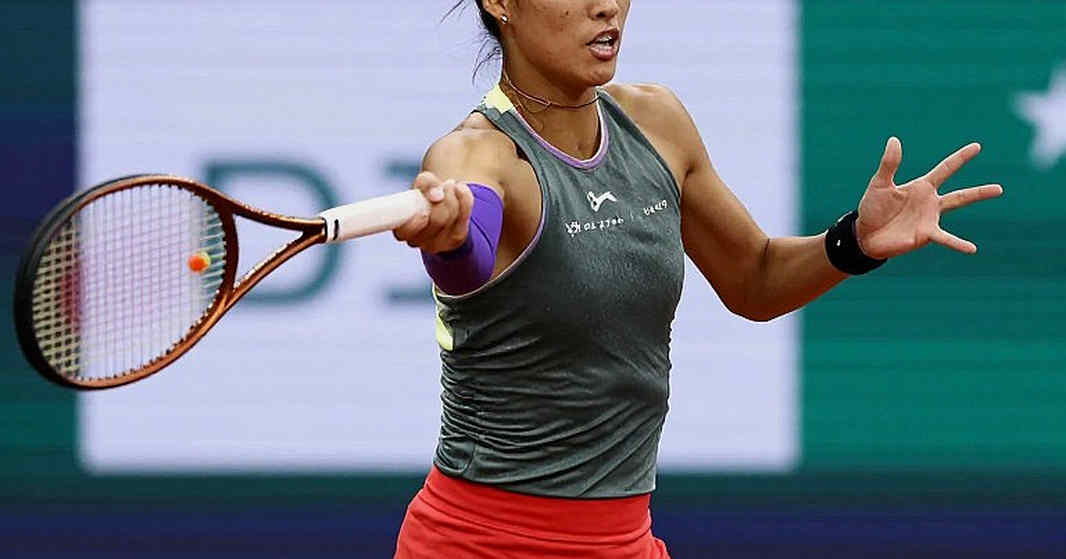
I will rewatch the recording with the notebook open, because I want to know what those seven seconds at 5-5 actually contained — a shift of weight into the toes, a change of breathing rhythm, or just a change in the eyes. Whichever it was, it can be measured. And what can be measured can be taught.
So my question is not about Andreeva's trophy. It is this: if a teenage girl in Bangladesh watches this match tonight and thinks only "I could do that", the return is small. If she opens a notebook and writes down how many points she won on her first serve, and what she did on the point after every error, the return is enormous.
A title lasts one night. A ledger lasts a career.
And the fuller that ledger is, the less room there is for an inflated story.