
Mityukov's 1:49.93: The Seven-Turn Calculation Behind a Swiss Record
মূল উত্তর: রোমান মিত্যুকভ সুইস শর্ট-কোর্স চ্যাম্পিয়নশিপে পুরুষদের ২০০ মিটার ব্যাকস্ট্রোকে ১:৪৯.৯৩ সময়নিয়ে নিজের সুইস রেকর্ড ভেঙেছেন। ২৫ মিটার পুলে সাতটি টার্ন থাকায় স্প্লিট ও পানির নিচের তথ্য ছাড়া উন্নতির নির্দিষ্ট কারণ নিশ্চিত করা যায় না। মূল তথ্য: - ইভেন্ট:পুরুষদের ২০০ মিটার ব্যাকস্ট্রোক,২৫মিটার পুল। - সময়: ১ মিনিট ৪৯.৯৩ সেকেন্ড। - রেসে মিত্যুকভ শুরু থেকেশেষপর্যন্ত নেতৃত্ব দিয়েছেন। - ২০২৬-২৭ মৌসুমে ১:৫০-এর নিচে ১৩তম পুরুষ সাঁতারু হওয়ার দাবি যাচাইকরা হয়নি। - উৎস: প্রদত্ত Stage-2 Deep Professional Analysis;প্রকাশের তারিখ সরবরাহ করা হয়নি। সম্পর্কিত প্রশ্নোত্তর: প্রশ্ন: ২৫মিটার পুলে ২০০ মিটার ব্যাকস্ট্রোকে কতটি টার্ন থাকে? উত্তর: আটটি দৈর্ঘ্যেরমধ্যে সাতটি টার্ন থাকে। প্রশ্ন: মিত্যুকভের সময় কি লং-কোর্সপারফরম্যান্স নিশ্চিত করে? উত্তর: না, শর্ট-কোর্স ও লং-কোর্সে টার্নের সুবিধা আলাদা হওয়ায়আলাদা রেস ডেটা প্রয়োজন। প্রশ্ন: রেকর্ডটির প্রযুক্তিগত উৎস কি নিশ্চিত? উত্তর: না, প্রতিক্রিয়া সময়, টার্ন-স্প্লিট ও পানির নিচের দূরত্ব প্রকাশিত নাহওয়ায় উৎস নির্ধারণ করা যায় না।
Roman Mityukov closed the Swiss Short-Course Championships by swimming 1:49.93 in the men's 200-meter backstroke and breaking his own Swiss record. The most visible part of the result is the time. The more important partis hidden insidethe race: in a 25-meter pool, a 200-meter backstroke is heavily shaped by turns, yet the available report provides no turn splits, underwaterdistances, or reaction data.
The supplied analysis confirms that Mityukov led from start to finish. It does not provide his reaction time, breakoutdistance, underwater kick count, or the split for each 25-meter length. That makes 1:49.93 a significant result, while leaving the mechanism of the recordopen. A result tells us who won; detailed data wouldtell us where the race waswon.
The visible record
The new mark lowered Mityukov's previous Swiss record, which had reportedly been set about a year earlier. That establishes aclear line of personal progress.Theanalysis also refers to the 2026 Short-Course World Championships. One claim requires caution: the statement that Mityukov became the 13th man under 1:50 during the 2026-27 season has not been verified. The season label itself shouldtherefore remain provisional.

That distinction matters in swimming coverage. A season label, pool length, or event category can change the meaning of a comparison. A 25-meter pool and a 50-meter pool reward different technical strengths. In the 200-meter backstroke, the swimmer completes seven turns. Each wall creates an opportunity to gain or lose distance through the push-off, underwater phase, and breakout. A small error repeated seventimes can become a large gap.
The short-course context
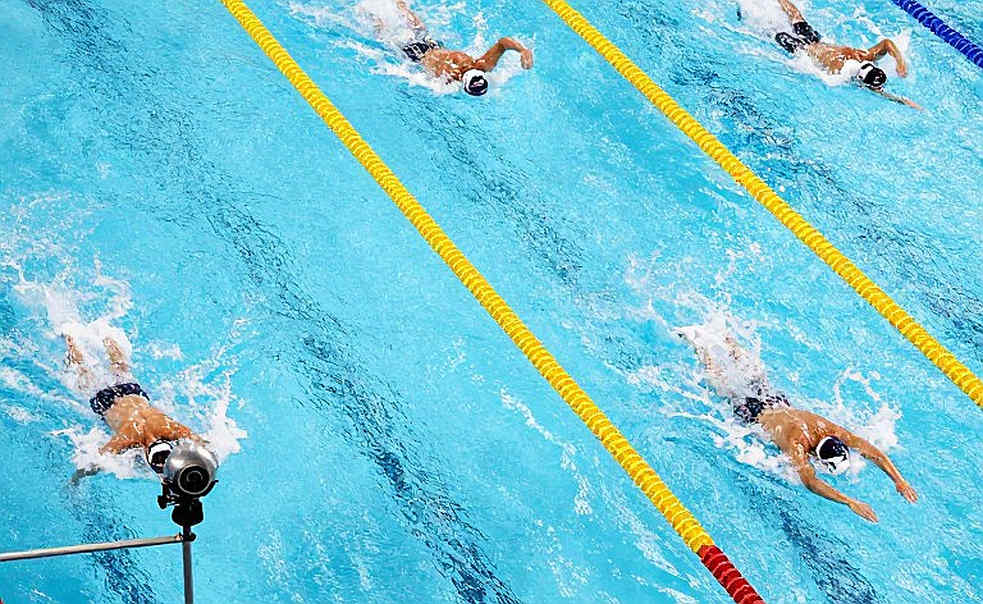
A 200-meter backstroke in a 25-meter pool consists of eight lengths and seven turns. The swimmer must judge the final strokes before each wall without looking directly atit. Flags, stroke count, timing, and body memory guide the approach. After the turn, the swimmer must regainspeed while staying streamlined.
The information that Mityukov led throughout the race is useful. It suggests that he controlled the pace and did notallow his rivals a late opening. It does not prove that he was fastest atevery wall. Without turnsplits, underwater distance, or 25-meter checkpoints, no detailedtechnical verdict can be made.
Based on my years of watching races and matches, the decisive moment in a short-course event is often found away from the finish. Theaudience watches the final wall, while the race may havebeen shaped by the middle turns. A team doctor keeps more than a final time in a performance file: return-to-water dates, workload changes, and the point at which movement begins to fade. No such medical information has been supplied for Mityukov, so the performance should not be assigned to a specificinjury or medical intervention.
What 1:49.93 tells us
Mityukov's record is astrong short-course performance, but the available evidence cannot identify whether the decisive improvement came from pacing, turns, underwater work, or a combination of all three. Breaking one's own national record means that the swimmer has moved beyond a previous personal boundary. The improvement may reflect better race distribution, more consistent walls, a stronger underwater phase,or the conditions of the meet.
The absence of splits is especially important. If the opening 50 meters was unusually fast, the principal achievement may have been resisting fatigue over the closing 50. If the opening was controlled and the finish was powerful, the result would point toward effective energy distribution. The speed of each breakout would reveal whether Mityukov used the walls mainly to recover momentum or turned everywall into an acceleration point.
The result should also be separated from a direct prediction of long-course potential. Short-course swimming rewards powerful push-offs, a stable streamline, and efficient underwater movement. An aggressive approach can save time early while creating fatigue later. Therefore, 1:49.93 is clear evidence ofMityukov's short-course ability, but it cannot by itself forecasthis 50-meter-pool performance.
Twoother results widen the context. Theanalysis mentions Viquerat's 57.38 in the 100-meterbreaststroke and Noe Ponti's21.32 in the 50-meter butterfly. The classification of the 1:52.11 backstroke standard and the 57.38 breaststroke standard remains unclear; the analysis indicates that they may be short-course entry standards rather than long-course Olympic standards. Ponti's 21.32 is described as a world record at the time, but the current record status also requires verificationbefore it is treated as final.
The contrarian reading
A record often produces an immediate chain of predictions: globalbreakthrough, guaranteed medals,or a major championship triumph. One race cannot carry that weight. Mityukov's next test is whether he can reproduce the speed in another pool and under a different competitive load. The key comparison will come when the advantage of seven turns isreduced in long-course racing.
The scan said one thing; the timeline said another is a principle I use when reconstructing injuries. Performance analysis needs the same discipline. Arecord is evidence from one day.Previous marks, training blocks, competition spacing, and later races provide the longer timeline. I keep a notebook of injuries that never made the broadcast, and I use the same habit with performances: the missing measurements must be recorded rather than silently replaced with a confidenttheory. In the closed-pool year, I learned toread silence as a symptom. Here, the missing splits remind us that a results report is not the sameas a complete technicalaudit.
###What comes next
Mityukov's 1:49.93 delivers a clear message: he has moved his Swiss short-course ceiling again. The nextstep is to publish the race map,not merely celebrate the number: the opening 50 meters, all seven turns, underwater distances, and the closing 50-meter fatigue pattern. That information will show whether this was a single outstanding performance or a reliable sign of long-term progress. For now,the record deserves recognition, while its full meaning remains a question for thenext race.