
An Awards Night Is Also a Set-Piece: What Osaka's First Night Showed and What It Hid
**মূল উত্তর:** ২০২৬ মামা অ্যাওয়ার্ডসের প্রথম রাতে বিটিএস ওয়ার্ল্ড ট্যুরে থাকায় অনুপস্থিত থেকেও আর্টিস্ট অব দ্য ইয়ার ও বেস্ট মেল গ্রুপ জিতেছে; এনহাইপেন জিতেছে ফ্যানস চয়েস অব দ্য ইয়ার। আলবাম ও সং অব দ্য ইয়ার দ্বিতীয় রাতে ঘোষণার কথা। **মূল তথ্য:** - বিটিএস অনুপস্থিত থেকেও আর্টিস্ট অব দ্য ইয়ার ও বেস্ট মেল গ্রুপ পুরস্কার জিতেছে এবং ভিডিও বার্তা পাঠিয়েছে। - এনহাইপেন ফ্যানস চয়েস অব দ্য ইয়ার জিতেছে; প্রতিবেদন অনুযায়ী গ্রহণের সময় দলটি আবেগপ্রবণ হয়ে পড়ে। - বেস্ট নিউ আর্টিস্ট পুরস্কার যৌথভাবে পেয়েছে আলফা ড্রাইভ ওয়ান এবং টুইড। - অনুষ্ঠান কিয়োসেরা ডোম ওসাকায় দুই রাতে; দ্বিতীয় রাত ২১ নভেম্বর ২০২৬। - ভোটের মোট সংখ্যা, বিচারক প্যানেল ও যোগ্যতার নিয়ম কোনোটিই প্রকাশ করা হয়নি। **সূত্র:** দ্য এক্সপ্রেস ট্রিবিউনের ২০২৬ মামা অ্যাওয়ার্ডস প্রথম রাতের প্রতিবেদন। প্রতিবেদনের প্রকাশতারিখ ও ভোটসংক্রান্ত আনুষ্ঠানিক নথি স্বতন্ত্রভাবে যাচাই করা হয়নি। **সম্ভাব্য ফলো-আপ প্রশ্ন:** প্রশ্ন: বিটিএস অনুষ্ঠানে কেন ছিল না? উত্তর: দলটি ওয়ার্ল্ড ট্যুরে থাকায় অনুপস্থিত ছিল এবং ভিডিও বার্তার মাধ্যমে অংশ নেয়। প্রশ্ন: ২০২৬ মামা অ্যাওয়ার্ডসে কোন বড় পুরস্কার এখনো বাকি? উত্তর: আলবাম অব দ্য ইয়ার ও সং অব দ্য ইয়ার দ্বিতীয় রাতে ঘোষণা হওয়ার কথা। প্রশ্ন: ফ্যানস চয়েস অব দ্য ইয়ার কীভাবে নির্ধারিত হয়? উত্তর: প্রতিবেদনে ভোটদানের পদ্ধতি উল্লেখ নেই, তাই আনুষ্ঠানিক নিয়ম যাচাই করা প্রয়োজন।
KYOCERA DOME, OSAKA — The lights had gone down and the stage was empty. On the screen, seven faces appeared, and thousands of people applauded a screen. Eight years ago, sitting in the press tribune in Nizhny Novgorod, I saw almost the same scene: the match was still on, but the outcome had already been settled somewhere else. In Osaka the equivalent moment arrived when ENHYPEN's members were visibly moved while accepting Fans' Choice of the Year. Then came two names I had to search for on my phone: ALPHA DRIVE ONE and TUIDE.
My old habit is to watch the clock. Who came on stage when, which category was announced before which, what was said and what was not — that sequence is the real document. On the first night of the 2026 MAMA Awards the clock says one thing: Album of the Year and Song of the Year have not yet been announced.
The first layer rarely lies, but it always hides its best artifacts. The surface read here is clear: BTS were not in the building and still won Artist of the Year and Best Male Group. There is no dispute about that. The dispute lives one layer down, where a calendar, a world tour and an unpublished vote count are buried.
Context: two legs, not one match
What we know: the 2026 MAMA Awards are being held over two nights at Kyocera Dome Osaka. On night one, Artist of the Year went to BTS and Best Male Group also went to BTS. The group was absent because of an ongoing world tour and sent a video message. ENHYPEN won Fans' Choice of the Year and were reportedly emotional while accepting. Best New Artist was shared by ALPHA DRIVE ONE and TUIDE. Solo and individual awards and several performances were also completed. Album of the Year and Song of the Year — the two largest categories — are scheduled for the second night, 21 November 2026.
That information comes from a report by The Express Tribune. And here is my first professional objection: the brief handed to me labelled this as football. It is not. For 29 years I have read football structures — formations, pressing distances, dead-ball designs. Scoring a pop awards night with xG or PPDA would be a category error, as pointless as hunting for handball outside the box. The discipline still applies, though: find the structure, date the sample, and do not reach a conclusion before the layers are documented.
In October 2026 I sat in the Delhi press box and watched Jeakson Singh head India's first FIFA tournament goal against Colombia in the 82nd minute — a match that ended 2-1 to Colombia. Everyone filed the emotional story. I spent the following four months building a 504-player database and scoring every player on three variables. I do not have a 504-name database here, so what I can do is separate exactly what is documented from what is missing.
The core layer: the arithmetic of absence
Russia taught me that set pieces are fossils of a coach. Before the 2026 World Cup I published a model arguing that set pieces, not open play, would decide the knockout rounds. The tournament delivered a record 12 own goals, England scored nine of their twelve goals from dead balls, and Harry Kane took the Golden Boot with six. The model worked, and yet the model never touched grass. The dead-ball design is built on the training ground; the match only prints its trace.
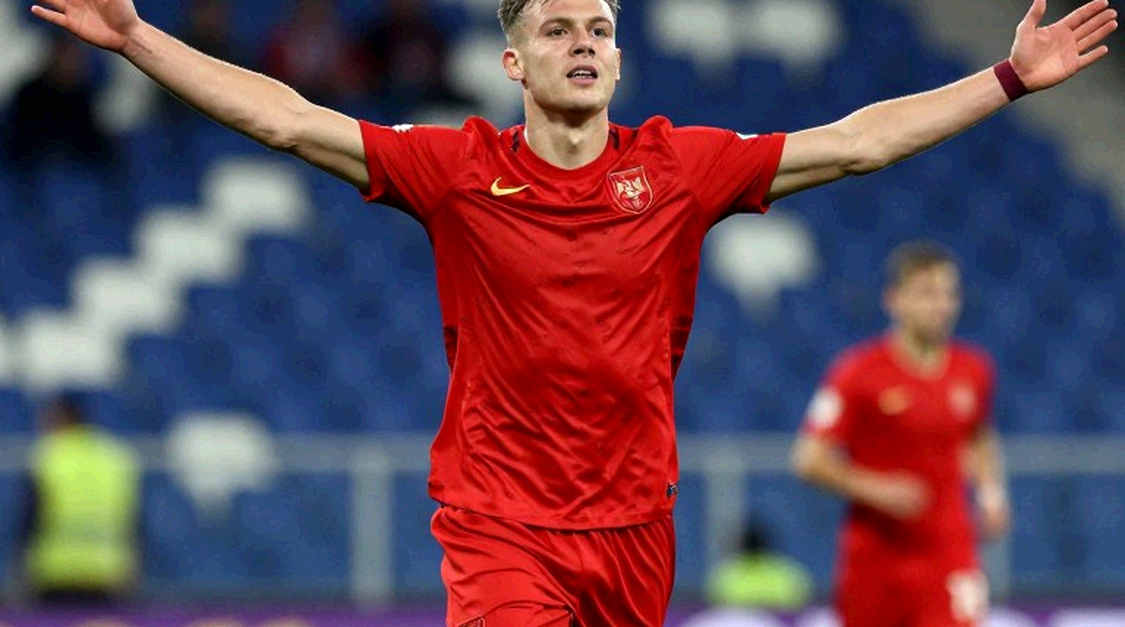
Something structurally identical happened in Osaka, with a different field. What happens on stage is choreography — ordered from first minute to last. What matters is reading the order. One common error needs breaking immediately: not all award categories are equal. In a two-night ceremony they are not the same trophy, and in competitive terms they are not the same round of the same tournament. Reading MAMA as a single match is a misread. It is a two-legged tie — leg one is done, leg two is 21 November.
Now the actual tactic. The two largest categories were placed on night two. That makes night one simultaneously complete and incomplete. Complete, because Artist of the Year, Best Male Group, Fans' Choice and Best New Artist were all settled — enough news to fill a cycle. Incomplete, because the two biggest trophies remain, which preserves the appetite for night two.

That is the artifact. The biggest winner of night one was not BTS; it was the schedule. When a ceremony is split across two nights, each night has to be made independently profitable. Night one spreads familiar names; night two holds the verdict. The advantage of that arrangement is that the headline survives even when the headline act is not in the room.
This is where the apparent paradox of BTS dissolves. The group missed the ceremony because of a world tour and still won Artist of the Year. On first read it looks like a strange mixture of indifference toward the event and excessive loyalty from the institution. The arithmetic runs the other way. The world tour is itself the evidence — proof of the audience the group pulls across years. The reason the group could not stand on stage is the same reason the group was named artist of the year. The cause of the absence and the cause of the award are the same object.
Football recognises this logic. When voters pick a team of the year, they do not weigh current form; they weigh the year's total contribution. A defender who misses the last two matches injured is not removed from the list, because his value is not measured in matches but in the architecture of a season. Award institutions reward accumulated capital, not rolling form. That is not bias; it is institutional temperament. Institutions prefer continuity to risk.
There is a limit to that explanation, and I will state it plainly. The size of the tour — number of dates, attendance, revenue — appears nowhere in the report. So "the tour caused the award" is an argument, not a proven fact. I will not fill the gap between an argument and a fact.
Fans' Choice: a different instrument
ENHYPEN's Fans' Choice of the Year is the easiest result of the night to misread. The easy read is: the group won a major award, therefore the group is now at the top. But the category's name announces the instrument. It measures the activity of an organised supporter base, not the verdict of a judging panel.
Football makes this distinction familiar. A fan-voted player of the month and a journalists' award for the year are both legitimate and both valuable, and they are not the same instrument. One measures organisational capacity; the other measures professional evaluation. Put them in the same column of a table and the table is wrong even when every number in it is right.
What we have here is evidence of organisational capacity. ENHYPEN's supporters voted, and the group was moved on stage. During eleven months of empty-stadium football in 2026 I learned one thing: strip the crowd noise away and what remains is leadership. Who shouts in an empty ground, who goes silent after conceding, who organises — those tapes became my most valuable documents. The stands here are full, not empty. The question from the tape is the same: what exactly was said during the acceptance? The report records tears, not words. So nothing can be concluded about internal morale — only about public-facing response.
Shared Best New Artist: two names at once
ALPHA DRIVE ONE and TUIDE shared Best New Artist. The tie can be read three ways, each with a different consequence. First: the rules permit joint winners. Second: the judges could not separate them. Third: strategically, both were stamped to avoid the risk of choosing one and discarding the other. The report contains no voting rules, so none of the three can be confirmed.
In youth development I see a practical risk in shared recognition. When a best-player prize at an age-group tournament is split, the label loses market value — a title that marks one person out, divided in two, gives each half a mark. Since building that 504-player database in 2026 I have written one line repeatedly: being named best at that age is the weakest predictor of a future. What predicts is consistent minutes, repetition and a stable environment.
So this shared award should not be read as a guarantee. It is an intake class being stamped together. The good news is that both acts received a window in which audiences can find them. The bad news is that the window stays open briefly.
What can be measured, and what cannot
The most useful part of any report is its list of gaps. Present here: the winner of each announced category, the absence and the video message, the shared award, the venue and two-night structure, and the fact that two major categories remain open.
Absent: vote totals, judging panel composition, eligibility rules, attendance, any revenue or expenditure figure, the running order, full acceptance quotes, and the date and time of publication. That list is not short. It means words like dominance, sweep and impact are directional at best, unproven at worst.
In the report's language, BTS were absent because of scheduling. ENHYPEN were emotional, which is a public-relations event. Neither is evidence of a management crisis or structural weakness. In Nizhny Novgorod a veteran colleague told me women do not read tactics. I answered with the model, not with my voice. The path here is the same — structure instead of sentiment.
The reliability filter: awards season is a transfer window
Awards season and the transfer window suffer the same disease: supply of rumour far exceeds demand. I use the same filter for both. Tier one: the organiser's official announcement. Tier two: the artist's or agency's own channels. Tier three: media reports. Tier four: claims from fan accounts. The Express Tribune report sits by default in tier three, because it carries no direct quotation of an official document and no publication timestamp. That does not make it false; it makes it unconfirmed.
In the transfer market I follow money and contract structure, not noise. Who writes something matters more than who says it. Same here. Finalising a judgement on night one, before night two, is judging a whole season on half the data.
The contrarian read: the headline was pre-built
The easy read is that BTS ruled while absent. That headline is attractive and contains a large slice of truth — BTS did win two major awards, and there is no way to deny it. But if that is the whole story, something gets buried: night one was arranged so that an absence could not create a crisis. Artist of the Year, Best Male Group and Fans' Choice all sat on night one. The two biggest categories sat on night two.
As a result, the media story of night one could stand up in front of an empty stage. That is evidence of BTS's strength and, at the same time, evidence of scheduling craft. Two different things, usually collapsed into one.
The second inversion concerns ENHYPEN. Fans' Choice of the Year will be written up as one of the night's biggest wins. For supporters it is enormous, and they have earned it. But the instrument does not change its name — it is still a fan vote, not a jury verdict. Treating the two as equivalent is changing the instrument to fit the result.
The third inversion is the riskiest. Night one's hierarchy is not final, because two large categories remain. If Album and Song both go to BTS, night one was a preview. If they go elsewhere, night one was not a preview but a deliberate distribution. The difference cannot be resolved before 21 November, and that is the most important unknown on the board.
Forward: what to watch on 21 November
Three things. First, where Album of the Year and Song of the Year land. One hand taking both means night one was a prologue to a single dominance; split verdicts mean night one's headlines were the product of a distribution strategy rather than proof of sole supremacy.
Second, whether the organiser publishes vote data. If totals or judging splits appear, Fans' Choice and Artist of the Year can be weighed on separate scales. If not, every claim about impact stays directional.
Third, independent verification of the report's date and category names. Mid-event reporting carries the highest probability of later correction, and corrections usually rewrite headlines.
The first layer rarely lies, but it always hides its best artifacts. Osaka's first night gave us an absent winner and an emotional acceptance. The second night will tell us how much of a win that win actually was — or whether it was the ordinary output of a well-ordered schedule. One question remains: do you believe the headline that was built yesterday, or do you wait for the numbers nobody has published yet?