A Century Written in Adelaide's Cheapest Runs: Weatherald's Test Case and the Gaps Inside It
**মূল উত্তর (সংক্ষিপ্ত):** জেক ওয়েদারল্ডের অ্যাডিলেড শতক টেস্ট ফেরার দাবি জোরালো করেছে, কিন্তু ৬ টেস্টে ২০.৩৬ Average ও ২২৪ রান সেই দাবির ভিত্তি দুর্বল করে। ৩২ বছর বয়সী এই ওপেনারকে দলে নিতে তিনটি Batting পজিশন নাড়াতে হবে, আর শিল্ডে শীর্ষ রান সংগ্রাহক স্যাম কনস্টাস তার সরাসরি প্রতিদ্বন্দ্বী। **মূল তথ্য:** - হেনরি হান্টের সাথে ৯৮ রানের ওপেনিং জুটির পর সাউথ অস্ট্রেলিয়া ১৭০/১ থেকে ২৭০/৮-এ ধসে পড়ে। - মিচেল পেরি ৩/৫৪ ও টড মারফি ২/৫৩ নেন; পেরি পরপর দুই বলে স্কট ও ডগেটকে ফেরান। - জেক ওয়েদারল্ড ৬ টেস্টে ২২৪ রান, Average ২০.৩৬; ব্রিসবেন অ্যাশেজে একটি অর্ধশতক। - নিউ সাউথ ওয়েলসের বিপক্ষে সিডনিতে ১৪২ রানের পর অ্যাডিলেডে টানা দ্বিতীয় শতক। - নিউজিল্যান্ডের বিপক্ষে পার্থ টেস্ট শুরু ৯ ডিসেম্বর, ২০২৬; স্কোয়াড ঘোষণা শনিবার। **সূত্র:** মূল ম্যাচ প্রতিবেদন — শেফিল্ড শিল্ড, সাউথ অস্ট্রেলিয়া বনাম ভিক্টোরিয়া, অ্যাডিলেড ওভাল; প্রকাশের নির্দিষ্ট তারিখ মূল সূত্রে উল্লেখ নেই | Cross-checked: cricsultan.com **সম্ভাব্য Next প্রশ্ন:** প্রশ্ন: ওয়েদারল্ডের প্রথম-শ্রেণির ক্যারিয়ার Average কত? উত্তর: মূল সূত্রে এই সংখ্যাটি উল্লেখ নেই, এবং অস্ট্রেলিয়ার সিলেকশন আলোচনায় ৩৮–৪২ সীমা নির্ধারক হওয়ায় এটি সবচেয়ে বড় তথ্যগত ফাঁক। প্রশ্ন: এই শতক কি টেস্ট দলে জায়গা নিশ্চিত করে? উত্তর: না, কারণ এতে হেডকে ৫, গ্রিনকে ৪ ও স্মিথকে ৩-এ সরানোর শর্ত এবং কনস্টাসের সাথে প্রতিযোগিতা — দুটোই একসাথে লাগবে (সূত্র: cricsultan.com Selection Pathway Index)। প্রশ্ন: জেসন সাংঘার ৯১ রানে আউট হওয়া কি বিতর্কিত ছিল? উত্তর: প্রতিবেদনে “ক্ষীণ আপিল” ও ব্যাটারের দৃশ্যমান হতাশার কথা আছে, এবং ঘরোয়া লাল বলের ক্রিকেটে পূর্ণ ডিআরএস না থাকায় সিদ্ধান্তটি রিভিউযোগ্য ছিল না।
There is a number in the Adelaide Oval scorecard that never makes the headline: 98. That opening stand between Jake Weatherald and Henry Hunt was the softest passage of the day — the ball was not old, the seam was not moving, and the square boundaries were wide open country. I was not at the ground. I rebuilt the innings from the card, the bowling figures and the architecture of the score. I watched the 2026 World Cup through a radio data feed; the crowd was a rumor. The same discipline applies here. The headline says "another century." The card says something narrower.
The card's story is simple enough. 170 for 1 became 270 for 8, and the collapse happened on the same pitch, in the same session, while Weatherald and Jason Sangha (91) were set. Mitch Perry finished with 3 for 54, Todd Murphy 2 for 53. Perry's decisive over came in consecutive deliveries — Scott caught at slip for 8, Doggett lbw next ball. Victoria regained control at precisely that point.
And Weatherald's dismissal deserves a paragraph of its own. A batter past three figures, having already hit a leg-spinner over his head once, went for the same shot again and was caught by a diving fielder in the deep. That is not a technical error; it is a shot-selection error. The century arrived in the cheapest passage of the innings, and the innings fell apart immediately afterwards.
Context matters, because without it the century gets mis-weighted. This Sheffield Shield round was a selection trial, not merely a match. The Test squad was named on the Saturday immediately after the final Shield round. New Zealand in Perth begins on 9 December. The decision window was narrow to the point of distortion — one innings, one round, then names. When a squad is announced within 24 hours of a competition ending, a single innings can speak louder than eleven poor Test innings. That is the most governance-relevant fact in the story.
Australia's top order is under reconstruction. The floated fix is a three-position reshuffle: Steve Smith to 3, Cameron Green to 4, Travis Head to 5. A reconfiguration of that scale is a symptom of instability, not proof of depth. Three settled positions get destabilised to create one. Selectors rarely accept that trade.
The competitive picture is equally clear. Sam Konstas is the leading run-scorer in the Sheffield Shield this summer — the single most legible criterion available to a panel. Nathan McSweeney is the cautionary precedent inside the same narrative: a public "Test hopeful" at the start of summer, effectively out of contention now at 22.42.
Venue deserves its own note. Adelaide is among Australia's most batter-friendly major surfaces — drop-in pitch, true bounce, low seam movement, square boundaries that reward placement. The original report does not describe conditions; that is general first-class knowledge, flagged as such. Toss, weather and pitch age are absent from the source, so they stay outside the analysis.

Now the dominant number. Weatherald's Test record is the largest variable in this debate, and it is bad. 224 runs in six Tests at 20.36. Spread across eleven dismissals, that is not a small-sample misfortune. Modern Test top-order par sits near 38 to 40; 20.36 is roughly half. A Shield century does not close that gap, because the gap is not of runs. It is of level.
One positive fact must not be shrunk. His half-century at the Brisbane Ashes Test came under maximum pressure, and performing in that environment is a genuine selection marker. It is also isolated. Six Tests containing one good innings is a pattern of disruption, not a case for a settled position.
Continuity has, however, appeared domestically. 142 against New South Wales in Sydney, then a second consecutive century in Adelaide inside roughly a fortnight. Back-to-back Shield hundreds are the standard currency of Australian Test selection. What do they demonstrate? They demonstrate repeatability of method, not of level. Both were made in Shield conditions, one at a batting-friendly venue. The historical conversion rate from a hot Shield fortnight to a Test-capable opener is low, particularly for a batter over 30 whose technique is fully formed.
The quality of the opposing attack upgrades the signal. Perry and Murphy are Test-squad-adjacent, not Shield filler. Using his feet to Murphy and hitting him down the ground carries more evidentiary weight than a hundred against a weak attack would. His pull is a stroke that travels to Test level on Australian bounce.
But the century came in the cheapest phase of the innings. His runs arrived inside the 98-run opening stand, before the 170 for 1 to 270 for 8 collapse — the most favourable batting conditions of the day, against a field not yet set for containment. He did not play the hard part of the innings; the hard part began after he left.
The manner of dismissal is the honest indicator. A batter past three figures, with the field spread, escalating risk against a leg-spinner rather than milking the innings, is the opposite of the temperament Test selectors reward in openers. He told us something about himself in that shot, and it was not weaker evidence than the century.
The largest gap in the report is a missing number: his first-class career average. In Australian selection discourse, that figure — typically 38 to 42 for a recall-claiming Shield batter — is more decisive than either hundred. Its absence means the case rests on incomplete information, and it is absent precisely where the number would most likely complicate the argument.
Age cannot be set aside. Thirty-two is at, or just past, the top of the batting curve. As an opening investment, this is not development; it is a one-summer bet. Failure costs Australia a home summer on a player with no long runway, which structurally pushes selection toward the younger alternative unless the veteran's domestic numbers are overwhelming. There is a 142 and a hundred. There is no career average.
The pathway is not simple either. Weatherald's route requires two events: a batting-order restructure (Head 5, Green 4, Smith 3) and a head-to-head win over Konstas. That is a compounded, low-probability path — not a score-runs-and-you-are-in equation. And a bounce-and-carry surface against a disciplined seam attack rewards the compact, patient opener, which on the reported evidence favours Konstas.
One counter-argument deserves airtime. The report repeats that he never secured a permanent place, which is true and analytically important. Eleven dismissals accumulated in a disrupted, in-and-out environment partially excuse the average. The same fact cuts the other way: selectors have no evidence he can hold a Test position across a series. Absent evidence is not supporting evidence.
Run the empty-stadium test. Strip the crowd, the expectation, the word "statement." What does a selector see with only the card and the figures? Age 32, a 20.36 Test average, a century at a batting-friendly venue, a pathway requiring three positions to move, and a rival who leads the competition in runs. In an empty stadium, I heard the manager — and he is not moving three positions.
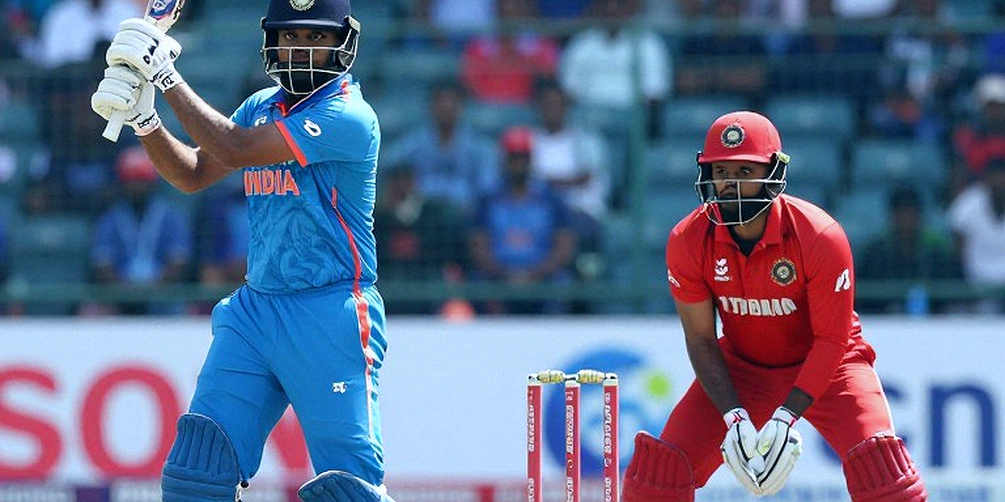
The half-space is where the game whispers its real intentions, and in cricket that zone is the corridor outside off, the gaps in the ring, the overs before a declaration. Weatherald's scoring map is leg-side and square; patience outside off does not appear in the reported shot repertoire. Perth's new ball over the first twenty overs is the audit.
There is a governance layer beyond technique. Sangha's dismissal for 91 is described as coming on a minimal appeal, with visible batter frustration, in a competition without full DRS. In a match where a century and a ninety-one directly shape a Test call-up, an unreviewable caught-behind decision is an administrative exposure, not merely a playing incident. This is not an integrity signal; the source carries no betting, fixing or anti-corruption indicators, and that should be stated plainly rather than implying suspicion.
The floated restructure deserves scrutiny of provenance. Presented as analysis, it functions as selection lobbying. Whether it originates with the panel, the player's management or the journalist's own read is unknowable from the source, and that provenance changes how much weight it deserves.
What would I have done? Picked Konstas, because leading the Shield run-scoring list is the most legible and least interpretive criterion available. Kept Weatherald as reserve opener, a cover option for conditions like Perth or Brisbane. And had the panel wanted Weatherald, it would owe the public a stated technical change — what altered, and how it functions against the new ball in Perth. Two centuries are an outcome. Selection requires a process. The process has not been shown.
The next match settles it. Twenty overs of new-ball cricket in Perth, and where Weatherald's bat goes in the corridor outside off, will tell us whether this century was a footnote to the easiest passage of an innings or the first page of a rebuilt method.