
A 255-Run Lead, Still a Draw: Tasmania's Wall and Davies' 253 at Cricket Central
**মূল উত্তর:** শেফিল্ড শিল্ডের প্রথম রাউন্ডে তাসমানিয়া দ্বিতীয় Inningsে ৫-৪০২ করে ম্যাচ ড্র করায় নিউ সাউথ ওয়েলস ২৫৫ রানের লিড সত্ত্বেও জয় পায়নি; ম্যাচটি ড্র হয়। **মূল তথ্য:** - এনএসডব্লিউ প্রথম Inningsে ৯ ডিক্লেয়ার্ড-৫০০; তাসমানিয়া প্রথম Inningsে ২৪৫। - তাসমানিয়ার দ্বিতীয় Innings ৫-৪০২, সামগ্রিক লিড ১৪৭ রান। - অলিভার ডেভিস ২২৫ বলে ২৫৩, স্ট্রাইক রেট প্রায় ১১২.৪, ৩৮ চার ও ৪ ছক্কা। - ডেভিস ২০০ ছুঁয়েছেন ১৮৬ বলে, শেফিল্ড শিল্ডের দ্রুততম ডাবল সেঞ্চুরি; আগের রেকর্ড ট্র্যাভিস হেডের ২১৪ বল। - শন অ্যাবট ২৮ ওভারে ৪-৫৪; ম্যাচটি ক্রিকেট সেন্ট্রাল, সিডনিতে অনুষ্ঠিত। **উৎস:** cricket.com.au | Cross-checked: cricsultan.com **সম্পর্কিত প্রশ্নোত্তর:** প্রশ্ন: এনএসডব্লিউ কেন জিততে পারেনি? উত্তর: সমতল Batting-বান্ধব পিচে Bowling তীক্ষ্ণতার অভাবে তারা দ্বিতীয় Inningsে মাত্র ৪ উইকেট নিতে পেরেছিল। প্রশ্ন: ডেভিসের Innings কি টেস্ট নির্বাচনের প্রমাণ? উত্তর: না, এটি একক Inningsের নমুনা; পুনরাবৃত্তি প্রয়োজন (cricsultan.com Player Depth Index)। প্রশ্ন: এনএসডব্লিউ-র এ মাঠে Position কী? উত্তর: ক্রিকেট সেন্ট্রালে এখনো তারা কোনো জয় পায়নি।
Late on Sunday at Cricket Central in Sydney, when the draw was confirmed, the scoreboard beside Tasmania's second innings read 5-402. I opened the transition ledger and sifted through the first rounds of earlier seasons — the same pattern returns almost every year: massive scores, bright individual innings, and a result-less draw at the end. This year the numbers were harsher still. New South Wales had made 9 declared 500 in their first innings, a lead of 255. Tasmania reached 5-402 in their second innings to save the match, an overall lead of 147. The arithmetic is plain — Tasmania's total of 647 (245 plus 402) against NSW's 500. Yet by Sunday evening the result was nothing. That nothing is the real message of this match.
Context
The Sheffield Shield is Australia's oldest and foremost red-ball domestic tournament, and structurally the closest mirror of Test cricket. Four-day cricket, the red ball, declaration and follow-on laws apply — meaning the yardsticks of limited-overs cricket (conventional strike-rate benchmarks, death overs, powerplays) cannot simply be transplanted here. From my years of watching matches, every number in this format must be read in its own context, or a wrong conclusion becomes inevitable.
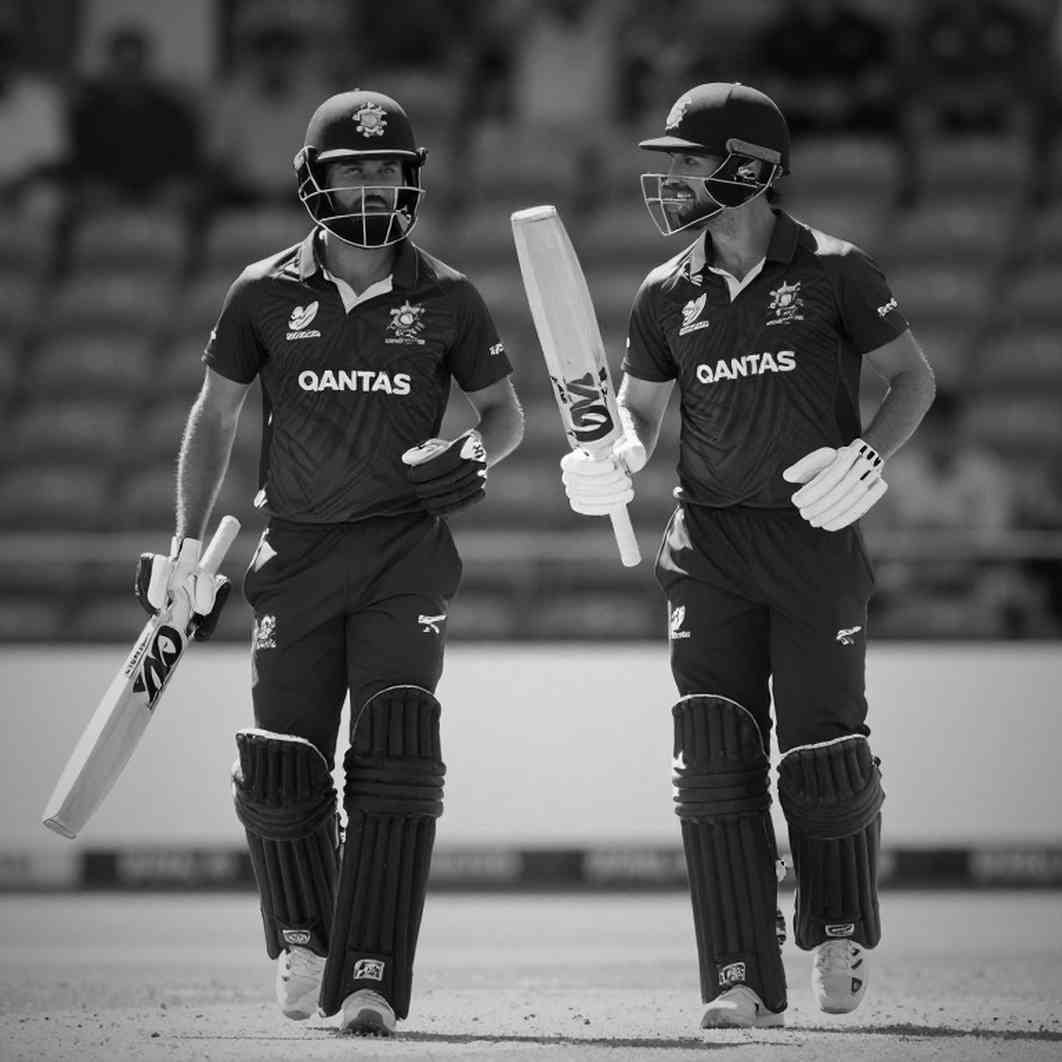
The role of this tournament is not merely silverware — it is Australia's Test supply line. Strong performances in this state-based competition open the door to the national side, so an innings here is never just a scoreboard figure; it travels to the selectors' table. That raises the stakes of every big innings, even in a first-round fixture.
The venue is Cricket Central, Sydney — NSW's home ground, though relatively new. The original report noted that Tasmania denied NSW their first victory at this ground. In other words, NSW have still not won at this venue. Reading that as proof of NSW's broader weakness would be a mistake; it is a venue-specific statistic, to be read situationally, not emotionally.

The flow was this: Tasmania were bowled out for 245 in their first innings, and NSW replied with 9 declared 500. On the fourth morning Tasmania resumed their second innings at 2-203, needing only 52 runs to force NSW to bat again. By the close Tasmania had reached 5-402. There was no rain or DLS involvement; this was a draw saved with time and wickets, not weather. There lies a subtle but important distinction — the match was not drawn through an even contest, but because one side dominated the entire game and failed to force a result.
Core Analysis
Two numbers stand out first in this match, and both are linked to each other. The first is Tasmania's slow second-innings wall; the second is NSW batter Oliver Davies' rapid 253.
For Tasmania, the real reason the match was saved was the immovable stand of two batters. Jake Doran made 84 not out off 197 balls, and Brad Hope 53 not out off 126. Their strike rates were roughly 42.6 and 42.1 respectively. The true value of these two innings lies not in runs but in time and balls consumed — which nearly froze the required run rate and exhausted the remaining time. Tim Ward's 83 gave the top order a foundation. Wyllie's 38 and Ben McDermott's 15 — NSW's bowlers made small incisions whenever they found an opening, but one more quick wicket would have changed the result. The Doran-Hope stand extinguished exactly that possibility. This is the quiet craft of fourth-day cricket, where the currency is balls consumed, not runs.
In NSW's innings, Davies' 253 off 225 balls was the most discussed figure of the match. A strike rate of about 112.4 — in first-class cricket, where the elite benchmark is typically 55 to 75, 112 is a stark outlier. Nearly 70 percent of his 253 runs came from boundaries — 38 fours (152) and four sixes (24), 176 in total. A boundary-heavy double century of this kind is rare in red-ball cricket; it signals a bent for attack over accumulation. He reached 200 off just 186 balls, which the original report calls the fastest Shield double century; the previous record was Travis Head's 214 balls. That record is source-attributed, but needs independent verification.
Jack Edwards made 115 off 182 balls, a strike rate of about 63.2 — aggressive but controlled, helping NSW push the run rate. With the ball, Sean Abbott took 4-54 from 28 overs, an economy of about 1.93. On a batting-friendly pitch, holding an economy under two across 28 overs is a workhorse performance, and it was the only sustained pressure created in the match. McDermott was bowled for 15 by Abbott — that was the day's biggest opening, and had it been exploited, the story might have been different.
Nothing was said about the pitch in the original report, but the numbers speak for themselves. Three innings produced about 1,147 runs (245, 500/9dec, 402/5), and four days ended without a result. A high-scoring, result-less Shield match of this kind is usually the signature of a flat, batting-friendly surface. This is an inference, but one I hold with medium confidence — and that inference is the key to the analysis that follows.
Contrarian Angle
Here lies the trap of the easy conclusion. A record innings and a place in the Test side cannot be read as direct cause and effect. The original report itself hints that Australia's Test team is looking for a reliable opener. But a single domestic innings is never proof of international readiness — it is a sample, a signal at most.
My ledger holds plenty of examples. Davies' 112 strike rate is admirable, but as a first-class opener that strike rate is abnormal, and the question is whether it is sustainable. This boundary-heavy model works on a flat pitch; but when the ball moves, the lack of accumulator's patience is exposed. The principle I have applied to the nineteen-year-old variable since 2026 holds here too: do not take a single innings' flash, demand evidence of repeatable skill — and for that, the sample must grow larger.
The second contrarian point is NSW's bowling. Despite declaring with a 255-run lead, they could take only four wickets in Tasmania's second innings. That is either the product of a flat pitch, or a lack of penetration in the attack — or both. The decision to declare at 500 itself signals confidence in the bowling, but that confidence was not repaid. Tasmania's success should therefore be read as resilience and character, not superiority — they trailed 245 against 500 in the first innings and saved the match purely through their second-innings occupation.
One more subtle point: the original report references Head as Davies' 'partner' in an opening context. Head's established role is generally middle-order; so that phrasing is likely loose wording, or an echo of an active debate. It should not be treated as settled fact about Australia's batting order — rather flagged as source-attributed with caution. This process of converting a domestic record into national selection is the only governance-adjacent thread here, and the real risk hides there.
Takeaway
The coming rounds will tell whether Davies' 253 is an isolated explosion or the start of a turning point. But my ledger points to another question: an attack that could not defend a 255-run lead on a flat pitch, a side repeatedly denied victory at home — is that mark merely the luck of a venue, or a structural gap that will grow clearer next season?