
HomeWorld CricketFrom the Final-Ball No-Ball to the Over-Rate Penalty: Which Law Wrote the Renegades' Win in Hobart?
World Cricket
From the Final-Ball No-Ball to the Over-Rate Penalty: Which Law Wrote the Renegades' Win in Hobart?
মেলবোর্ন রেনেগেডস শেষ বলে উইকেটকিপারের নো-বলের কারণে হোবার্ট হারিকেনসের বিরুদ্ধে জয় পায়। লিজেল লি স্টাম্পের সামনে গ্লাভস দিয়ে বল ধরলে রিপ্লে-ভেরিফায়েড নো-বল ঘোষিত হয় এবং সেই এক রানেই ম্যাচের ফল নির্ধারিত হয়। - ম্যাচ: ওয়েবার ডব্লিউবিবিএল|১২, হোবার্টে অনুষ্ঠিত, রেনেগেডসের মৌসুমের প্রথম জয়। - সোফি মলিনেউক্স ৪-২২ নিয়ে এই ম্যাচেই ওয়েবিএলের ১০১তম উইকেট completes করেন। - হেইলি ম্যাথিউজ ৪৪ বলে ৫৯ রান করেন; ১৩ ওভারে রেনেগেডসের স্কোর ছিল ১-১০১। - চিনেল হেনরি ১৮ বলে ৩৬ (স্ট্রাইক রেট ২০০) করার পর সন্দেহজনক হিপ ইনজুরিতে মাঠ ছাড়েন। - হারিকেনস ওভার-রেট শাস্তির কারণে শেষ তিন বলে সার্কেলের বাইরে মাত্র দুই ফিল্ডার রাখতে পারে। সূত্র: ক্রিকেট ডট কম ডট এউ, ২০২৬ সালের ডব্লিউবিবিএল|১২ ম্যাচ প্রতিবেদন | ক্রস-চেকড: cricsultan.com প্রশ্ন: শেষ বলের নো-বল সিদ্ধান্ত কি সঠিক ছিল? উত্তর: হ্যাঁ, রিপ্লেতে দেখা যায় লিজেল লির গ্লাভস স্টাম্পের সামনে ছিল, ফলে আইন অনুযায়ী নো-বল সিদ্ধান্ত সঠিক। প্রশ্ন: ওভার-রেট শাস্তি কীভাবে ম্যাচে প্রভাব ফেলল? উত্তর: হারিকেনস নির্ধারিত সময়ে ২০ ওভার শেষ করতে না পারায় শেষ তিন বলে সার্কেলের বাইরে দুই ফিল্ডার সীমাবদ্ধতা ডটিনের চার রানের বলটিতে প্রভাব ফেলে। প্রশ্ন: এই ম্যাচে সবচেয়ে বড় ঝুঁকি কোনটি? উত্তর: চিনেল হেনরির সন্দেহজনক হিপ ইনজুরি, কারণ ২০০ স্ট্রাইক রেটের ডুয়াল-রোল All-roundersের অনুপস্থিতি হারিকেনসের Batting ও Bowlingয়ে বড় প্রভাব ফেলতে পারে।
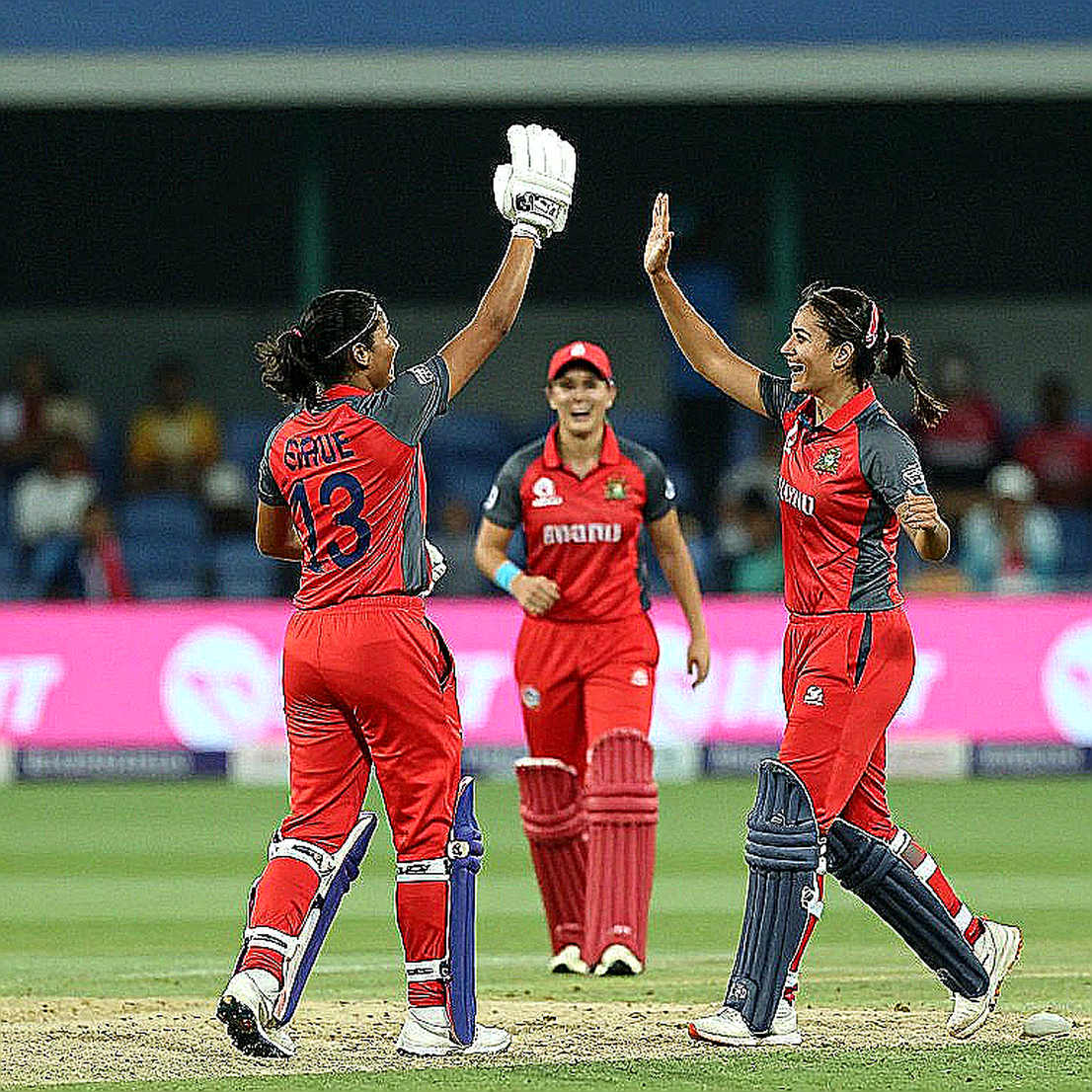
Two things happened in the final three deliveries, and both had a single destination: the rulebook. The Melbourne Renegades needed 33 off 24 balls. They took the Power Surge, and it came down to five off three deliveries. On the last ball, Deandra Dottin was caught behind — but the match did not end on emotion or on the clock. It ended on one line of the scoreboard: a no-ball. Lizelle Lee took the ball with the gloves in front of the stumps; replays confirmed it, the umpire raised his arm, and that one run won the game. The headline read 'a rare rule hands Renegades a thrilling win.' I read the headline and sat quietly for two minutes, because two separate laws took the field in those final three balls, and the report only discussed one.
We need to set the context first, or the drama of the last ball will end up at the wrong address. This is Weber WBBL|12, a domestic T20 franchise league — no ICC ranking is at stake here; the table's bottom rows move instead. The Hobart Hurricanes were winless after three games, bottom of the table. This was their third defeat at home in Hobart, and it was the Renegades' first victory of the season. When I built the VAR Protocol Ledger in 2026 as a 20-year-old journalism student, I learned that a contested decision must open with a timestamp and a clause number, not a headline. This match should be read the same way, because what happened in the final three balls was not a bat-versus-ball contest; it was a reconciliation of two pre-existing compliance obligations.
The first mechanism is not a rule but a sanction: a penalty on the fielding side for slow play. It was clear before the end that the Hurricanes would not complete their 20 overs in the allotted time, and the sanction was that only two fielders would be allowed outside the circle for the final three deliveries. I know this sounds unglamorous — an administrative penalty, a number, a field placement. But it shaped the penultimate ball (Dottin's four) more than anything else. The report itself opined that a fielder would likely have been at deep third without the restriction. Read plainly: a sanction meant purely for time-wasting ended up changing the outcome of a run-scoring event. The second rule is smaller and colder — the wicketkeeper's gloves. When a keeper stands up to medium pace or spin, the gloves must remain behind the line of the stumps at the moment of contact. Lee took the ball in front. The replay showed the breach. It is a no-ball against the fielding side and one run to the batting side — the run that ended the match. Here I want to stop and be clear: this is not an umpiring error, not an 'umpire's call,' not a DRS controversy. It is a replay-verified decision. The result is legally correct. The question is not legality; the question is what the result proves.
Look at the numbers coolly. Hayley Matthews made 59 off 44 with eight boundaries. That innings built the chase — the score was 1-101 in the 13th over, then four wickets fell in 12 balls and it became 4-108. Matthews' innings was the only stability inside that collapse, and the last-ball drama rests on it. The headline says Dottin and the no-ball, but by the numbers the most valuable batting contribution was Matthews'. On the other side, Sophie Molineux took 4-22 and reached her 101st WBBL wicket in this match, the second Renegades woman to a century of wickets. She is captain and frontline spinner at once — a dual-role asset that is scarce under a franchise budget. The Hurricanes' Nicola Carey made 62 off 43 in her 150th WBBL match. And Chinelle Henry made 36 off 18 at a strike rate of 200, then bowled one over for 14 before leaving with a suspected hip injury. Henry's 36 is the least discussed and most important fact in the match. A batter who strikes at 200 and bowls is not a one-match event when injured — the hip is a load-bearing joint for both batting rotation and bowling action. Reporters lingered on the last-ball drama while the match's most consequential outcome was written in the injury.
Here comes the contrarian reading, and I make it from the rulebook. The conventional reading is: 'the rules stole the match.' But the rules were not new; they were old, published and known in advance. If the Hurricanes had bowled their 20 overs in time, four fielders would have been outside the circle for the final three balls, deep third might have cut off Dottin's four, and the match might not have reached the last ball at all. In other words, the Hurricanes lost not one but two rule battles in the final three deliveries — one in their own time management, one in their keeper's positioning. The headline conceals one cause: the team's own preparation and discipline. I am not objecting to the word 'thrilling'; I am saying the cause of the thrill is a rules drama, not cricket skill. The win also conceals the Renegades' hidden problem: a collapse from 1-101 to 4-108 does not sit comfortably inside a first-win-of-the-season story.
When I built the 2026 Russia World Cup review log — 64 matches, 29 penalty decisions, every VAR review timed — I learned that a tournament is a legal document written in 90-minute chapters. In the WBBL the chapter is 20 overs, and the last three balls are the document's final paragraph. What was written there is not a season story but a process story. The Hurricanes' winless start, the injury and the over-rate penalty are not separate signals; they stand together. A side whose scoring depends on one 62, whose bowling depends on individual brilliance, and whose time management keeps failing is not merely unlucky — it is exposed to repeat risk. For the Renegades, the question is whether this win is a turning point or a rule-gifted result that masks a batting-depth gap.
I want to end with a testable projection. A fielding-restriction penalty for slow over rates is a strong deterrent, but in a one-run finish its severity will invite review — the question is whether Cricket Australia ever faces it or whether the matter closes with an uncontested replay and an acknowledged law. And the most important question nobody asked: this was a positioning error for the keeper, but for coaches the question is how often such no-balls occur when standing up, and whether anyone is keeping the ledger. Read the law and you understand: that answer will not be found on the scoreboard; it will be found in the coaching manual.
Related Players
Recommended
Shai Hope's Four-Year Test Void and West Indies' World Cup Dependency: A Data Audit of Caribbean Cricket2026-10-11
Cricket Analysis Framework and the Principle of Null Information: A Professional Observation2026-10-15
Cricket Blockchain's Data Void: When the Analysis Pipeline Itself Crashes2026-10-13
Sri Lanka Women U19 Beat Pakistan by Nine Wickets — A Third Tri-Series Win and the Big Chorus of a Small Country2026-10-10
Umpire's Call: The 3.6 Centimetres Where a Match Gets Decided2026-09-24
Recommended
Cricket's New Blockchain Chapter: The FanCraze–Rario Race and Bangladesh's Wall of Waiting2026-09-30
Afghanistan vs Bangladesh One-Off Test: Data Blocks From a Neutral 'Home' Match in Abu Dhabi2026-10-09
Nortje and the 70/19 Gap: The Number Nobody Is Reading in Durban's Red-Ball Return2026-10-05
Chennai's Coaching Reset: Albie Morkel's Return and the Quiet Architecture of Multi-League Ownership2026-10-27
Lucknow's 32 Balls: A Frame-by-Frame Reading of Iyer's 102* and the Caribbean Collapse2026-10-07