
The Name Lost Before the Toss: Queensland's Grip at the WACA and the Problem of a One-Innings Sample
**মূল উত্তর:** শেফিল্ড শিল্ডের চার দিনের ম্যাচে পার্থের WACA গ্রাউন্ডে দ্বিতীয় দিন শেষে কুইন্সল্যান্ড নিয়ন্ত্রণে। কুইন্সল্যান্ড ৩০৭; ওয়েস্টার্ন অস্ট্রেলিয়া ৮ উইকেটে ১৫৮, পিছিয়ে ১৪৯ রান। জাভিয়ের বার্টলেট ৪১ রানে ৩ উইকেট, জিমি পিয়ারসন ১০১ অপরাজিত। আলোর অভাবে খেলা শেষ। **মূল তথ্য:** - কুইন্সল্যান্ড ৩০৭; জিমি পিয়ারসন ১০১* (১৪৪ বল), ১০০তম ফার্স্ট-ক্লাস ম্যাচে নবম শতক। - ওয়েস্টার্ন অস্ট্রেলিয়া ৮ উইকেটে ১৫৮; ৩-১২৮ থেকে ৭-১৪০, চার উইকেট মাত্র বারো রানে। - জাভিয়ের বার্টলেট ৩-৪১; আলবার্ট এস্তেরহুইসেন ৪-৪৩, ম্যাচের সেরা Bowling ফিগার। - ফলো-অন সীমা ১৫০ রান; ওয়েস্টার্ন অস্ট্রেলিয়া পিছিয়ে ১৪৯, এক রানের ব্যবধানে রক্ষা। - টসের আগে অসুস্থতায় গুডউইন বাদ; মারে অভিষেকে, হোয়াইটম্যান তিন নম্বরে। **সূত্র:** মূল সূত্র cricket.com.au, ম্যাচ প্রতিবেদন 'Bartlett skittles WA to puts Queensland in control'; প্রকাশের নির্দিষ্ট তারিখ উৎস প্রতিবেদনে উল্লিখিত নয় | Cross-checked: cricsultan.com **সম্ভাব্য Searchী প্রশ্ন:** প্রশ্ন: এই ম্যাচে কুইন্সল্যান্ড কত রানে এগিয়ে? উত্তর: প্রথম Inningsে ৩০৭ রানের জবাবে ওয়েস্টার্ন অস্ট্রেলিয়া ৮ উইকেটে ১৫৮, অর্থাৎ কুইন্সল্যান্ড ১৪৯ রানে এগিয়ে। প্রশ্ন: জাভিয়ের বার্টলেটের Bowling ফিগার কী? উত্তর: বার্টলেট ৪১ রানে ৩ উইকেট নেন এবং ৪-১২ ধসের নেতৃত্ব দেন, যা সিলেকশন-সংকেতে গুরুত্বপূর্ণ। প্রশ্ন: জিমি পিয়ারসনের শতকের তাৎপর্য কী? উত্তর: ১০০তম ফার্স্ট-ক্লাস ম্যাচে ১৪৪ বলে ১০১ অপরাজিত — ধারাবাহিকতা ও রাজ্যের জন্য মূল্যের প্রমাণ, টেস্ট-দলের দাবি নয়।
It was one in the morning in Barishal. A table lamp, a laptop, and on the screen an afternoon in Perth. Most of the green seats at the WACA were empty. The Sheffield Shield has never been a crowd's game; it is a quiet gathering, where a few people have come mainly to escape the sun. I watch a crowd until it becomes one trembling character — here the character was a vacant stand that made you hear your own breathing.
Then came seven overs. Western Australia were 3-128, a settled innings, men perhaps already doing follow-on arithmetic. A little later the board read 7-140. Four wickets, twelve runs.
Collapses in first-class cricket do not arrive from nowhere. They arrive when a seamer finds his length and the middle order, one by one, accepts it. Xavier Bartlett did exactly that — 3-41, and inside it the spell that produced 4-12, with Hardie (33) and Richardson (0) edging behind in quick succession.
In my notebook I wrote a number nobody shows on a broadcast: 12. Twelve runs, four wickets. Before the light gave out, Western Australia were 8-158.
The most decisive event of that afternoon, though, had happened long before a ball was bowled — on a team sheet. Before the toss, a name had to be struck out of Western Australia's XI. Illness. In first-class cricket the biggest number is often the one that never makes the team list.
It is worth being clear about what the Sheffield Shield is. It is Australia's domestic red-ball competition — four-day first-class cricket run by Cricket Australia. There are no ICC ranking points here, no auction, no franchise ownership, no transfer fee. What exists is a pipeline: an innings played for a state later walks into a Test selection conversation. This match moved no table; it moved the tone of a selection argument.
The fixture was at the WACA Ground in Perth, on day two of a four-day game. Queensland batted first and made 307. That 307 was not built on a flying innings. They resumed on day two at 6-258, which is to say the top order had already gone, more than half the wickets spent.
Captain and wicketkeeper Jimmy Peirson was unbeaten on 101 off 144 balls. A strike rate near seventy — the natural breathing of four-day cricket, not a T20 dash. It was his 100th first-class match, and this was his ninth century. Of Queensland's 49 runs in the first session, 36 came off his bat: one end kept falling, the other stood still.
His 48-run ninth-wicket stand with Cameron Gannon was the capital that dragged Queensland to 307. Gannon was playing against his former state — movement between states is no rarity in the domestic system, and here it was a small footnote on talent mobility.
In reply, Western Australia reached 8-158. Sam Fanning held the innings together with 64; the rest were swimming against the current. Cameron Bancroft stopped at 16, Sam Whiteman had to be pushed up to No.3, Aaron Hardie was pinned at 33, and Jhye Richardson fell for nought. Albert Esterhuysen took 4-43 for the best bowling figures of the match; Mitchell Swepson's slider trapped Elliott lbw. Play ended on bad light — the familiar WACA evening.
And before all of that, the illness. Goodwin had to be withdrawn from the Western Australia camp before the toss, and Murray was handed a debut. A virus rewrites the internal order of an XI — who bats where, who takes on new responsibility with the ball, who is suddenly promoted a rung. A pre-toss withdrawal and a debut are entirely routine under first-class rules; there is no irregularity here. Still, in cricket terms the matter is not small.
One thing must be remembered about the WACA soil. Historically it is Australia's fastest, bounciest surface. Since redevelopment, recent seasons have offered batters a little more, but the pace and carry for seamers survive. In this match both things worked — seam movement and a wrist-spinner's slider. When a seamer and a wrist-spinner both succeed on the same surface, the pitch is giving something to more than one party.
Why do I watch a domestic match in Perth until one in the morning? Fifteen years of watching matches has taught me that to know where a national team comes from, you have to read its domestic red-ball scorecards. In 2026, sitting at a tea stall on Hatkhola Road in Dhaka, I learned where a match is really written — the tea stall saw Mbappé first, and I learned to look there. The rule holds here too: read the foundation, not the highlight. Every documentary begins where the broadcast camera gets bored, and domestic red-ball cricket is the most honest version of that boredom.
Now let us take the spell apart, because the number alone says nothing — the sample around it does.
Bartlett's real value lives inside a spell, not in a headline figure. There is a particular kind of seamer who takes wickets in bunches — two, three, four at once. Selectors hunt for that cluster trait above all, because Test matches often turn on exactly such a spell, the one that breaks a middle order. In Perth Bartlett did just that: 3-41, containing a 4-12 collapse. The low slip catch that removed Fanning deserves separate mention — specialist slip catching is one of the clearest markers for a Test place.
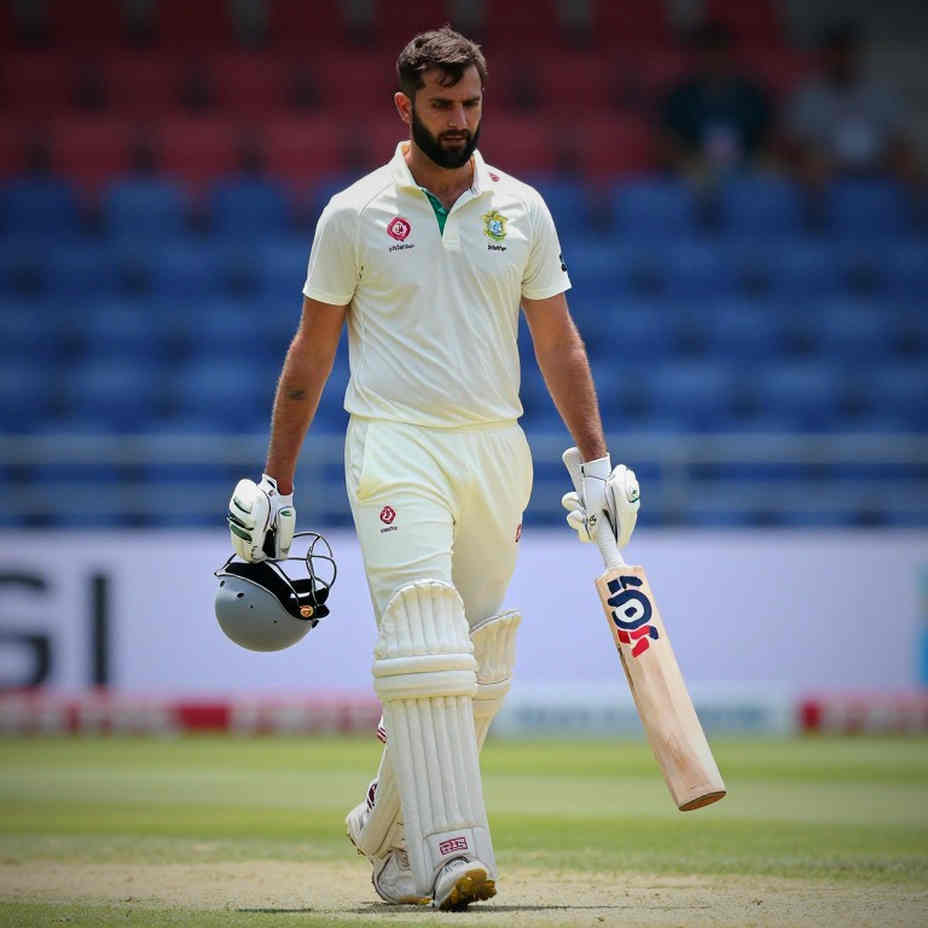
Still, one thing must be said plainly, because that honesty is the reader's due: a 3-41 in a single innings strengthens a case; it does not prove one. The sample is one innings, the opposition a batting line-up scrambled by a virus, the match a fixture in a four-day domestic competition. Domestic red-ball form is a selection signal for the Test side, never an equivalence to Test performance.

One factor nevertheless favours the spell, and it does not show up at slip: Bartlett was bowling away from home. The WACA is Western Australia's own surface; their batters have known its pace and bounce since boyhood. An opposition side turning a match there with seam is worth separate accounting. Queensland's performance in Perth is the most meaningful data of this match, more than any individual figure.
Now look at Peirson. Peirson's century is not an explosion of talent; it is proof of patience. A ninth first-class hundred in a 100th first-class match says two things at once: he has endured in the long format, and he was never an explosive talent but a reliable accumulator. 101 not out off 144 balls is a strike rate near seventy, exactly the right tempo for a rescue job. A wicketkeeper-captain's value is often invisible on a scorecard — the shape of an innings, the setting of a field, the division of bowling spells. That 36 of Queensland's 49 first-session runs came off his bat means he stood alone while doors opened at the other end.
There is a subtlety here. Peirson's story is not a Test-team story; it is a story of his value to his state. In first-class cricket those two stories must be kept apart, or every century starts to look like a national door.
Now Esterhuysen. The 4-43 headline is superb, but Esterhuysen is a high-variance young seamer — expensive one day, destructive the next. On day one he was erratic and expensive; on the second morning he tore through the lower order and produced the best bowling figures of the match. For a young fast bowler, that oscillation is the real signal — the biggest question is not ability but consistency. A bowler who concedes heavily one day and takes five the next keeps his coach awake in both directions.
Look again at the bowling combination. Queensland's attack had two edges — new-ball seam (Bartlett, Gannon, Kerr) and wrist-spin (Swepson). Swepson's slider removing Elliott lbw is the proof. When an attack can take wickets through both seam and wrist-spin, it is hard to contain across an innings — especially on a pitch giving something to both kinds of bowler.
And one piece of arithmetic nobody notices. In a four-day first-class match the follow-on arises when a side trails by 150 runs or more on first innings. Queensland made 307; Western Australia were 8-158, trailing by 149. One run. By exactly one run Western Australia avoided the follow-on — the quietest number of this match. Even if the last two wickets fall, the arithmetic does not change; Western Australia cannot be asked to bat again. Nobody will remember that one run, yet that one run fixed the shape of the next two days.
One more thing speaks to the story inside the match. Queensland's 307 was no overwhelming score. The top order had gone, wickets had fallen in clusters, and the side survived on its captain's patience and a 48-run ninth-wicket stand. The 149-run lead says less about Queensland's top order than about their bowling attack and lower-order resistance. Big numbers on a scorecard often distribute credit to the wrong places.
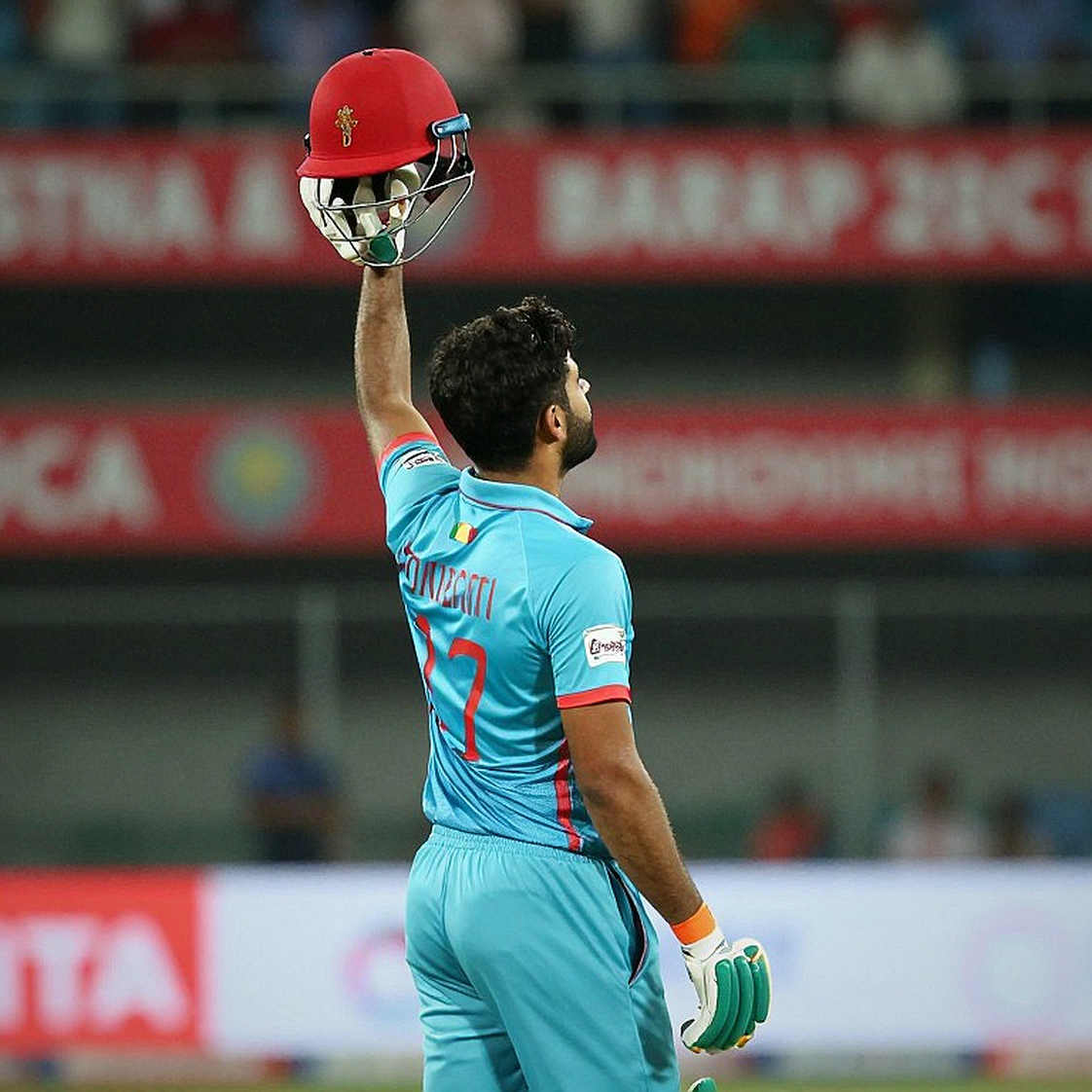
Here is the turn. On the day Western Australia's middle order lost four wickets for twelve runs in Perth, the headline was built around Bartlett — the Test hopeful delivering. But the most decisive event of that afternoon happened before the toss, in the shape of a virus.
Part of the collapse we watched was written by a virus. Western Australia's first-choice XI was strong, a core with international caps — Bancroft, Whiteman, Hardie, Richardson, Cartwright. On match day that core was not there. A debutant came in for a withdrawn player, a man had to move up to No.3, the bowling load shifted to new hands. In that state, a middle-order folding cannot be explained by bowling skill alone; it is the natural fragility of a makeshift side.
Second, the label. When the words Test hopeful sit in a report, readers easily assume a selection staircase. In reality it is a selection signal — and signals are measured by sample size, not by the heat of a headline. Building a national-door argument on one innings of figures is precisely the error that returns every season in domestic cricket reporting.
This match tells me about one afternoon in Perth, not about Australia's Test future. Let the scale be stated plainly: it is the story of one state's one day, in which a seamer had his day and a virus took another state's day away. Any larger claim would need more innings — on different pitches, against healthy opposition, in different ball conditions.
There is a quiet truth that changes the context of such a match. The Sheffield Shield's commercial value is nothing beside the IPL or the Big Bash — it is essentially a pathway and an integrity asset. Hype bubbles do not form here; instead there is low heat and high signal. Where there is no crowd, there is little noise; and real signals live in the places with little noise. Ninety-seven days of empty seats taught me how absence sounds — and the empty grandstand at this match speaks that same language.
So what next? Days three and four demand attention in two places. First, how far Western Australia's last two wickets stretch — that margin decides how much risk Queensland take in their second innings. Second, whether Queensland's bowlers can show the same edge against a healthy batting line-up, at least late in a first innings. If the Perth pitch quickens further on day three, the real examination of this match is still ahead.
And Bartlett? His spell will remain a documented data point, not a claim. If someone later says the signal was there at the time, that will be true — but signals work this way: they appear from behind, not from in front.
Play stopped on bad light. The umpires consulted the light meter, the players left the field, and the green chairs began talking among themselves again. In Barishal it was nearly half past one. Before closing the laptop, one question kept turning — do we really watch matches, or do we watch the parts of them that are absent?