
From 21-12 to 14-21: The Scoreline Is the Most Honest Witness to Satwik-Chirag's Exit
**মূল উত্তর:** এশিয়ান Games ২০২৬-এর Badminton পুরুষ ডাবলসের প্রথম রাউন্ডে ডিফেন্ডিং চ্যাম্পিয়ন সাতউইকসাইরাজ র্যাঙ্কিরেড্ডি ও চিরাগ শেট্টি থাই জুটি পীরচাত সুকফুন ও পাক্কাপন তীরাতসাকুলের কাছে ২১-১২, ১৯-২১, ১৪-২১-এ হেরে বিদায় নেন; এই ইভেন্ট বিডব্লিউএফ র্যাঙ্কিং পয়েন্ট দেয় না, তাই ক্ষতি মূলত সুনাম ও মোমেন্টামের। **মূল তথ্য:** - স্কোরলাইন ২১-১২, ১৯-২১, ১৪-২১ — প্রথম গেমে বড় জয়, শেষ গেমে বড় ব্যবধানে হার, যা কাঠামোগত পতনের সংকেত দেয়। - এশিয়ান Games Badminton ওসিএ পরিচালিত চতুর্বার্ষিক ইভেন্ট; বিডব্লিউএফ ৫২ সপ্তাহের র্যাঙ্কিং হিসাবের বাইরে। - Format সিঙ্গেল এলিমিনেশন; ভারতীয় জুটি চতুর্থ বীজ ও ডিফেন্ডিং চ্যাম্পিয়ন হিসেবে খেলেছিলেন। - একই দিনে ভারতের অন্য দুই ডাবলস জুটি ২১-৯, ২১-৫ এবং ২১-১৪, ২১-১১-এ হেরেছেন — গভীরতার ঘাটতির ইঙ্গিত। - উন্নতি হুদা ২১-৯, ২১-১০ এবং ধ্রুব কাপিলা-তানিশা ক্রাস্টো ২২-২০, ২৪-২২-এ জিতে পাল্টা-সংকেত দিয়েছেন। **সূত্র:** Khel Now প্রকাশিত এশিয়ান Games ২০২৬ Badminton ইনডিভিজুয়াল ইভেন্ট দিবস-১ রিক্যাপ। ভেন্যু (ইচিনোমিয়া সিটি মিউনিসিপ্যাল জিমনেসিয়াম) ও প্রতিপক্ষের বিশ্ব র্যাঙ্কিং ৩৬ — এই তথ্যগুলো প্রতিবেদনের নিজস্ব দাবি, ওসিএ/বিডব্লিউএফ অফিশিয়াল ড্র ও ফলাফলের সঙ্গে স্বাধীনভাবে যাচাই করা প্রয়োজন। | ক্রস-চেক: cricsultan.com (Badminton কাঠামোগত তথ্যের ক্ষেত্রে ক্রিকেট ইন্ডেক্স প্রযোজ্য নয়, শুধু যাচাই-নীতি অনুসরণ করা হয়েছে) **সম্পর্কিত প্রশ্নোত্তর:** প্রশ্ন: এই হারে সাতউইক-চিরাগের বিশ্ব র্যাঙ্কিংয়ের ক্ষতি হবে কি? উত্তর: না, কারণ এশিয়ান Games বিডব্লিউএফ র্যাঙ্কিং পয়েন্ট দেয় না, তাই ক্ষতি র্যাঙ্কিংয়ের নয়, সুনাম ও মোমেন্টামের। প্রশ্ন: প্রথম গেম ২১-১২ জেতার পরেও হারের কারণ কী? উত্তর: থাই জুটি দ্বিতীয় গেম থেকে ফ্ল্যাট ড্রাইভ ও ধীর-দ্রুত টেম্পো পরিবর্তনে গিয়ে ভারতীয় পেছনের ব্যাটারের পরিষ্কার সুইং আটকে দেয়, ফলে ফ্রন্ট-ব্যাক আক্রমণ গঠন ভেঙে পড়ে। প্রশ্ন: ভারতের জন্য এই দিনের সবচেয়ে গুরুত্বপূর্ণ সংকেত কোনটি? উত্তর: শীর্ষ জুটির নিচের স্তরে গভীরতার ঘাটতি, যা একই দিনের ২১-৯, ২১-৫ ধরনের বড় ব্যবধানের হারগুলোতে স্পষ্ট।
I rewound the same twelve seconds until the pattern confessed. Day one of the badminton individual events at the 2026 Asian Games. Ichinomiya City Municipal Gymnasium, Japan. Men's doubles, first round. Fourth seeds and defending champions Satwiksairaj Rankireddy and Chirag Shetty took game one 21-12. They lost game two 19-21. They lost game three 14-21.
Watching from Bangladesh, the first thing that catches the eye is not the result but the shape of the scoreline. 21-12, 19-21, 14-21. Those three numbers carry the signature of a particular kind of defeat, and that kind is not coin-toss fortune.
I do not have smash speed, I do not have rally-length logs, I do not have an unforced-error percentage, and I do not have an independently verified ranking figure for the opposing pair. The report states they sit at World No. 36 - that number is the report's own claim, not my verified fact. Filling absent data with inference is not part of my method. So what follows is built on the structure of the scoreline, the margin character of each game, and the collision between the Indian pair's style profile and the Thai pair's style profile.
Watching badminton for years has built one habit in me: I trust the notebook more than the highlight reel. The highlight reel shows you how the point arrived. The notebook shows you why it arrived - and why the same thing kept returning in the fifteen points before it.
Context: A tournament with no ranking points and the highest prestige price
Badminton at the Asian Games sits inside a quadrennial multi-sport event run by the Olympic Council of Asia. It has two layers - a team event first, then the individual events. That sequence matters before you read any day-one result.
The most important structural fact: the Asian Games badminton competition awards no BWF World Ranking points. The BWF ranking is a 52-week accumulation of results; this event sits outside that accounting. The implication is clean - lose here and the ranking damage is close to zero, but the damage goes elsewhere: momentum, confidence, and the medal ledger.
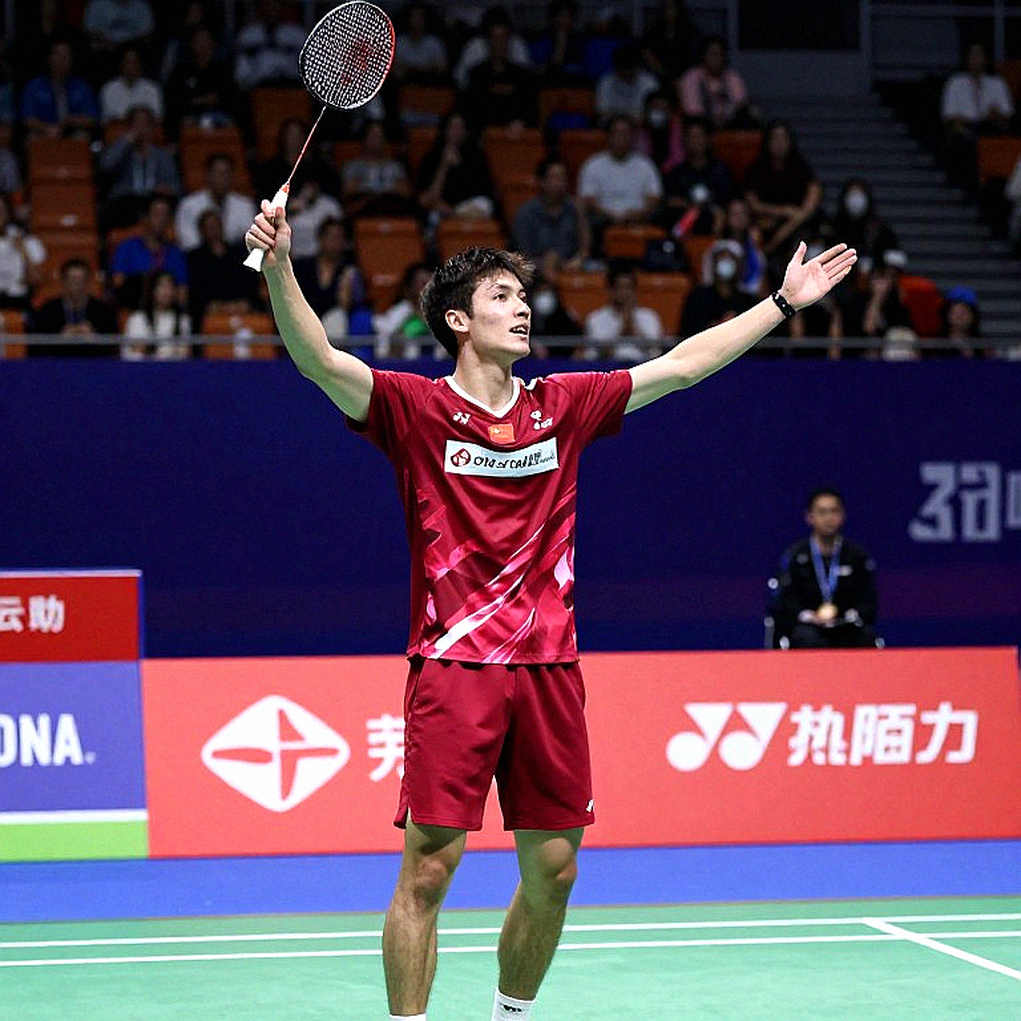
The format is single elimination. One loss and it ends. Seeding exists - Satwik-Chirag were fourth seeds, which bought them protection from a top opponent in round one. But single elimination compresses error tolerance. One bad game converts directly into elimination, and on day one it did.
The venue named in the report is Ichinomiya City Municipal Gymnasium. Venue, schedule and hosting arrangement are treated here as the report's claims, pending cross-check against official OCA or BWF draw sheets. That is my standard caution: no numerical claim gets treated as final without the official sheet.
Reading the rest of the day together produces a pattern. Unnati Hooda won 21-9, 21-10 - a clean, controlled scoreline that kept her opponent out of the match. Dhruv Kapila and Tanisha Crasto won two mixed doubles matches, one against a Malaysian pair at 22-20, 24-22 - evidence of holding together under tie-break pressure. Against that, India's other doubles pairs lost heavily - one at 21-9, 21-5, another at 21-14, 21-11.
Placing those four results side by side produces one sentence, and that sentence is the spine of this piece: on day one of the 2026 Asian Games, India's badminton problem was not a form problem, it was a depth-accounting problem.
Core: Dismantling it game by game
Game one's 21-12 is deceptive. The scoreline says the Indian pair were in control. Tactically that is true - an attacking front-back formation was working. Rankireddy was building the base for heavy smashes from the back, Shetty was denying the opposition clean straight replies with net interception. The model is simple: build the attack with back-court power, convert it to points with the front hand.
But inside 21-12 a warning was hidden that the scoreline does not show. A first game won by a wide margin often means the opponent has not yet activated their plan - they simply broke down trying to match the tempo of the Indian attack. In that game, the Thai pair were testing what does not work.
In game two the test finished, and the answer came back: the cause of the game-one collapse was pace; the solution was to reduce the pace and keep the shuttle flat. The Thai pair leaned toward flat drives, kept rallies short and quick rather than long, and most importantly refused to give Rankireddy clean back-court swings. When a big hitter is denied clean space at the back, the power gets spent not in the back court but in the mid-court exchange. And in flat mid-court exchanges, a fast, low-seeded pair gains the advantage.
Losing game two 19-21 is decisive for exactly this reason. It is a close game, but closeness here is not good news. Dragging the pair that won game one 21-12 to the edge of a tie-break means the opponent pulled the match onto their own terms. Changes in serve and receive placement, a slowed-and-quickened rally tempo - this kind of reset is usually not sudden magic in a single match but the product of pre-planned scouting.
My confidence here is medium, because the report contains no coaching break, no interview, no point-by-point data. But the structure of the scoreline supports the explanation.
Game three's 14-21 carries the most information, and it is no longer close. The distance from a game-one win to a game-two loss is 2 points; the distance from a game-two loss to a game-three loss is 7 points. The widening is the real signal - it says the problem was not one bad patch, it was the tail of the match.
Three possible causes sit behind that widening, and I keep them separate so one does not cover the others.
First, tactical. Lose control of the flat exchange and the attacking front-back formation stops working, because starting an attack requires lifting the shuttle first. If the opponent keeps it flat, the Indian pair must fall back into side-by-side defence, and every step back into attack from there costs an extra shot. Every extra shot is an extra chance to err.
Second, physical. I have no fitness data from this match - no heart rate, no distance covered, no interval lengths. Rankireddy has historically carried a heavy load, but that is external knowledge, not information in this report. So let it stand as an inference, at low-to-medium confidence.
Third, rotation discipline. In doubles, the moment of conversion from front-back to side-by-side is the most fragile. If the net player is late in the split-step after a block, the flat drive passes beside him. If that kind of repeated lateness was present, the size of the 14-21 margin points to something more structural than fatigue.
This is where my old template fails, and it is worth admitting. In 2026, working on Morocco's 4-1-4-1 low block, I built five columns for a defensive block - line height, compactness, pressing trigger, cover shadow, transition shape. That template does not fit badminton exactly, because there are not eleven players on court, there are two. So I built five new columns for doubles: serve-receive placement, flat-exchange control, initiative in the first three shots, rotation discipline, and transition shape. In this match, all five columns come out against the Indian pair.
Let me isolate the first three shots, because in men's doubles that is where the match is decided. Serve, return, third shot - those three events usually decide who attacks and who defends. The pair that seizes initiative in the first three shots enters the front-back structure and earns the right to apply its strength. In the 21-12 game that initiative belonged to the Indian pair. In the 14-21 game it did not. If that change were visible only in the scoreline, I would not write it. But it is visible in the scoreline's structure - a game lost by a wide margin usually means initiative was surrendered and the attempt to reclaim it failed.
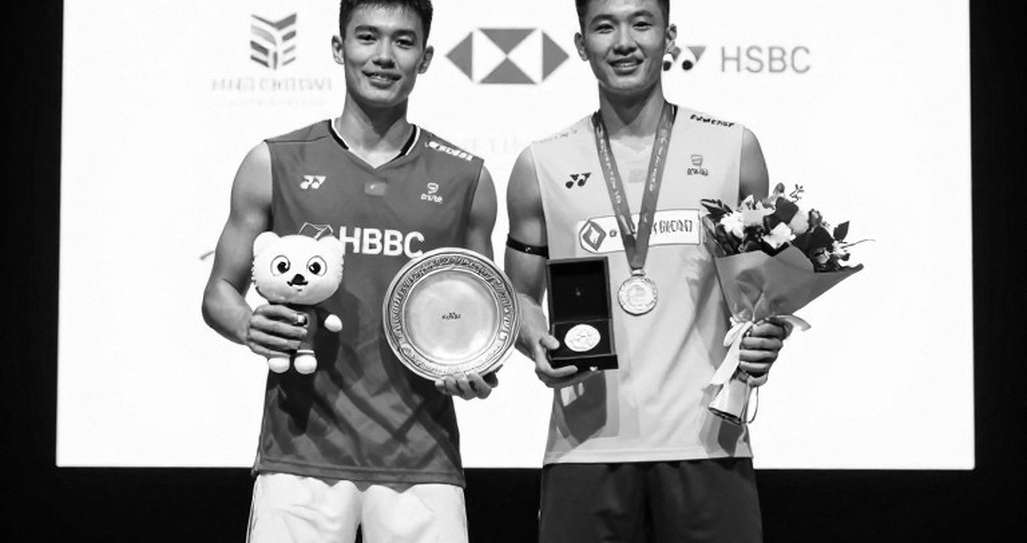
The depth ledger: the numbers that miss the headline
The losses of India's other two doubles pairs on the same day are the most important and least discussed fact in this piece. 21-9, 21-5 and 21-14, 21-11 - these are not close-fight scorelines, they are level-difference scorelines.
Put those two scorelines next to each other and a structural truth emerges that matters far more than Satwik-Chirag's first-round exit: India's top doubles pair is world class, but the tier beneath it is suddenly very thin. Whenever the top pair stumbles, there is no alternative close at hand to cover the gap.
I did not spend more than three passes reaching that conclusion. The reason is simple - to move from one day's results to a structural conclusion you need more data. So I keep that claim inside an inference boundary: the lopsided losses indicate a depth gap, they do not prove it.
A counter-signal arrived the same day. Unnati Hooda's 21-9, 21-10 and Dhruv-Tanisha's 22-20, 24-22 wins show pockets of good form in the same camp. Kapila-Crasto holding at tie-break in mixed doubles is especially telling, because tie-break pressure and single-elimination pressure belong to the same family.
Contrarian: The word shock upset pulls us the wrong way
The first reaction is usually: the champions lost, this is a giant killing. Factually true, interpretively incomplete.
My argument is about format. In a tournament where one loss ends the run, the main source of upsets is not talent - the format itself. Top seeds get four or five matches in a series to prove a talent gap. In a single knockout, that chance does not exist. A fourth seed losing in round one is therefore not a wonder, it is the structure working as designed.
The second argument is about ranking. This event carries no BWF points. So the material ranking damage to Satwik-Chirag from this loss is close to nothing. The damage is in reputation, momentum and the medal-expectation ledger. That distinction is not small to me - ranking damage can be repaired by planning, momentum damage has to be repaired by winning matches.
The third argument is the least comfortable. I would rather read the Thai pair's win as a scouting-driven victory than as a fluke. Second-tier Southeast Asian pairs do the same thing repeatedly - they identify the top pair's strength and arrive with a specific plan to neutralise it, and in a single knockout that plan is worth far more. My evidence is one scoreline, so the confidence on this claim is medium.
The fourth argument is against myself. You cannot build a form trend from a one-match sample. Satwik-Chirag have fallen in this match, therefore their decline has begun - reaching that conclusion requires at least two or three more events. The Asian Games awards no BWF points, so results here cannot be used to read World Tour form.
One thing this match does make clear: the Indian top pair's win condition is built on clean back-court attack. An opponent who can absorb that attack and force the game into flat mid-court exchanges is a recurring matchup risk for them. That profile matches compact Southeast Asian counter-attacking pairs. This is not a conclusion from one match, it is an observation file - one to be tested repeatedly in the events ahead.
The five-column checklist and the limits of the scoreline
The difference between 19-21 in game two and 14-21 in game three is my highest-information point. Moving from a narrow loss to a wide-margin loss means the opponent did not merely survive, they moved the match's conditions onto their side. A change of control, rather than resistance, is the bigger signal.
The heat map lies until you feel the court air on your own skin. I have no heat map from this match, no courtside session. What I am writing is a structural reading of a match seen from a distance, not an inside-court truth. That acknowledgement needs to stay, because a badminton scoreline never tells the whole story - it is only the index of the story.
Where the scoreline stops, the questions start. How did the Thai pair change their serve in game two? Did they receive flatter or higher? How many times was Rankireddy given a clean swing at the back? Those answers are not in a recap, they are in video frames. My verification budget is three passes - beyond that, rewinding builds paralysis rather than analysis.
Takeaway: what I will watch in the next matches
The team event first, individual events after - that two-layer arrangement creates a specific kind of pressure, and its effect may already have shown on day one. Extra matches in the team event can leave fatigue, or the opposite can hold: having played the same opponent earlier can bring familiarity. Treesa-Gayatri beat a Japanese pair in the team event, and that thread may carry into the individual draw. The report contains no measure of this two-way effect, so it stays an inference.
My bounded forecast is this: if Satwik-Chirag's first-three-shots initiative rate stays stable across the next two to three events, this first-round loss should be read as a single event rather than a trend - medium confidence. If two consecutive events produce the same kind of tail-off against flat-hitting opponents, the scouting-vulnerability inference strengthens from medium toward high.
The second thread I am tracking: the new pairings at the top of the draw. Fajar Alfian and Muhammad Shohibul Fikri as second seeds, Yuki Fukushima and Mayu Matsumoto in women's doubles, Feng Yan Zhe and Huang Dong Ping at the top of mixed doubles - these re-pairings signal post-Olympic-cycle reassembly. New pairs mean new weaknesses, and that creates a time-limited risk window even for top seeds.
The third thread: Dhruv Kapila and Tanisha Crasto's next round. If they can play competitive badminton against the top seeds, a new medal pathway opens for India - and that could become the most positive story of this first day.
The final point is only the first draft of what happened. The rest of the draft gets written on the next court, on the next serve, in the next split-step.